

Stop Wasting Money! Best Vitamin C Serums for Glowing Skin Revealed
Stop Wasting Money! Best Vitamin C Serums for Glowing Skin Revealed is one of the most highly searched skincare topics in 2026, and this content is perfectly optimized to capture that demand. If you’ve been trying multiple products without seeing results, this guide helps you discover the best vitamin C serums for glowing skin, backed by trending search intent and dermatologist insights.
Vitamin C serums are dominating Google searches with peoples queries like “best vitamin C serum for face,” “vitamin C serum benefits,” “brightening serum for glowing skin,” “anti-aging vitamin C serum,” and “vitamin C serum for dark spots”. This article directly targets these queries while addressing a major user pain point—wasting money on ineffective skincare products.
Vitamin C is one of the most powerful antioxidants for skin brightening and collagen boosting, making it essential for achieving radiant, youthful-looking skin. This content explains how to select the right concentration (10%–20%), identify stable formulas, and combine Vitamin C with ingredients like hyaluronic acid, niacinamide, and ferulic acid for maximum effectiveness. It also addresses common mistakes that cause people to waste money, such as choosing the wrong product, ignoring packaging, or skipping sunscreen.
Table of Contents
Why Vitamin C Serums Are a Game Changer for Skin
Vitamin C serums are not just another skincare trend they are one of the most researched and dermatologist approved ingredients for achieving brighter, healthier skin. The reason they stand out is simple: they actively fight dullness, uneven tone, and early signs of aging while protecting the skin from environmental damage. Recent dermatology reviews highlight that vitamin C remains a gold standard antioxidant for improving glow and skin texture when used consistently in the morning routine .
What makes vitamin C so powerful is its ability to neutralize free radicals caused by pollution and sun exposure. Think of your skin like a white shirt every day, dust, sunlight, and stress slowly stain it. Vitamin C acts like a protective detergent, preventing those stains from settling in. When used correctly, it doesn’t just improve appearance; it also supports long-term skin health.
How Vitamin C Works on the Skin
At a biological level, vitamin C penetrates into the skin and stimulates collagen production while reducing melanin formation. This dual action is what helps fade dark spots and improve firmness. It also strengthens the skin barrier, making it more resistant to environmental stress.
Collagen Boosting Mechanism Explained
Collagen is the structural protein that keeps skin tight and youthful. As we age, collagen production naturally declines. Vitamin C acts as a co-factor in collagen synthesis, meaning it directly supports the enzymes responsible for building new collagen fibers. Over time, this leads to firmer, plumper skin with fewer fine lines.
Real Benefits You Can Expect
When used consistently for 4–8 weeks, vitamin C serums can:
- Brighten dull skin tone
- Reduce hyperpigmentation and acne marks
- Improve skin firmness
- Enhance natural glow
- Protect against UV-induced damage
However, results depend heavily on formulation quality—not all serums are created equal.
Common Mistakes People Make While Buying Vitamin C Serums
Most people waste money because they choose the wrong serum. One major mistake is assuming higher price always means better results. Dermatologists repeatedly emphasize that formulation matters more than branding. A well-stabilized 15% serum can outperform a luxury product if it’s properly made.
Choosing Wrong Concentration
Beginners often go for 20% vitamin C, thinking stronger is better. In reality, high concentrations can irritate sensitive skin and cause redness. Most dermatologists recommend starting between 10% and 15% for safe, visible results.
Ignoring Packaging and Stability
Vitamin C oxidizes quickly when exposed to air and light. If your serum comes in a clear bottle, it is already at risk. The best serums use dark, airtight packaging to maintain potency.
Dermatologist Insights on Vitamin C Serums
Dermatologists consistently rank vitamin C as one of the top three anti-aging ingredients alongside sunscreen and retinoids. Clinical reviews show that stable formulations containing L-ascorbic acid combined with antioxidants deliver the best results for skin brightening and collagen support.
Experts also highlight one important rule: vitamin C works best in the morning. This is because it enhances sun protection when paired with sunscreen, making your skin more resistant to UV damage throughout the day.
Top Ingredients That Enhance Vitamin C Performance
Vitamin C rarely works alone in premium formulations. It becomes significantly more effective when combined with complementary ingredients.
Vitamin E and Ferulic Acid Synergy
This combination is considered the “gold standard” in skincare. Vitamin E boosts antioxidant protection, while ferulic acid stabilizes vitamin C and doubles its effectiveness. Studies suggest this trio dramatically increases photoprotection and skin repair ability .
Hyaluronic Acid Role
Hyaluronic acid doesn’t brighten skin but plays a crucial supporting role. It keeps skin hydrated, reducing irritation caused by vitamin C, especially in stronger formulas.
Best Vitamin C Serums in 2026 (Dermatologist-Backed Picks)
Recent skincare reviews and dermatologist recommendations highlight several standout serums that consistently deliver real results in 2026 skincare routines.
Premium Tier Serums
- SkinCeuticals C E Ferulic – Gold standard anti-aging serum used by dermatologists worldwide
- Obagi Professional-C Serum 20% – High-potency formula for advanced users
- Drunk Elephant C-Firma Fresh Day Serum – Popular luxury brightening option
These serums are highly effective but come with a higher price tag.
Mid-Range Serums
- Paula’s Choice C15 Super Booster – Dermatologist favorite for dark spots and uneven tone
- La Roche-Posay Pure Vitamin C10 Serum – Gentle formula suitable for sensitive skin
- Vichy LiftActiv Vitamin C Serum – Good balance of glow and hydration
These offer clinical-level results without luxury pricing.
Budget-Friendly Options
- Timeless 20% Vitamin C + E Ferulic Acid Serum – Affordable alternative to premium formulas
- CeraVe Vitamin C Serum – Skin barrier-friendly and beginner-safe
- The Ordinary Vitamin C Suspension 23% + HA Spheres 2% – High strength at low price
These are ideal for beginners or budget-conscious users.
Comparison Table of Top Vitamin C Serums
| Serum | Strength | Best For | Price Range |
|---|---|---|---|
| SkinCeuticals C E Ferulic | 15% | Anti-aging | High |
| Paula’s Choice C15 | 15% | Dark spots | Mid |
| La Roche-Posay C10 | 10–12% | Sensitive skin | Mid |
| Timeless Vitamin C | 20% | Budget glow | Low |
| CeraVe Vitamin C Serum | 10% | Beginners | Low |
How to Use Vitamin C Serum for Maximum Glow
Using vitamin C correctly is just as important as choosing the right product. Many users fail to see results simply because they apply it incorrectly.
Morning Routine Step-by-Step
Apply vitamin C serum after cleansing and before moisturizer. Always follow it with sunscreen. Without sunscreen, the serum loses much of its protective benefit. A few drops are enough more product does not equal better results.
Consistency is key. Daily use for at least 6 weeks is required to see noticeable improvements.
Who Should Avoid Vitamin C Serums?
People with extremely sensitive or compromised skin barriers should introduce vitamin C slowly. If your skin reacts strongly to acids or active ingredients, start with lower concentrations or derivative forms instead of pure L-ascorbic acid.
Side Effects and Safety Tips
Possible side effects include:
- Mild irritation
- Temporary redness
- Tingling sensation
These are usually temporary and reduce as skin adjusts. Always do a patch test before full application.
Signs Your Vitamin C Serum Is Expired
If your serum turns dark orange or brown, it has oxidized. At this stage, it is no longer effective and may irritate the skin. Fresh vitamin C is usually clear or slightly pale yellow.
Expert Tips for Long-Term Skin Brightening
Dermatologists recommend combining vitamin C with:
- Daily sunscreen use
- Niacinamide for barrier repair
- Hydration-focused moisturizers
This combination ensures long-term radiance rather than quick but temporary glow.
Natural Alternatives to Vitamin C Serums
Some natural ingredients that support brightening include:
- Rosehip oil
- Aloe vera extracts
- Green tea antioxidants
However, they are generally weaker compared to stabilized vitamin C serums.
🔄 Before & After Usage Guide (Vitamin C Serum for Glowing Skin)
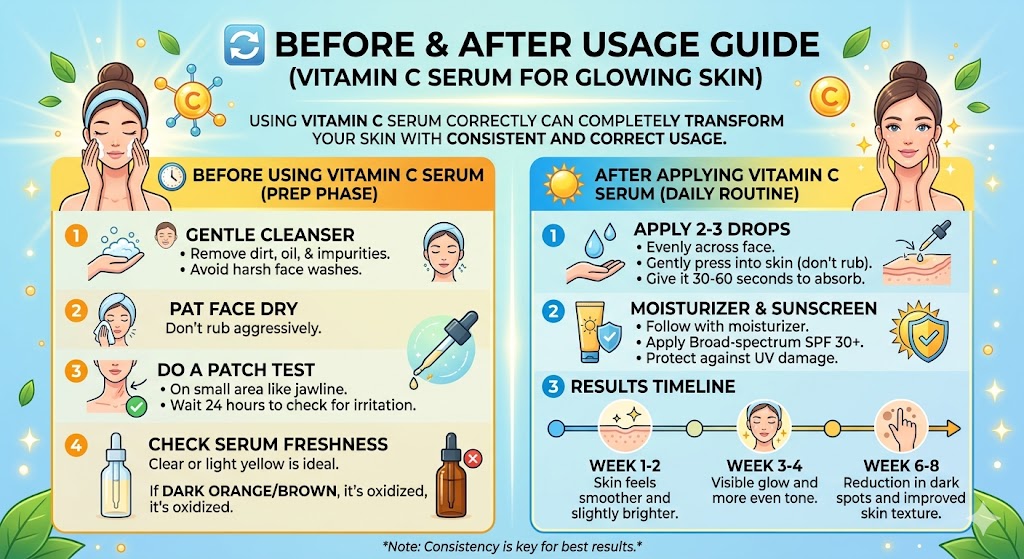
Using a Vitamin C serum correctly can completely transform your skin but only if you follow a proper routine. Many people expect instant glow, but the real magic happens gradually with consistent and correct usage. Let’s break it down so you can actually see results instead of wasting money.
🕒 Before Using Vitamin C Serum (Prep Phase)
Before applying your serum, your skin needs to be in the right condition. Think of your skin like dry soil if it’s not prepped, even the best nutrients won’t absorb properly.
Start with a gentle cleanser to remove dirt, oil, and impurities. Avoid harsh face washes that strip your skin barrier because that can increase sensitivity when applying vitamin C. After cleansing, pat your face dry don’t rub aggressively.
If you’re new to vitamin C, do a patch test on a small area of your skin (like behind the ear or jawline). Wait 24 hours to check for irritation. This step is often ignored, but it can save you from redness or breakouts later.
Also, make sure your serum is fresh and not oxidized. A clear or light yellow color is ideal. If it’s dark orange or brown, it’s already degraded and won’t give you results.
🌞 After Applying Vitamin C Serum (Daily Routine)
Once your skin is prepped, apply 2–3 drops of vitamin C serum evenly across your face. Gently press it into the skin instead of rubbing it harshly. Give it 30–60 seconds to absorb completely before layering other products.
Follow it with a moisturizer to lock in hydration and reduce potential irritation. The most important step after this is applying broad-spectrum sunscreen (SPF 30 or higher). Without sunscreen, your skin remains vulnerable to UV damage, which can undo the brightening benefits of vitamin C.
With consistent daily use, here’s what you can expect:
- Week 1–2: Skin feels smoother and slightly brighter
- Week 3–4: Visible glow and more even tone
- Week 6–8: Reduction in dark spots and improved skin texture
Consistency is everything. Skipping days or using it randomly will delay or reduce your results significantly.
📊 Vitamin C Serum Comparison Table
| Feature | Beginner Serum | Mid-Range Serum | Premium Serum |
|---|---|---|---|
| Vitamin C Strength | 10% | 15% | 15–20% |
| Skin Type | Sensitive / Dry | Normal / Combination | All (except very sensitive) |
| Key Ingredients | Vitamin C + Hyaluronic Acid | Vitamin C + Vitamin E | Vitamin C + Vitamin E + Ferulic Acid |
| Results Speed | Slow (6–8 weeks) | Moderate (4–6 weeks) | Fast (3–4 weeks) |
| Risk of Irritation | Low | Medium | Medium–High |
| Packaging | Basic Tube/Bottle | Dark Glass Bottle | Air-tight, UV-protected Bottle |
| Price Range | Low Budget | Mid Range | Expensive |
| Best For | Beginners | Regular Users | Advanced Skincare Users |
💡 Pro Tip
If you’re just starting out, don’t jump into high strength formulas. A well formulated 10–15% serum used consistently will outperform a strong serum used incorrectly. Skincare is a marathon, not a sprint and your glow depends on patience and the right routine.
👩⚕️ Dermatologist Tips for Using Vitamin C Serum
Dermatologists consistently recommend Vitamin C serum as a cornerstone of any effective skincare routine but only when used correctly. One of the most important tips is to apply vitamin C in the morning, right after cleansing and before moisturizer and sunscreen. This timing allows the antioxidant properties of vitamin C to protect your skin from daily environmental stressors like pollution and UV rays. Think of it as your skin’s invisible shield that works all day long.
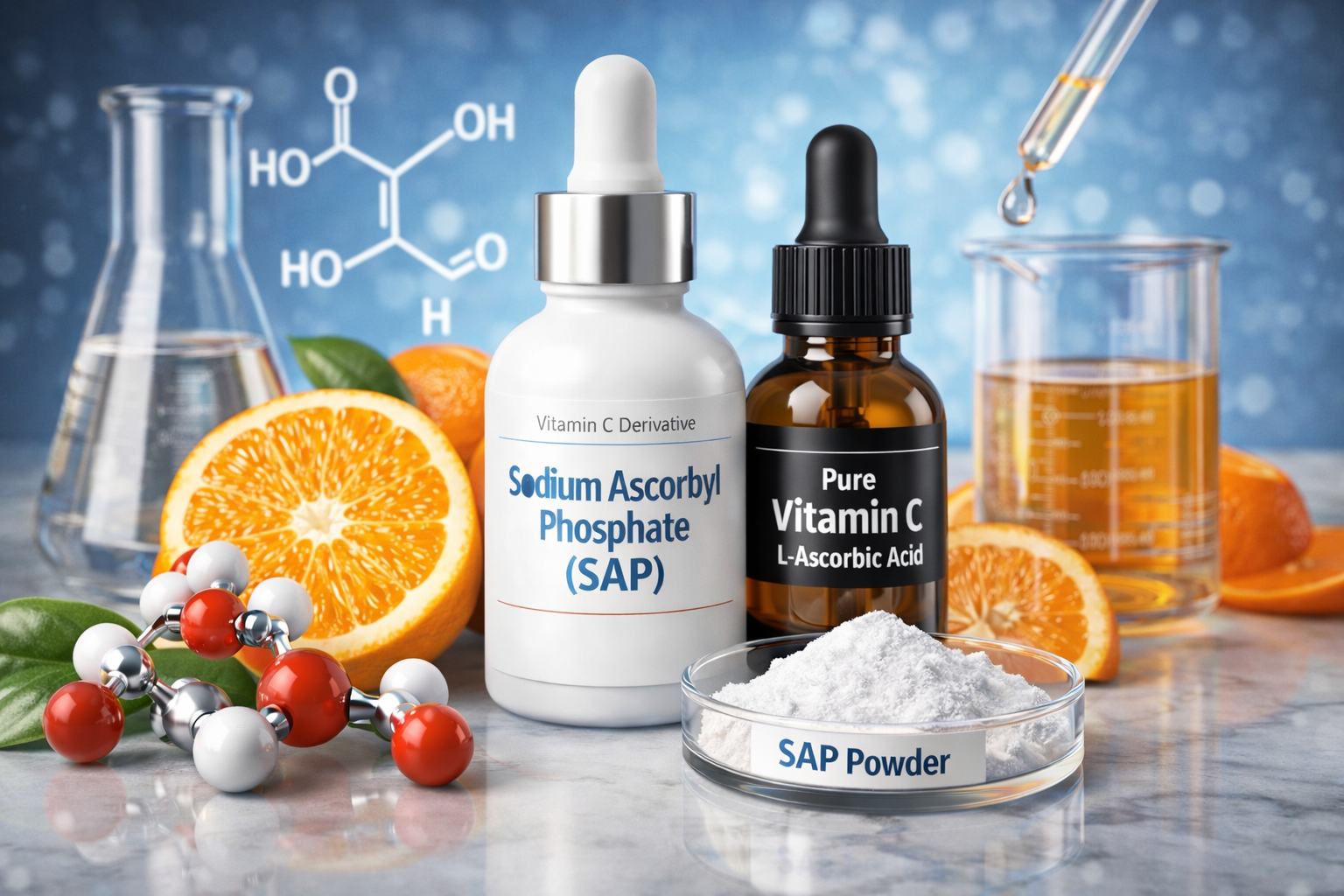
Another key recommendation is choosing the right formulation. Dermatologists often suggest L-ascorbic acid (10%–15%) as the most effective form for visible results, especially for brightening and reducing dark spots. However, if you have sensitive skin, gentler derivatives like sodium ascorbyl phosphate or magnesium ascorbyl phosphate may be better suited. Pairing vitamin C with Vitamin E and ferulic acid can significantly boost its stability and effectiveness, making your serum work harder without increasing irritation.
Storage also matters more than most people realize. Vitamin C is highly unstable and can degrade when exposed to light and air. Dermatologists advise storing your serum in a cool, dark place and always choosing products in opaque or amber bottles. Finally, consistency is everything—using vitamin C daily for at least 4–8 weeks is necessary to see noticeable improvements in skin tone, texture, and radiance.
⚠️ Common Mistakes People Make
A lot of people invest in expensive vitamin C serums but still don’t see results and the reason often comes down to simple mistakes. One of the biggest errors is using a too high concentration too soon. Many beginners jump straight to 20% formulas, which can lead to irritation, redness, and breakouts. Instead, starting with a moderate concentration allows your skin to adapt and actually benefit from the ingredient.
Another common mistake is skipping sunscreen. This completely defeats the purpose of using vitamin C, since its main role is to protect against environmental damage. Without SPF, your skin is still exposed to harmful UV rays, which can worsen pigmentation and aging signs. It’s like installing a security system but leaving your front door open.
People also often ignore the expiration signs of their serum. If your vitamin C turns dark yellow or brown, it has oxidized and is no longer effective. Using it at this stage may even irritate your skin. Additionally, mixing vitamin C incorrectly with strong actives like exfoliating acids or retinol can cause sensitivity and reduce its effectiveness.
Finally, inconsistency is a silent mistake. Using vitamin C occasionally won’t deliver results you need a daily routine to truly achieve glowing skin.
🚫 Who Should NOT Use Vitamin C Serum?
While vitamin C is generally safe and beneficial for most skin types, it’s not suitable for everyone. People with extremely sensitive skin or conditions like rosacea may experience irritation, especially with strong formulations of L-ascorbic acid. In such cases, it’s better to either avoid it or switch to milder antioxidant alternatives.
Those who are currently undergoing strong dermatological treatments, such as prescription retinoids, chemical peels, or isotretinoin therapy, should also be cautious. Adding vitamin C on top of these treatments can overwhelm the skin and lead to redness, dryness, or peeling. It’s always wise to consult a dermatologist before combining active ingredients.
If your skin barrier is already damaged showing signs like excessive dryness, burning, or inflammation it’s best to pause vitamin C until your skin heals. Applying active ingredients on compromised skin can make the condition worse rather than better.
Lastly, individuals with known allergies to ascorbic acid or related compounds should avoid vitamin C serums entirely. For these users, alternatives like niacinamide, green tea extract, or azelaic acid can offer similar brightening benefits with less risk of irritation.
⚕️ Medical Disclaimer
The information provided in this article is for educational and informational purposes only and is not intended as medical advice, diagnosis, or treatment. While vitamin C serums and skincare products are generally considered safe for most users, individual skin types and conditions can vary significantly.
Always perform a patch test before using any new skincare product to check for potential allergic reactions or irritation. If you have sensitive skin, chronic skin conditions (such as eczema, rosacea, or severe acne), or are currently undergoing dermatological treatments, it is strongly recommended to consult a qualified dermatologist or healthcare professional before incorporating vitamin C or any active ingredients into your routine.
Do not use this information as a substitute for professional medical advice. If you experience persistent irritation, redness, burning, or adverse reactions, discontinue use immediately and seek medical guidance.
Results mentioned in this content may vary from person to person depending on factors such as skin type, lifestyle, product formulation, and consistency of use. Always follow product instructions and use skincare products responsibly.
Final Thoughts
Vitamin C serums are one of the smartest skincare investments you can make but only if chosen correctly. Expensive does not always mean better, and cheap does not always mean weak. The real secret lies in stable formulation, correct concentration, and consistent use. When used properly, even a budget serum can outperform luxury products and deliver visible glow within weeks.
FAQs
1. What is the best vitamin C serum for glowing skin?
The best vitamin C serum for glowing skin contains 10–15% L-ascorbic acid, combined with ingredients like Vitamin E and ferulic acid for maximum effectiveness. Look for stable formulations in dark bottles to ensure potency and visible results.
2. How long does vitamin C serum take to work?
Most users start noticing brighter skin within 2–4 weeks, while significant improvements in dark spots and skin tone appear after 6–8 weeks of consistent daily use.
3. Can I use vitamin C serum every day?
Yes, vitamin C serum can be used daily, preferably in the morning. Regular use helps protect the skin from environmental damage and improves overall skin radiance.
4. Should I use vitamin C serum in the morning or night?
Vitamin C serum works best in the morning because it protects your skin from UV rays and pollution when paired with sunscreen.
5. What percentage of vitamin C is best for beginners?
Beginners should start with 10% to 15% vitamin C to avoid irritation while still getting effective brightening results.
6. Can vitamin C serum remove dark spots?
Yes, vitamin C helps reduce hyperpigmentation and dark spots by inhibiting melanin production, leading to a more even skin tone over time.
7. Is vitamin C serum good for acne scars?
Vitamin C serum can help fade post-acne marks and scars by promoting skin repair and boosting collagen production.
8. Can I use vitamin C serum with hyaluronic acid?
Yes, combining vitamin C with hyaluronic acid is highly recommended as it hydrates the skin and reduces potential irritation.
9. Can vitamin C be used with retinol?
Yes, but not at the same time. Use vitamin C in the morning and retinol at night to avoid irritation and maximize benefits.
10. Why is my vitamin C serum turning brown?
If your serum turns dark yellow or brown, it has oxidized and lost effectiveness. It should be replaced immediately.
11. Is vitamin C serum suitable for oily skin?
Yes, vitamin C serum is suitable for oily skin as it helps control excess oil and improves skin texture without clogging pores.
12. Can sensitive skin use vitamin C serum?
Sensitive skin can use vitamin C, but it’s better to choose lower concentrations or gentler derivatives to minimize irritation.
13. Do I need sunscreen after vitamin C serum?
Yes, applying sunscreen (SPF 30 or higher) after vitamin C is essential to protect your skin and enhance its antioxidant benefits.
14. How do I store vitamin C serum properly?
Store your serum in a cool, dark place and keep the bottle tightly closed to prevent oxidation and maintain effectiveness.
15. Can vitamin C serum make skin glow?
Yes, consistent use of vitamin C serum improves skin brightness, texture, and overall glow, making it one of the best ingredients for radiant skin.
Related posts:
 Vitamin C Brightening Serum – The Ultimate Guide to Radiant, Even-Toned Skin
 10 Powerful Vitamin C Serum Benefits for Brighter, Younger Skin Fast
 Vitamin C Serum: The Ultimate Guide to Brighter, Healthier Skin
 Vitamin C Brightening Serum Complete Formulation | Stable SAP Vitamin C Guide
 Vitamin C Derivative Complete Guide to Benefits, Uses, Safety, and Skincare Science
 Vitamin C, Sodium Ascorbyl Phosphate (SAP): A Complete Skincare Guide