

10 Powerful Vitamin C Serum Benefits for Brighter, Younger Skin Fast
Discover the 10 powerful Vitamin C serum benefits that can transform your skin into a glowing, youthful masterpiece. If you’re struggling with dull skin, dark spots, fine lines, or uneven texture, incorporating a Vitamin C serum for face into your daily skincare routine can deliver fast, visible results. Known as one of the most effective antioxidants in skincare, Vitamin C (ascorbic acid) helps neutralize free radicals, boost collagen production, and protect your skin from environmental damage like pollution and UV rays.
Using a best Vitamin C serum for glowing skin can significantly improve skin brightness and reduce hyperpigmentation, making it a top choice for those searching for skin brightening solutions. Clinical studies and dermatologists recommend Vitamin C serums with concentrations between 10% to 20% for optimal effectiveness. These serums penetrate deep into the skin layers, helping to reduce wrinkles, fade acne scars, and improve skin tone.
One of the biggest advantages of using a Vitamin C serum for hyperpigmentation is its ability to inhibit melanin production, which helps fade dark spots and sun damage over time. Additionally, it strengthens the skin barrier and enhances hydration, making your skin look plump and healthy. If you are dealing with acne prone skin, Vitamin C’s anti inflammatory properties can also help reduce redness and breakouts.
For best results, apply your Vitamin C serum in the morning followed by sunscreen. This combination provides enhanced protection against harmful UV rays and prevents premature aging. Whether you’re aiming for anti-aging skincare, brighter complexion, or smoother texture, Vitamin C serum is a must-have in your routine.
If you want radiant, youthful skin faster, investing in a high quality Vitamin C face serum is one of the smartest skincare decisions you can make today.
Table of Contents
What Is Vitamin C Serum?
How Vitamin C Works on Skin
Imagine your skin as a battlefield. Every day, it’s under attack from pollution, UV rays, and stress. These attackers produce something called free radicals, which damage your skin cells and accelerate aging. This is where Vitamin C serum steps in like a powerful shield.
Vitamin C, also known as ascorbic acid, is a potent antioxidant that neutralizes these harmful free radicals and protects your skin from damage. According to dermatological research, topical vitamin C can help reduce wrinkles, improve skin texture, and protect against environmental damage . It also plays a crucial role in collagen synthesis, which is the protein responsible for keeping your skin firm and youthful .
But here’s the interesting part your body doesn’t naturally produce Vitamin C. That means your skin relies on external sources like skincare products to get these benefits. When applied topically, Vitamin C penetrates the skin layers and starts working at a cellular level, repairing damage and boosting overall skin health.
Why Serums Are the Most Effective Form
You might wonder, why not just use a cream or moisturizer? The answer lies in concentration and absorption. Serums are lightweight, fast-absorbing, and packed with a high concentration of active ingredients. This allows Vitamin C to penetrate deeper into the skin compared to creams.
Studies suggest that Vitamin C serums with concentrations between 10% to 20% are most effective for visible results . Their low pH formulation enhances absorption, ensuring your skin gets maximum benefits.
Why Vitamin C Is a Skincare Superstar
Dermatologist Insights and Scientific Backing
If skincare had a “celebrity ingredient,” Vitamin C would definitely top the list. Dermatologists worldwide recommend it because it addresses multiple skin concerns at once from aging to pigmentation.
Experts highlight that Vitamin C can improve skin tone, reduce sun damage, and boost collagen production, making it a must have in daily skincare routines . Clinical studies also show that consistent use for at least 3 months can significantly improve wrinkles and overall skin appearance .
Think of it as a multitasking powerhouse one product doing the job of several.
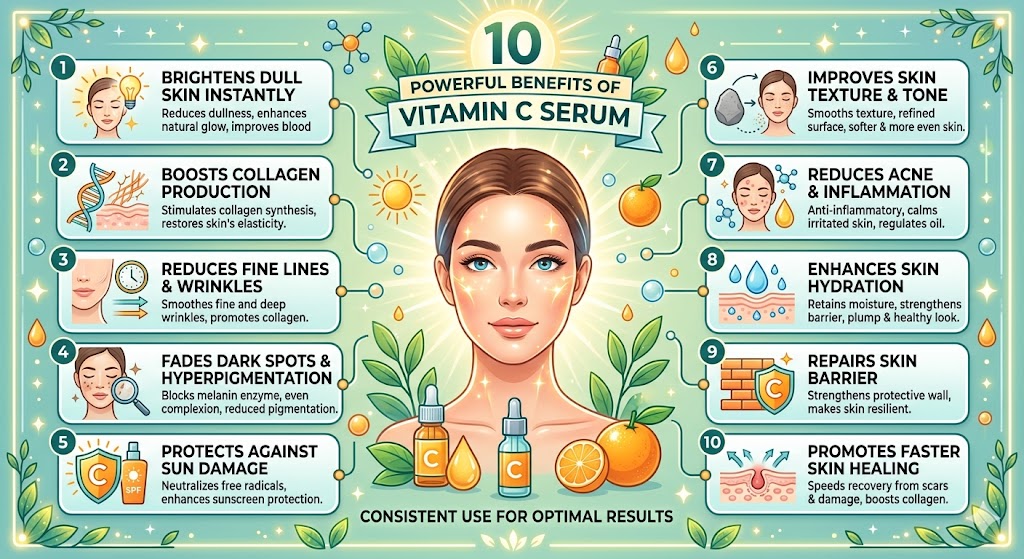
10 Powerful Benefits of Vitamin C Serum
1. Brightens Dull Skin Instantly
Ever looked in the mirror and felt like your skin looks tired or lifeless? Vitamin C serum works like a natural spotlight. It reduces dullness and enhances your skin’s natural glow by improving blood circulation and cell turnover.
By inhibiting melanin production, it helps your skin appear brighter and more radiant over time. This is why many people notice a visible glow within just a few weeks of consistent use.
2. Boosts Collagen Production
Collagen is what keeps your skin firm, plump, and youthful. As you age, collagen production naturally decreases, leading to sagging skin. Vitamin C stimulates collagen synthesis, helping restore your skin’s elasticity.
Research confirms that Vitamin C increases collagen formation and stabilizes collagen fibers, reducing signs of aging . Think of it as giving your skin a structural upgrade.
3. Reduces Fine Lines and Wrinkles
Fine lines are often the first sign of aging. Vitamin C helps smooth them out by promoting collagen and protecting against oxidative stress.
Clinical studies show that regular use of Vitamin C can significantly improve both fine and deep wrinkles, making your skin look smoother and younger .
4. Fades Dark Spots and Hyperpigmentation
Dark spots, acne scars, and uneven skin tone can be frustrating. Vitamin C tackles this by blocking the enzyme responsible for melanin production.
Over time, this leads to a more even complexion and visibly reduced pigmentation. Many users report clearer, brighter skin within weeks.
5. Protects Against Sun Damage
Let’s be clear Vitamin C is not a sunscreen. But it works alongside sunscreen to enhance protection.
It neutralizes free radicals generated by UV exposure and reduces long term damage. Studies show that combining Vitamin C with sunscreen provides better protection against harmful UV rays .
6. Improves Skin Texture and Tone
Rough skin? Uneven texture? Vitamin C helps smooth things out by accelerating cell turnover.
It refines your skin’s surface, making it softer and more even. Over time, your skin feels as good as it looks.
7. Reduces Acne and Inflammation
Vitamin C has anti inflammatory properties that help calm irritated skin. It also regulates oil production, which can reduce acne breakouts.
Clinical findings suggest that Vitamin C can reduce acne lesions and redness when used consistently .
8. Enhances Skin Hydration
While Vitamin C isn’t a moisturizer, it helps your skin retain moisture by strengthening its barrier.
This leads to softer, more hydrated skin that looks plump and healthy.
9. Repairs Skin Barrier
Your skin barrier is like a protective wall. When it’s damaged, your skin becomes sensitive and prone to issues.
Vitamin C helps repair and strengthen this barrier, making your skin more resilient against environmental stressors.
10. Promotes Faster Skin Healing
Got acne scars or minor skin damage? Vitamin C speeds up the healing process by boosting collagen and cell regeneration.
It’s like giving your skin a fast forward button for recovery.
How to Use Vitamin C Serum for Best Results
Step-by-Step Routine
Using Vitamin C serum correctly can make all the difference. Here’s a simple routine:
- Cleanse your face thoroughly
- Apply a few drops of Vitamin C serum
- Gently pat into the skin
- Follow with moisturizer
- Apply sunscreen (morning routine)
Consistency is key. Daily use delivers the best results.
Best Time to Apply
Dermatologists recommend using Vitamin C in the morning. Why? Because it helps protect your skin from daily environmental damage.
Before & After Using Vitamin C Serum (Complete Usage Guide)
Before Using Vitamin C Serum (What to Expect Initially)
Before introducing a Vitamin C serum for face into your skincare routine, your skin may show common concerns like dullness, uneven tone, dark spots, or early signs of aging such as fine lines. Many people also experience rough texture, lack of radiance, or acne marks that seem stubborn and slow to fade. This is completely normal, especially if your skin has been exposed to pollution, UV damage, or inconsistent skincare habits.
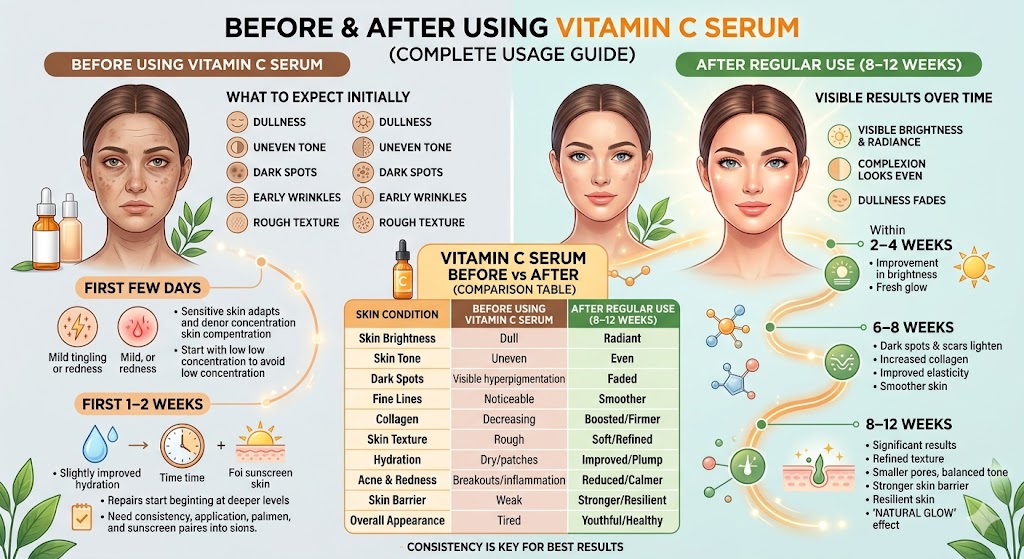
When you start using a Vitamin C serum for glowing skin, your skin may take some time to adjust. In the first few days, some individuals especially those with sensitive skin might notice mild tingling or slight redness. This is usually temporary and part of the skin adapting to active ingredients like ascorbic acid. Dermatologists recommend starting with a lower concentration and gradually increasing usage to avoid irritation.
It’s also important to understand that Vitamin C is not an overnight miracle. Many users expect instant transformation, but in reality, skincare works progressively. During the first 1–2 weeks, changes may be subtle, such as slightly improved hydration or a faint glow. This early phase is crucial because your skin is beginning to repair itself at a deeper level.
Consistency, proper application, and pairing with sunscreen are essential during this stage. Without these, you may not see the full benefits. Think of this phase as laying the foundation for brighter, healthier skin.
After Using Vitamin C Serum (Visible Results Over Time)
With consistent use of a best Vitamin C serum, the transformation becomes noticeable and rewarding. Within 2–4 weeks, most users report a visible improvement in skin brightness and radiance. Your complexion starts to look more even, and dullness gradually fades, giving your skin a fresh, healthy glow.
After 6–8 weeks, deeper benefits begin to appear. Dark spots, acne scars, and hyperpigmentation start to lighten as Vitamin C inhibits melanin production. At the same time, collagen production increases, which helps reduce the appearance of fine lines and improves skin elasticity. Your skin feels smoother, firmer, and more youthful.
By the 8–12 week mark, the results are significantly more pronounced. Skin texture becomes refined, pores may appear smaller, and overall tone looks more balanced. With continued use, Vitamin C also strengthens your skin barrier, making it more resilient against environmental stressors like pollution and UV rays.
One of the most noticeable long term benefits is the “natural glow” effect your skin looks brighter without makeup. This is why Vitamin C is often considered a must have in anti-aging skincare routines.
Vitamin C Serum Before vs After (Comparison Table)
| Skin Condition | Before Using Vitamin C Serum | After Regular Use (8–12 Weeks) |
|---|---|---|
| Skin Brightness | Dull, tired looking skin | Radiant, glowing complexion |
| Skin Tone | Uneven tone, discoloration | Even, balanced skin tone |
| Dark Spots | Visible hyperpigmentation, acne scars | Faded dark spots and reduced pigmentation |
| Fine Lines & Wrinkles | Noticeable fine lines and early wrinkles | Smoother skin with reduced lines |
| Collagen Levels | Decreasing with age | Boosted collagen, firmer skin |
| Skin Texture | Rough, uneven surface | Soft, smooth, refined texture |
| Hydration Level | Dry or dehydrated patches | Improved moisture retention and plumpness |
| Acne & Redness | Frequent breakouts and inflammation | Reduced acne and calmer skin |
| Skin Barrier Strength | Weak, sensitive to environmental damage | Stronger, more resilient barrier |
| Overall Appearance | Tired, aging, lack of glow | Youthful, healthy, and vibrant look |
Dermatologist Tips for Using Vitamin C Serum
Dermatologists consistently recommend Vitamin C serum as a cornerstone of an effective skincare routine but only when used correctly. One of the most important tips is to apply your serum on clean, dry skin. This allows better absorption and ensures the active ingredient penetrates deeply into the skin layers where it can stimulate collagen and fight free radicals effectively.
Another expert backed tip is to use Vitamin C in the morning routine. Why? Because it acts as an antioxidant shield, protecting your skin from pollution and UV damage throughout the day. However, dermatologists stress that Vitamin C is not a substitute for sunscreen, so always follow with a broad spectrum SPF 30 or higher.
Choosing the right formulation also matters. Experts suggest opting for L-ascorbic acid with a concentration between 10%–20%, as this range provides visible results without causing excessive irritation. If you have sensitive skin, starting with a lower concentration (around 10%) is safer.
Storage is another often overlooked factor. Vitamin C is highly unstable and can oxidize when exposed to light and air. Dermatologists recommend using products in dark, airtight bottles and storing them in a cool place to maintain effectiveness.
Finally, consistency is key. Dermatologists emphasize that visible improvements in skin tone, brightness, and fine lines typically appear after 4–12 weeks of regular use. Skipping days or inconsistent application can delay results significantly.
Common Mistakes to Avoid When Using Vitamin C Serum
Even though Vitamin C serum is powerful, many people unknowingly reduce its effectiveness by making simple mistakes. One of the biggest errors is using too much product. A few drops are enough overapplying won’t speed up results and may actually irritate your skin.
Another common mistake is mixing Vitamin C with incompatible ingredients, such as benzoyl peroxide or strong exfoliating acids (like AHAs/BHAs) at the same time. These combinations can either neutralize the Vitamin C or cause irritation, reducing its benefits.
Many users also apply Vitamin C on wet or damp skin, which can dilute the formula and affect absorption. Always ensure your skin is completely dry before applying the serum for maximum potency.
Ignoring oxidation is another critical mistake. If your serum turns dark yellow or brown, it has likely oxidized and lost its effectiveness. Continuing to use it won’t deliver results and may even harm your skin.
Skipping sunscreen is perhaps the most damaging mistake. While Vitamin C helps protect against environmental damage, it cannot replace SPF. Without sunscreen, your skin remains vulnerable to UV damage, which can undo the benefits of the serum.
Lastly, inconsistency is a silent problem. Many people expect overnight results and stop using the serum too soon. Vitamin C works gradually, so regular use is essential for long term improvements.
Who Should NOT Use Vitamin C Serum?
While Vitamin C serum is generally safe and effective, it’s not suitable for everyone. Individuals with extremely sensitive or reactive skin may experience irritation, redness, or a burning sensation especially when using high concentrations (above 15%). In such cases, it’s better to start with milder alternatives or consult a dermatologist.
People with certain skin conditions like rosacea or eczema should be cautious. Vitamin C can sometimes trigger flare ups due to its acidic nature. A patch test is highly recommended before full application.
Those who are already using strong active ingredients like retinoids, chemical peels, or prescription acne treatments should avoid layering Vitamin C at the same time, as this can overload the skin and cause irritation. Dermatologists often suggest alternating usage (for example, Vitamin C in the morning and retinol at night).
If you have recently undergone skin treatments such as laser therapy, microneedling, or chemical peels, your skin may be too sensitive for Vitamin C. It’s best to wait until your skin fully heals before reintroducing it.
Additionally, individuals who notice consistent irritation even after adjusting concentration or frequency should discontinue use and seek professional advice. Skincare should improve your skin, not stress it.
Pregnant or breastfeeding individuals can generally use Vitamin C safely, but it’s always wise to consult a healthcare professional before introducing new active ingredients into your routine.
Choosing the Right Vitamin C Serum
Ideal Concentration and Ingredients
Not all serums are created equal. Look for:
- 10%–20% Vitamin C concentration
- L-ascorbic acid (most effective form)
- Added antioxidants like Vitamin E or ferulic acid
These combinations enhance stability and effectiveness.
Medical Disclaimer
The information provided on this website, including content related to Vitamin C serum benefits, skincare routines, and product recommendations, is intended for educational and informational purposes only. It is not intended to replace professional medical advice, diagnosis, or treatment.
While we strive to provide accurate, up to date, and research based information, skincare results can vary from person to person depending on individual skin type, health conditions, and lifestyle factors. You should always consult a qualified dermatologist or healthcare professional before starting any new skincare product, especially if you have sensitive skin, allergies, or existing skin conditions such as acne, eczema, or rosacea.
The use of any products or information provided on this site is at your own risk. We do not guarantee specific results, including improvements in skin tone, reduction of wrinkles, or treatment of hyperpigmentation. If you experience irritation, redness, or discomfort while using a product, discontinue use immediately and seek medical advice.
Additionally, any statements regarding skincare ingredients, including Vitamin C (ascorbic acid), have not been evaluated for medical treatment purposes and are not intended to diagnose, treat, cure, or prevent any disease.
By using this website, you acknowledge that you are responsible for your own skincare decisions and agree that the website owners and content creators are not liable for any adverse effects or consequences resulting from the use of the information provided.
Potential Side Effects and Precautions
Vitamin C is generally safe, but some people may experience mild irritation, especially with higher concentrations.
Start with a lower concentration if you have sensitive skin, and always do a patch test. Also, avoid mixing it with strong acids or benzoyl peroxide to prevent irritation.
Conclusion
Vitamin C serum isn’t just another skincare trend it’s a scientifically backed powerhouse that delivers real results. From brightening your complexion to reducing wrinkles and protecting against damage, it offers a complete solution for healthier, younger-looking skin.
The key is consistency and choosing the right formulation. With regular use, you’re not just improving your skin you’re investing in its future.
FAQs
1. What does Vitamin C serum do for your skin?
Vitamin C serum helps brighten skin, reduce dark spots, boost collagen production, and protect against environmental damage. It is a powerful antioxidant that improves overall skin tone and texture.
2. How long does Vitamin C serum take to work?
Most people notice a visible glow within 2–4 weeks, while improvements in dark spots and fine lines typically appear after 6–12 weeks of consistent use.
3. Can I use Vitamin C serum every day?
Yes, Vitamin C serum is safe for daily use, preferably once a day in the morning for maximum protection against pollution and UV damage.
4. What is the best time to apply Vitamin C serum?
The best time to use Vitamin C serum is in the morning after cleansing and before moisturizer and sunscreen.
5. Can Vitamin C serum remove dark spots?
Yes, Vitamin C serum helps fade dark spots and hyperpigmentation by reducing melanin production, resulting in a more even skin tone over time.
6. Is Vitamin C serum good for acne-prone skin?
Yes, it has anti-inflammatory properties that help reduce redness and acne marks, while also supporting skin healing.
7. What percentage of Vitamin C serum is best?
Dermatologists recommend a concentration between 10% and 20% for effective results without causing irritation.
8. Can I use Vitamin C serum at night?
Yes, you can use it at night, but morning use is more beneficial because it protects your skin from daily environmental stressors.
9. Should I apply moisturizer after Vitamin C serum?
Yes, always follow Vitamin C serum with a moisturizer to lock in hydration and improve absorption.
10. Can I use Vitamin C serum with other skincare products?
Yes, but avoid mixing it with benzoyl peroxide or strong acids at the same time, as they can reduce effectiveness or cause irritation.
11. Is Vitamin C serum suitable for all skin types?
Vitamin C serum is suitable for most skin types, but those with sensitive skin should start with a lower concentration to avoid irritation.
12. How do I know if my Vitamin C serum is oxidized?
If your serum turns dark yellow or brown, it has oxidized and may no longer be effective. It’s best to replace it.
13. Can Vitamin C serum reduce wrinkles?
Yes, it helps boost collagen production, which reduces fine lines and wrinkles, making skin look firmer and younger.
14. Do I need sunscreen when using Vitamin C serum?
Yes, always use sunscreen after Vitamin C serum to protect your skin from UV damage and enhance its benefits.
15. What happens if I stop using Vitamin C serum?
If you stop using it, your skin may gradually lose its brightness, protection, and anti-aging benefits over time.
Related posts:
 Vitamin C Serum: The Ultimate Guide to Brighter, Healthier Skin
 Vitamin C Derivative Complete Guide to Benefits, Uses, Safety, and Skincare Science
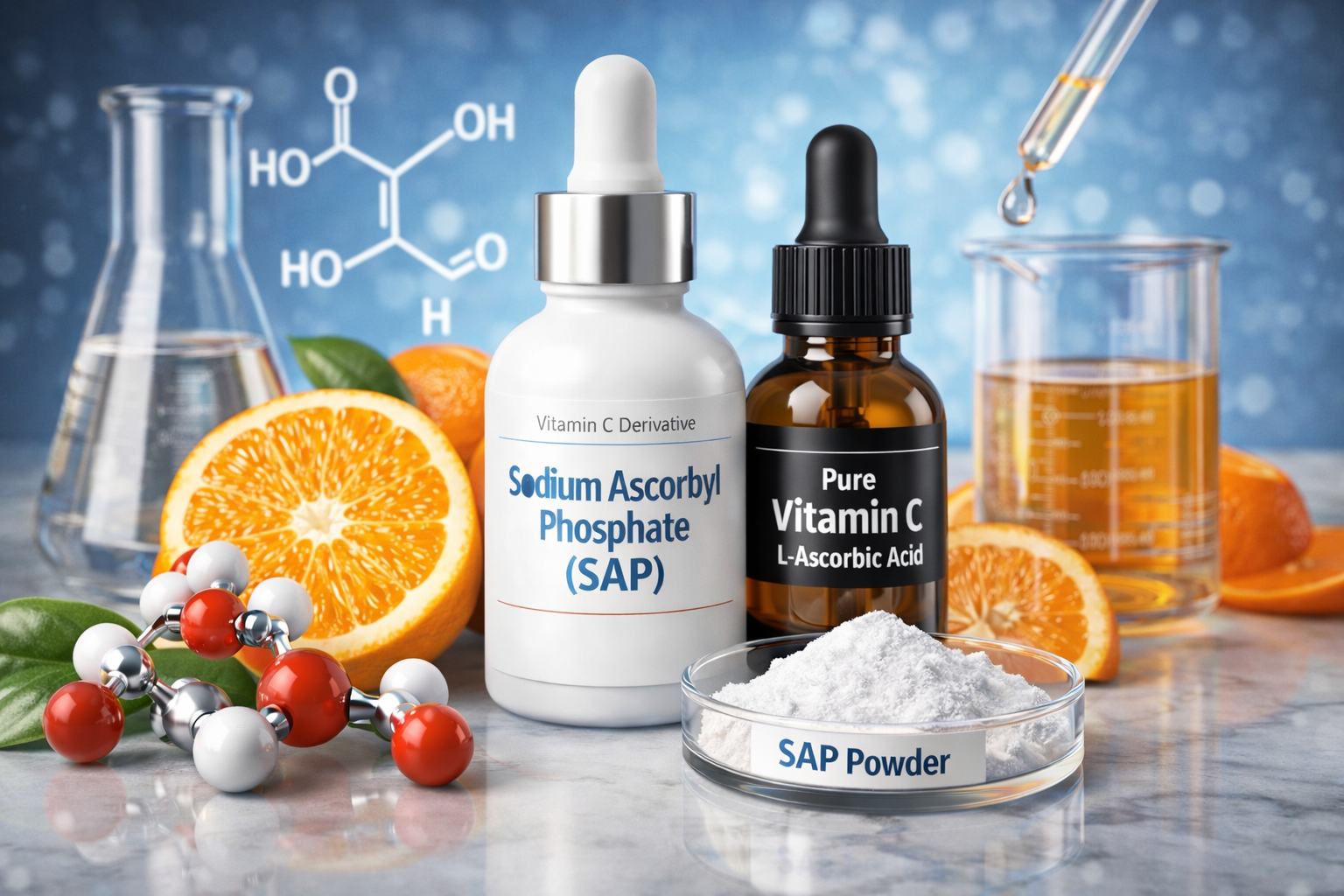 Vitamin C, Sodium Ascorbyl Phosphate (SAP): A Complete Skincare Guide
 Vitamin C Face Wash – Complete Product Formulation
 Glutathione Glow Serum – The Ultimate Guide to Radiant, Even-Toned Skin
 Vitamin C Face Wash: The Ultimate Guide to Bright, Clean, and Glowing Skin