Vitamin C Derivative: Complete Guide to Benefits, Uses, Safety, and Skincare Science
Looking for the best vitamin C derivative for glowing skin? This complete guide breaks down everything you need to know about vitamin C derivatives in skincare, including their benefits, uses, safety, and the science behind how they work. Unlike traditional L-ascorbic acid, vitamin C derivatives are more stable, less irritating, and perfect for daily skincare routines especially for sensitive, acne prone, and dry skin types.
In this in-depth guide, you’ll discover the most popular and effective forms like Sodium Ascorbyl Phosphate (SAP), Magnesium Ascorbyl Phosphate (MAP), Ascorbyl Glucoside, and Tetrahexyldecyl Ascorbate (THD). These advanced ingredients are widely used in modern formulations due to their ability to brighten skin, reduce hyperpigmentation, boost collagen production, and fight signs of aging.
If you’re struggling with dark spots, uneven skin tone, dull complexion, or acne scars, vitamin C derivatives can be a game changer. They work by inhibiting melanin production and neutralizing free radicals, making them essential for achieving radiant, youthful, and healthy skin. Plus, they are more stable in formulations, meaning your serum stays effective longer even in hot climates.
This guide also explains how to choose the right derivative based on your skin type, how to incorporate it into your routine, and common mistakes to avoid. Whether you’re a skincare beginner or building your own beauty brand, understanding vitamin C derivatives will help you create or select high performance products that deliver real results.
👉 Learn how to:
- Choose the best vitamin C serum for your skin type
- Understand the difference between vitamin C vs derivatives
- Use vitamin C safely with other actives like niacinamide and retinol
- Maximize results for brightening, anti aging, and acne control
If you want clear, glowing, and youthful skin, this is your ultimate guide to vitamin C skincare science.
Table of Contents
What Is a Vitamin C Derivative?
Vitamin C derivatives are modified forms of ascorbic acid (pure vitamin C) that are designed to be more stable, less irritating, and easier to use in skincare formulations. If you’ve ever used a vitamin C serum that turned brown quickly or caused tingling, you’ve already experienced the downside of pure vitamin C. That’s exactly where derivatives come in they act like a “smarter delivery system” for the same benefits.
In simple terms, a vitamin C derivative is like a time-release capsule. Instead of hitting your skin all at once, it slowly converts into active vitamin C after absorption. This makes it more suitable for daily use, especially for beginners or sensitive skin types. According to recent cosmetic research, derivatives are specifically engineered to improve stability, absorption, and compatibility with the skin barrier, solving the biggest problems associated with traditional vitamin C formulations .
What makes them even more interesting is their diversity. There isn’t just one derivative there are multiple types, each with unique properties. Some are water soluble and lightweight, while others are oil soluble and penetrate deeper into the skin. This flexibility allows skincare brands and even formulators like you to tailor products based on specific skin concerns.
Difference Between Pure Vitamin C and Derivatives
Pure vitamin C, also known as L-ascorbic acid, is considered the gold standard in skincare. It works immediately and is highly effective at brightening skin, boosting collagen, and reducing pigmentation. However, it comes with serious limitations it is extremely unstable, oxidizes quickly when exposed to air or light, and requires a very low pH (around 2.5–3.5), which can irritate sensitive skin .
On the other hand, vitamin C derivatives are more stable and can function at a skin friendly pH (around 5–7). They don’t oxidize as quickly and are less likely to cause irritation. The trade off? They work slightly slower because they need to convert into active vitamin C inside the skin.
Think of it like this:
- Pure Vitamin C = Fast but fragile
- Derivatives = Stable but gradual
Both have their place it all depends on your skin goals and tolerance level.
Why Derivatives Are Used in Skincare
There’s a practical reason why modern skincare heavily relies on derivatives. Stability is everything. A product that degrades before you even finish the bottle is basically wasted money. Studies show that pure vitamin C can lose effectiveness quickly due to oxidation, especially in hot climates like Pakistan, where storage conditions aren’t always ideal.
Derivatives solve this by offering:
- Longer shelf life
- Better compatibility with other ingredients
- Reduced irritation risk
- Flexible formulation options
For brands like yours (Kmatee or HaiderGlow), this is critical. Using stable derivatives means your product remains effective from the first drop to the last something customers truly notice.
Types of Vitamin C Derivatives Explained
Water-Soluble Derivatives
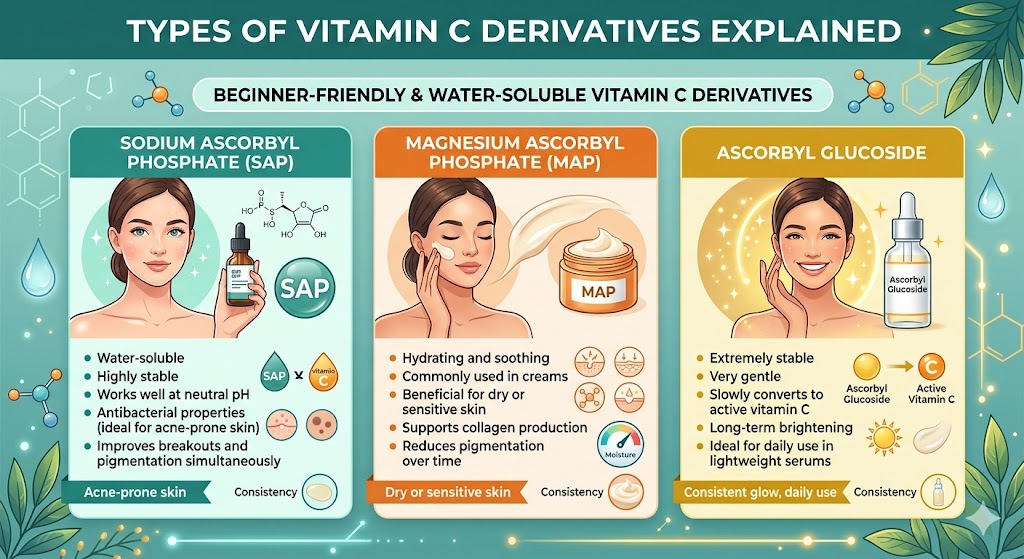
Sodium Ascorbyl Phosphate (SAP)
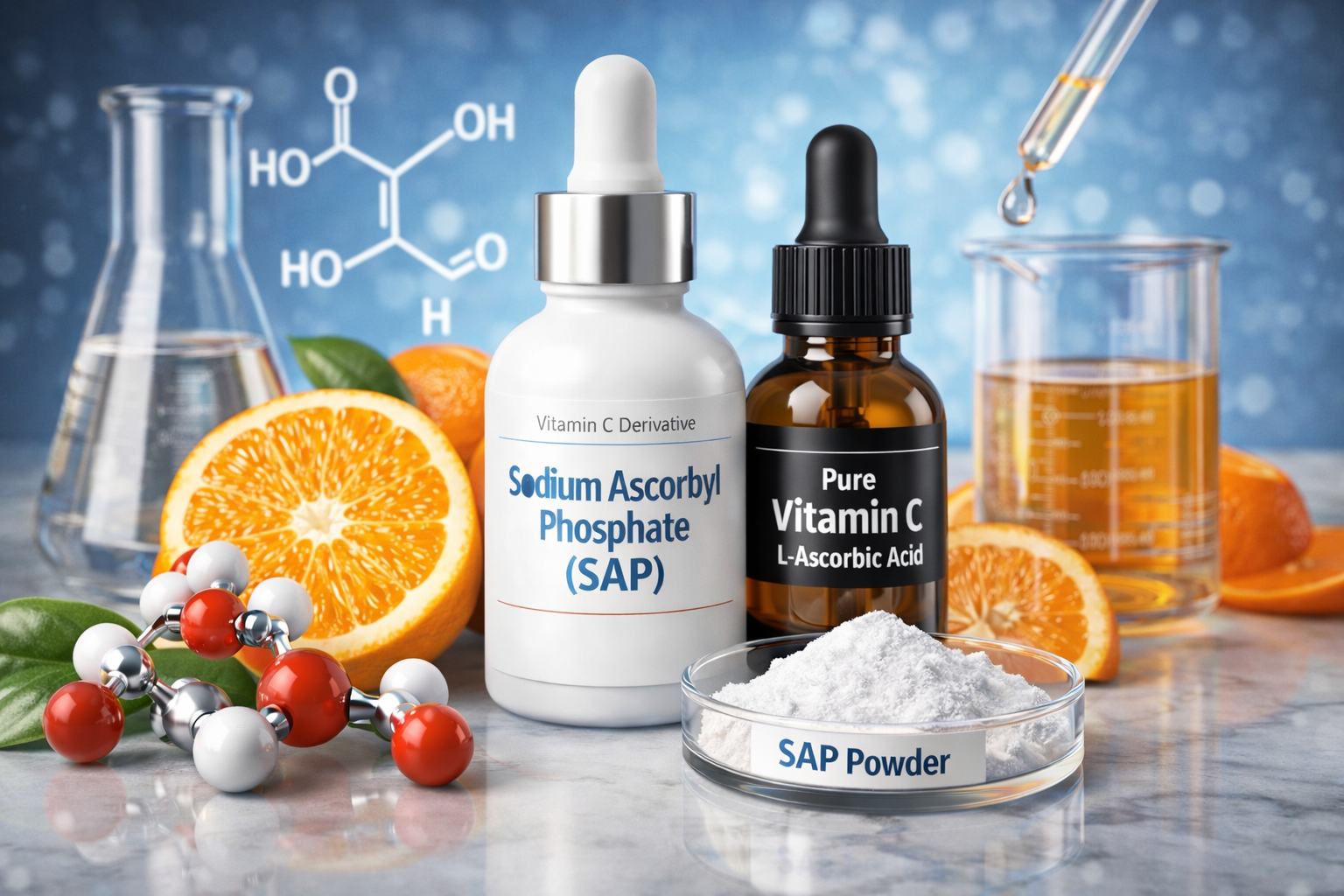
SAP is one of the most beginner friendly vitamin C derivatives. It’s water soluble, highly stable, and works well at a neutral pH. Interestingly, it also has antibacterial properties, making it ideal for acne prone skin. Research suggests that SAP can help improve both breakouts and pigmentation simultaneously, which is a rare combination in skincare .
Magnesium Ascorbyl Phosphate (MAP)
MAP is known for its hydrating and soothing properties. It’s commonly used in creams rather than serums and is particularly beneficial for dry or sensitive skin. Studies show that MAP supports collagen production while improving hydration and reducing pigmentation over time .
Ascorbyl Glucoside
This derivative is extremely stable and gentle. It slowly converts into active vitamin C, providing long-term brightening effects. It’s ideal for daily use and works well in lightweight serums. If you want consistent glow without irritation, this is one of the best options.
Oil-Soluble Derivatives
Tetrahexyldecyl Ascorbate (THD/ATIP)
This is a premium, oil-soluble derivative that penetrates deeper into the skin’s lipid layers. It’s highly stable and effective for anti aging and pigmentation. Because of its deep penetration, it supports collagen production more efficiently over time.
Ascorbyl Palmitate
This derivative is less commonly used in high end formulations due to mixed stability results. While it is oil soluble and penetrates the skin, its effectiveness depends heavily on the overall formulation.
Advanced Derivatives
Ethyl Ascorbic Acid
Ethyl ascorbic acid is considered a hybrid it combines stability with relatively fast results. It works at a broader pH range and is suitable for most skin types. Many modern formulations prefer this derivative because it balances performance and comfort.
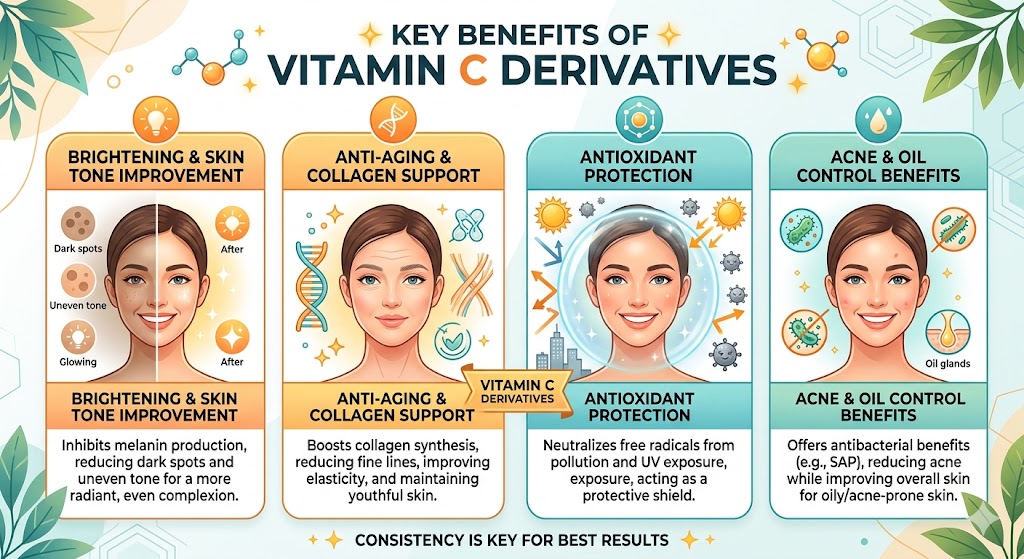
Key Benefits of Vitamin C Derivatives
Brightening and Skin Tone Improvement
One of the most loved benefits of vitamin C derivatives is their ability to brighten the skin. They work by inhibiting melanin production, which helps reduce dark spots and uneven tone. Over time, this leads to a more radiant and even complexion.
Anti-Aging and Collagen Support
Vitamin C plays a crucial role in collagen synthesis. By supporting collagen production, derivatives help reduce fine lines, improve elasticity, and maintain youthful skin. This is why dermatologists often recommend vitamin C as part of an anti aging routine.
Antioxidant Protection
Environmental damage from pollution and UV exposure leads to free radicals, which accelerate aging. Vitamin C derivatives neutralize these free radicals, acting as a protective shield for your skin.
Acne and Oil Control Benefits
Some derivatives like SAP offer antibacterial benefits, helping reduce acne while also improving skin tone. This dual action makes them highly valuable for oily and acne prone skin types.
How Vitamin C Derivatives Work (Science Explained)
Conversion to Active Vitamin C
Unlike pure vitamin C, derivatives need to be converted into active ascorbic acid once they penetrate the skin. Enzymes in the skin break them down gradually, releasing vitamin C over time. This slow release mechanism ensures longer lasting effects with minimal irritation.
Stability and pH Compatibility
One of the biggest advantages of derivatives is their ability to work at a neutral pH. This makes them more compatible with the skin barrier and reduces the risk of redness or sensitivity.
Vitamin C Derivatives vs L-Ascorbic Acid
| Feature | L-Ascorbic Acid | Vitamin C Derivatives |
|---|---|---|
| Stability | Low | High |
| Irritation Risk | High | Low |
| Speed of Results | Fast | Gradual |
| pH Requirement | Low (acidic) | Neutral |
| Shelf Life | Short | Long |
How to Choose the Right Derivative for Your Skin Type
Choosing the right derivative depends on your skin goals:
- Sensitive skin: MAP or SAP
- Acne-prone skin: SAP
- Dry skin: MAP or THD
- Pigmentation: Ethyl ascorbic acid or THD
- Beginner: Ascorbyl glucoside
How to Use Vitamin C Derivatives in Skincare Routine
Apply vitamin C derivatives in the morning after cleansing and before sunscreen. They work best when layered under SPF because they enhance protection against environmental damage.
✨ Before & After Usage Guide for Vitamin C Derivatives
Using vitamin C derivatives correctly can completely transform your skin but only if you follow the right steps. Think of this as your roadmap from dull, uneven skin to a brighter, smoother, and healthier complexion.
🔹 Before Using Vitamin C Derivatives (Preparation Phase)
Before applying any vitamin C product, your skin needs to be properly prepared. Skipping this step is like painting on a dirty wall the results just won’t be the same.
Start with a gentle cleanser to remove dirt, oil, and impurities. Clean skin allows better absorption of active ingredients. Avoid harsh or stripping cleansers because they can weaken your skin barrier and increase sensitivity.
Next, check your skin condition. If your skin is irritated, inflamed, or damaged, it’s better to delay using vitamin C until your barrier is repaired. Applying actives on compromised skin can lead to redness and discomfort.
Always perform a patch test before full application. Apply a small amount behind your ear or on your wrist and wait 24 hours. This simple step can save you from unexpected reactions.
Also, make sure your product is fresh and properly stored. Even though derivatives are more stable, exposure to heat and sunlight can still reduce effectiveness. A cool, dark place is ideal.
👉 Pro Tip: If you are new, start with 3–4 times per week instead of daily use. Let your skin adjust gradually.
🔹 During Use (Application Phase)
Now comes the most important part how you actually use the product. Proper application determines how well your skin benefits from vitamin C.
Apply vitamin C derivatives in your morning routine after cleansing. Use 2–3 drops of serum and gently spread it across your face. Avoid rubbing aggressively your skin doesn’t need force, it needs care.
Layering matters. After vitamin C:
- Apply a hydrating serum or moisturizer
- Finish with broad spectrum sunscreen (SPF 30+)
This combination boosts protection against UV damage and pollution while locking in hydration.
Be consistent. Skincare isn’t about occasional use it’s about routine. Missing days frequently can delay your results.
👉 Pro Tip: Avoid mixing vitamin C with strong acids or retinol in the same routine unless you’re experienced. Keep things simple for better results.
🔹 After Using (Results Phase)
This is where patience pays off. Vitamin C derivatives don’t work overnight, but with consistent use, the transformation becomes noticeable.
Week 1–2:
Your skin may feel smoother and slightly more hydrated. Some people notice a subtle glow, but major changes are still building beneath the surface.
Week 3–4:
Skin tone starts becoming more even. Minor dark spots and dullness begin to fade. Your complexion looks healthier and more refreshed.
Week 6–8:
This is where real results appear. You’ll notice:
- Brighter, radiant skin
- Reduced hyperpigmentation
- Improved texture
- Fewer visible fine lines
After 8 Weeks:
Consistent users often achieve a clear, glowing, and youthful complexion. Your skin becomes more resilient against environmental damage.
👉 Reality Check: Results vary depending on the derivative type, concentration, and your skin condition but consistency always wins.
📊 Vitamin C Derivatives Comparison Table
| Feature | L-Ascorbic Acid (Pure Vitamin C) | Sodium Ascorbyl Phosphate (SAP) | Magnesium Ascorbyl Phosphate (MAP) | Ascorbyl Glucoside | Tetrahexyldecyl Ascorbate (THD) | Ethyl Ascorbic Acid |
|---|---|---|---|---|---|---|
| Stability | Low (oxidizes quickly) | High | High | Very High | Very High | High |
| Skin Type | Normal/Oily (tolerant skin) | Acne-prone, oily | Dry, sensitive | All skin types | Dry, mature | All skin types |
| Irritation Risk | High | Low | Very Low | Very Low | Low | Low |
| Absorption Speed | Fast | Moderate | Moderate | Slow | Deep penetration | Fast-Moderate |
| Brightening Effect | Strong | Moderate | Moderate | Gradual | Strong | Strong |
| Anti-Aging | High | Moderate | Moderate | Moderate | Very High | High |
| Acne Benefits | Low | High | Low | Low | Moderate | Moderate |
| pH Requirement | Low (acidic) | Neutral | Neutral | Neutral | Flexible | Flexible |
| Shelf Life | Short | Long | Long | Long | Long | Long |
| Best For | Quick results | Acne + brightening | Hydration + glow | Beginners | Anti-aging luxury formulas | Balanced performance |
💡 Quick Summary
- Want fast results? → Go for L-Ascorbic Acid
- Want acne + gentle care? → Choose SAP
- Want hydration + sensitive skin? → Use MAP
- Want beginner-friendly glow? → Try Ascorbyl Glucoside
- Want premium anti-aging? → Pick THD Ascorbate
- Want balanced performance? → Use Ethyl Ascorbic Acid
Safety, Side Effects, and Precautions
Vitamin C derivatives are generally safe for all skin types. However, overuse or combining with strong actives (like retinol or acids) can cause irritation. Always patch test before full application.
👩⚕️ Dermatologist Tips for Using Vitamin C Derivatives
Dermatologists widely recommend vitamin C derivatives because they are more stable and gentler than pure vitamin C, but using them correctly makes a huge difference in results. Think of it like using a powerful tool the way you use it determines whether you get glowing skin or irritation.
One of the most important tips is to apply vitamin C derivatives in the morning routine. Why? Because they work as antioxidants, helping your skin fight environmental stressors like UV rays, pollution, and dust. However, they are not a replacement for sunscreen always follow up with SPF 30 or higher for maximum protection.
Another expert tip is to start with a lower concentration, especially if you are new to vitamin C. Even though derivatives are gentler, your skin still needs time to adjust. Gradually increasing usage allows your skin barrier to stay healthy while still benefiting from the ingredient.
Dermatologists also suggest pairing vitamin C derivatives with supportive ingredients like:
- Vitamin E – enhances antioxidant protection
- Ferulic Acid – improves stability and effectiveness
- Hyaluronic Acid – boosts hydration and reduces dryness
Consistency is key. You won’t see overnight miracles, but with regular use for 4–8 weeks, you’ll notice brighter, smoother, and more even toned skin. Skincare is more like a marathon than a sprint slow and steady wins the glow.
⚠️ Common Mistakes When Using Vitamin C Derivatives
Even though vitamin C derivatives are beginner-friendly, many people unknowingly reduce their effectiveness by making simple mistakes. Avoiding these can dramatically improve your results.
One of the biggest mistakes is expecting instant results. Many users stop using the product too soon because they don’t see changes in a few days. In reality, skin renewal takes time, and vitamin C works gradually at a deeper level.
Another common issue is incorrect layering in the skincare routine. Vitamin C derivatives should typically be applied after cleansing and before heavier creams or oils. Applying them incorrectly can block absorption and reduce their benefits.
Storage is another overlooked factor. While derivatives are more stable than pure vitamin C, they can still degrade when exposed to heat, sunlight, and air. Keeping your serum in a cool, dark place helps maintain its potency.
People also often make the mistake of mixing too many active ingredients at once. Combining vitamin C with strong exfoliating acids or retinol without guidance can lead to irritation, redness, or breakouts. It’s better to keep your routine simple and balanced.
Lastly, skipping sunscreen is a major error. Using vitamin C without SPF is like building protection but leaving the door open. Always seal your routine with sunscreen to protect your results.
🚫 Who Should NOT Use Vitamin C Derivatives?
While vitamin C derivatives are generally safe for most skin types, there are certain situations where caution is necessary. Not everyone’s skin reacts the same way, and understanding your skin condition is essential before adding any active ingredient.
People with extremely sensitive or compromised skin barriers such as those experiencing severe irritation, redness, or conditions like eczema should avoid starting vitamin C immediately. In such cases, the priority should be repairing the skin barrier first with soothing and hydrating products.
Individuals undergoing strong dermatological treatments like chemical peels, laser therapy, or prescription retinoids should also be careful. Adding vitamin C derivatives during these treatments can increase sensitivity and discomfort. It’s best to consult a dermatologist before combining treatments.
Those who have a known allergy to vitamin C formulations (rare but possible) should avoid using these products entirely. A patch test is always recommended before full application to prevent unwanted reactions.
Additionally, if your skin is currently inflamed due to acne flare ups, sunburn, or over exfoliation, it’s better to pause active ingredients including vitamin C until your skin calms down.
Pregnant and breastfeeding individuals can usually use vitamin C derivatives safely, but it’s always wise to consult a healthcare professional for personalized advice.
Results Timeline and What to Expect
Most derivatives show visible results within 4–12 weeks, depending on the type and concentration . Patience is essential here.
Formulation Tips (For Skincare Brands & DIY)
If you’re building your own skincare brand like Kmatee, focus on:
- Stability (airless packaging)
- Correct pH balance
- Combining antioxidants (Vitamin E, Ferulic Acid)
⚕️ Medical Disclaimer
The information provided in this article is intended for educational and informational purposes only and is not meant to substitute professional medical advice, diagnosis, or treatment. While every effort has been made to ensure the accuracy and reliability of the content, skincare results may vary from person to person depending on individual skin type, condition, and sensitivity.
The use of vitamin C derivatives and other skincare ingredients should be based on your personal skin needs. It is strongly recommended to perform a patch test before using any new skincare product to check for possible allergic reactions or irritation.
If you have sensitive skin, underlying skin conditions (such as eczema, rosacea, or dermatitis), or are undergoing dermatological treatments, please consult a qualified dermatologist or healthcare professional before incorporating new active ingredients into your routine.
This content does not claim to cure, treat, or prevent any medical condition. Any product or ingredient mentioned should not be considered a medical prescription. If you experience redness, irritation, swelling, or discomfort after using any skincare product, discontinue use immediately and seek medical advice.
Pregnant or breastfeeding individuals, as well as those with known allergies, should consult a healthcare professional prior to use.
By reading and using this information, you acknowledge that you are doing so at your own discretion and risk.
Conclusion
Vitamin C derivatives are the future of skincare. They solve the biggest problems of traditional vitamin C instability and irritation while still delivering powerful results. Whether you’re a beginner, a skincare enthusiast, or building your own cosmetic brand, understanding these derivatives gives you a serious advantage. Instead of chasing hype, focus on choosing the right form for your skin and consistency will do the rest.
FAQs
1. What are vitamin C derivatives in skincare?
Vitamin C derivatives are modified forms of pure vitamin C (L-ascorbic acid) designed to be more stable, less irritating, and easier to use in skincare products. They convert into active vitamin C after absorption, helping improve skin brightness, collagen production, and overall skin health.
2. Which vitamin C derivative is best for glowing skin?
The best vitamin C derivative for glowing skin depends on your skin type. Ascorbyl Glucoside and Ethyl Ascorbic Acid are excellent for brightening, while Tetrahexyldecyl Ascorbate (THD) is ideal for deeper anti-aging and radiance.
3. Are vitamin C derivatives better than pure vitamin C?
Vitamin C derivatives are not necessarily better, but they are more stable and gentler. Pure vitamin C works faster but can irritate sensitive skin, while derivatives provide gradual results with less risk of irritation.
4. Can vitamin C derivatives be used every day?
Yes, vitamin C derivatives are safe for daily use, especially in the morning. They help protect the skin from environmental damage and improve overall skin tone when used consistently.
5. Do vitamin C derivatives help with dark spots and pigmentation?
Yes, vitamin C derivatives help reduce dark spots and hyperpigmentation by inhibiting melanin production. With regular use, they can visibly brighten skin and even out skin tone over time.
6. How long does it take for vitamin C derivatives to work?
Vitamin C derivatives typically show visible results within 4 to 8 weeks, depending on the formulation, concentration, and individual skin condition. Consistency is key for best results.
7. Can I use vitamin C derivatives with niacinamide?
Yes, vitamin C derivatives can be safely used with niacinamide. This combination enhances brightening, improves skin barrier function, and reduces inflammation without causing irritation.
8. Are vitamin C derivatives suitable for sensitive skin?
Yes, most vitamin C derivatives are suitable for sensitive skin because they are less acidic and more stable than pure vitamin C. Options like Magnesium Ascorbyl Phosphate (MAP) are especially gentle.
9. Should I use vitamin C derivatives in the morning or night?
Vitamin C derivatives are best used in the morning to provide antioxidant protection against UV rays and pollution. Always follow with sunscreen for maximum effectiveness.
10. Can vitamin C derivatives cause breakouts?
Vitamin C derivatives are generally non-comedogenic and safe, but some individuals may experience breakouts due to formulation ingredients or skin sensitivity. Performing a patch test helps prevent this.