

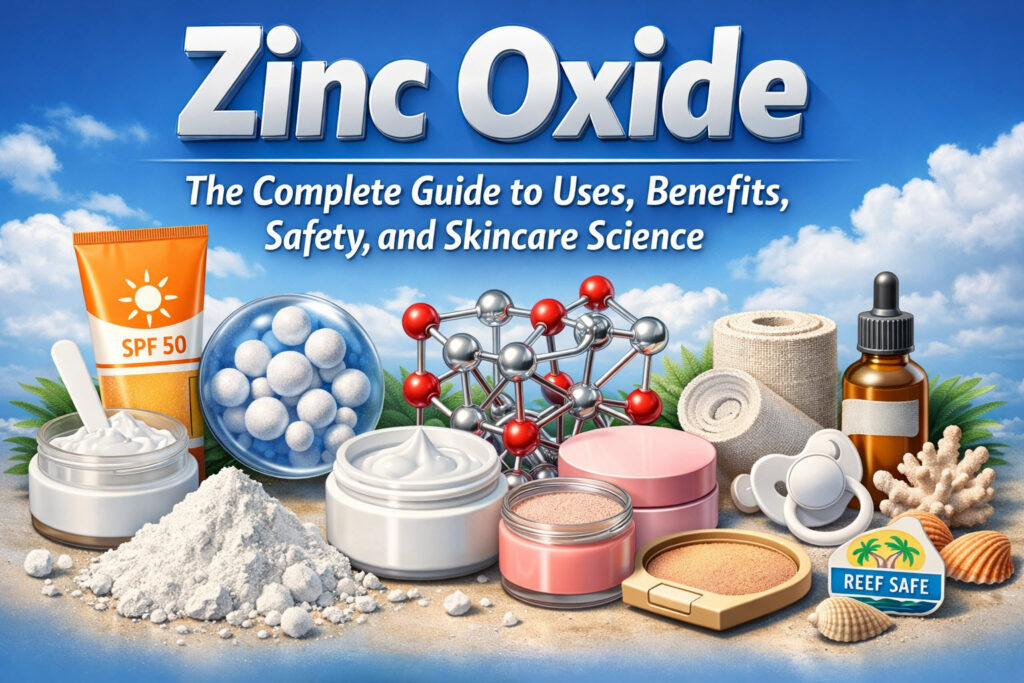
Zinc Oxide – The Complete Guide to Uses, Benefits, Safety, and Skincare Science
Zinc Oxide is a powerful, multi-functional mineral ingredient widely used in skincare, cosmetics, sunscreens, baby care, and medical formulations. Known for its broad-spectrum UV protection, zinc oxide acts as a physical shield that reflects both UVA and UVB rays, making it one of the safest and most effective sun-protective ingredients available today.
Unlike chemical filters, zinc oxide sits on the skin’s surface, providing immediate protection without absorption. Its anti-inflammatory, antibacterial, and soothing properties make it ideal for sensitive, acne-prone, rosacea-affected, and eczema-prone skin. From calming redness and irritation to supporting wound healing and oil control, zinc oxide delivers visible skin benefits without harsh side effects.
In skincare formulations, zinc oxide is commonly found in mineral sunscreens, acne treatments, soothing creams, diaper rash ointments, powders, and foundations. It helps regulate sebum production, reduce breakouts, protect the skin barrier, and prevent environmental damage. Its compatibility with clean beauty, reef-safe, and dermatologist-recommended products has increased its demand across global markets.
Available in nano and non-nano forms, zinc oxide continues to evolve with advanced cosmetic technologies that minimize white cast while maintaining high performance. As consumers shift toward safe, natural, and science-backed skincare, zinc oxide remains a gold-standard ingredient for daily skin protection and long-term skin health.
Table of Contents
Introduction to Zinc Oxide
If skincare ingredients were superheroes, zinc oxide would be the calm, reliable guardian standing quietly between your skin and the outside world. It doesn’t scream for attention, but it works relentlessly behind the scenes. From sunscreens and baby creams to acne treatments and makeup, zinc oxide is everywhere—and for good reason.
Let’s unpack why this simple white powder has earned such a legendary reputation.
What Is Zinc Oxide?
Zinc oxide is an inorganic mineral compound made from zinc and oxygen. Sounds basic, right? But don’t let the simplicity fool you. This compound forms a protective barrier on the skin, reflecting and scattering harmful elements like UV rays, bacteria, and irritants.
Think of it like a tiny shield—one that sits on your skin and says, “Not today.”
Why Zinc Oxide Matters in Daily Life
You might not notice it, but zinc oxide touches your life daily. Sunscreen? Yep. Face powder? Absolutely. Diaper rash cream? Big time. Its versatility and safety make it one of the most trusted ingredients across industries.
The Science Behind Zinc Oxide
Chemical Composition and Structure
Zinc oxide (ZnO) is a crystalline compound known for its stability. It doesn’t break down easily, which is exactly why it’s so effective in long-lasting skin protection.
How Zinc Oxide Works on Skin
Unlike chemical ingredients that absorb into the skin, zinc oxide sits on top. It reflects UV rays like a mirror reflects sunlight. Simple. Effective. Gentle.
Physical vs Chemical Action
Zinc oxide is a physical blocker, not a chemical absorber. That means fewer reactions, less irritation, and more peace of mind—especially for sensitive skin.
Types of Zinc Oxide
Regular Zinc Oxide
Traditional zinc oxide particles are larger and can leave a noticeable white cast. Still effective, just not as cosmetically elegant.
Nano Zinc Oxide
These particles are finely milled to reduce whiteness while maintaining protection. They sit on the skin’s surface, not absorbed into the bloodstream.
Non-Nano Zinc Oxide
Preferred by clean beauty lovers, non-nano zinc oxide offers UV protection without ultra-small particles.
Zinc Oxide in Skincare
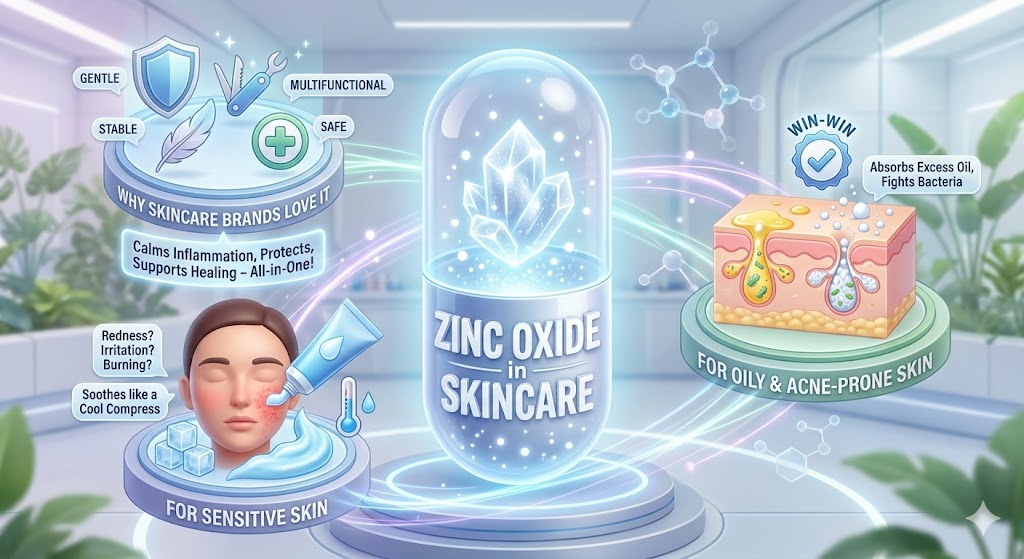
Why Skincare Brands Love Zinc Oxide
Because it’s gentle, stable, multifunctional, and safe. Zinc oxide calms inflammation, protects skin, and supports healing—all in one ingredient.
Zinc Oxide for Sensitive Skin
Redness? Irritation? Burning? Zinc oxide soothes like a cool compress on a hot day.
Zinc Oxide for Oily and Acne-Prone Skin
It absorbs excess oil and helps fight acne-causing bacteria. That’s a win-win.
Zinc Oxide in Sunscreens
Mineral Sunscreens Explained
Mineral sunscreens rely on zinc oxide to block both UVA and UVB rays naturally.
Zinc Oxide vs Titanium Dioxide
Titanium dioxide mainly blocks UVB, while zinc oxide covers the full spectrum. That makes zinc oxide the gold standard.
Broad-Spectrum UV Protection
Zinc oxide protects against premature aging, sunburn, and long-term skin damage.
Benefits of Zinc Oxide
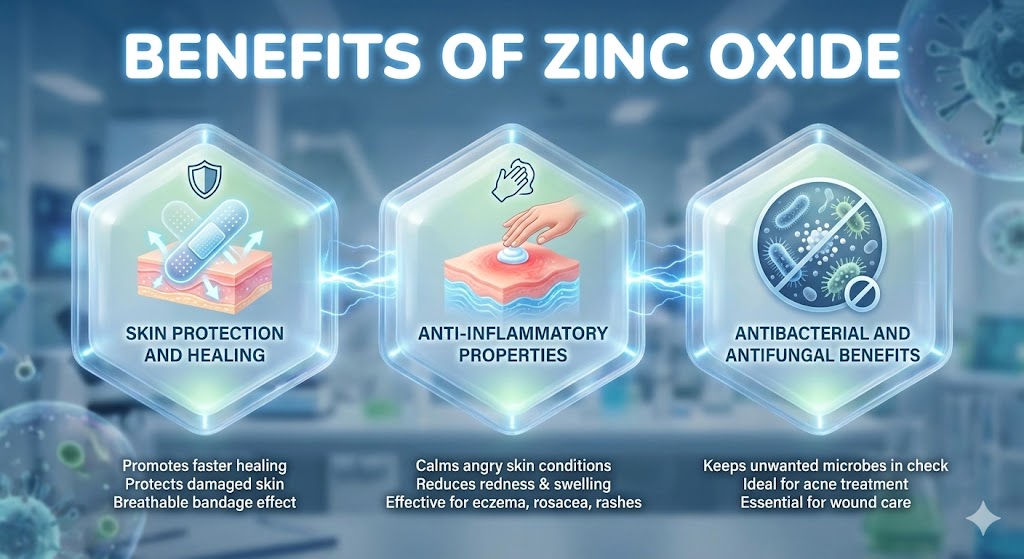
Skin Protection and Healing
It promotes faster healing and protects damaged skin like a breathable bandage.
Anti-Inflammatory Properties
Zinc oxide calms angry skin conditions like eczema, rosacea, and rashes.
Antibacterial and Antifungal Benefits
It keeps unwanted microbes in check, making it ideal for acne and wound care.
Zinc Oxide for Acne and Rosacea
How Zinc Oxide Calms Breakouts
It reduces redness, absorbs oil, and prevents bacterial growth without drying the skin.
Zinc Oxide and Redness Reduction
Rosacea-prone skin loves zinc oxide because it cools inflammation without irritation.
Zinc Oxide in Cosmetics
Makeup Products Using Zinc Oxide
Foundations, powders, concealers—all use zinc oxide for coverage and skin benefits.
Role in Powders and Foundations
It improves texture, longevity, and oil control while protecting skin.
Zinc Oxide in Baby Care Products
Diaper Rash Creams Explained
Zinc oxide forms a protective barrier, preventing moisture-related irritation.
Why Zinc Oxide Is Safe for Babies
It’s non-toxic, non-absorbing, and dermatologist-approved for delicate skin.
Zinc Oxide in Medical and Pharmaceutical Uses
Wound Healing and Bandages
Used in medicated creams to speed healing and prevent infection.
Calamine Lotion and Ointments
Zinc oxide is a key ingredient in calming itchy, irritated skin.
Safety Profile of Zinc Oxide
Is Zinc Oxide Safe for Skin?
Yes—extensively researched and approved worldwide.
Myths vs Facts About Zinc Oxide
Myth: It clogs pores.
Fact: It’s non-comedogenic and breathable.
Environmental Impact of Zinc Oxide
Reef-Safe Sunscreens
Zinc oxide is considered safer for coral reefs than chemical filters.
Eco-Friendly Formulations
Many brands now use sustainably sourced zinc oxide.
How to Use Zinc Oxide Correctly
Choosing the Right Percentage
For sun protection, look for 10–25% zinc oxide.
Tips for Daily Skincare Routine
Apply as the final step in your morning routine for best protection.
Zinc Oxide Side Effects and Precautions
Possible Skin Reactions
Rare, but patch testing is always smart.
How to Avoid White Cast
Choose tinted or micronized formulations.
Zinc Oxide vs Other Skin-Protecting Ingredients
Zinc Oxide vs Chemical UV Filters
Zinc oxide is gentler and more stable.
Zinc Oxide vs Salicylic Acid
Salicylic acid treats acne; zinc oxide prevents and soothes it.
Future of Zinc Oxide in Skincare
Innovation and Advanced Formulations
New textures, transparent finishes, and hybrid products are emerging.
Growing Demand in Clean Beauty
Zinc oxide aligns perfectly with the clean, minimal skincare movement.
Conclusion
Zinc oxide isn’t flashy—but it’s powerful. It protects, heals, calms, and supports skin like a trusted friend who always shows up. Whether you’re building a skincare routine, choosing sunscreen, or caring for sensitive skin, zinc oxide deserves a permanent spot on your ingredient list.
FAQs
1. Is zinc oxide good for daily use?
Yes, it’s gentle enough for everyday skincare and sun protection.
2. Can zinc oxide help acne scars?
It supports healing and reduces inflammation, which helps improve skin texture over time.
3. Does zinc oxide clog pores?
No, it’s non-comedogenic and suitable for acne-prone skin.
4. Is zinc oxide safe during pregnancy?
Yes, it’s one of the safest sunscreen ingredients for pregnant women.
5. Why does zinc oxide leave a white cast?
Because it reflects light—but newer formulations minimize this effect.
Related posts:
 Hyaluronic Acid – The Ultimate Guide to Deep Hydration and Youthful Skin
 Niacinamide – The Ultimate Skincare Ingredient Explained
 Propanediol: The Ultimate Guide to This High-Performance, Skin-Friendly Ingredient
 Kojic Acid: Benefits, Uses, Safety, and How It Transforms Your Skin
 Alpha Arbutin: Complete Guide to Benefits, Uses, Safety, and Skincare Science
 Biotin (Vitamin B7): The Complete Guide to Benefits, Uses, and Sources