

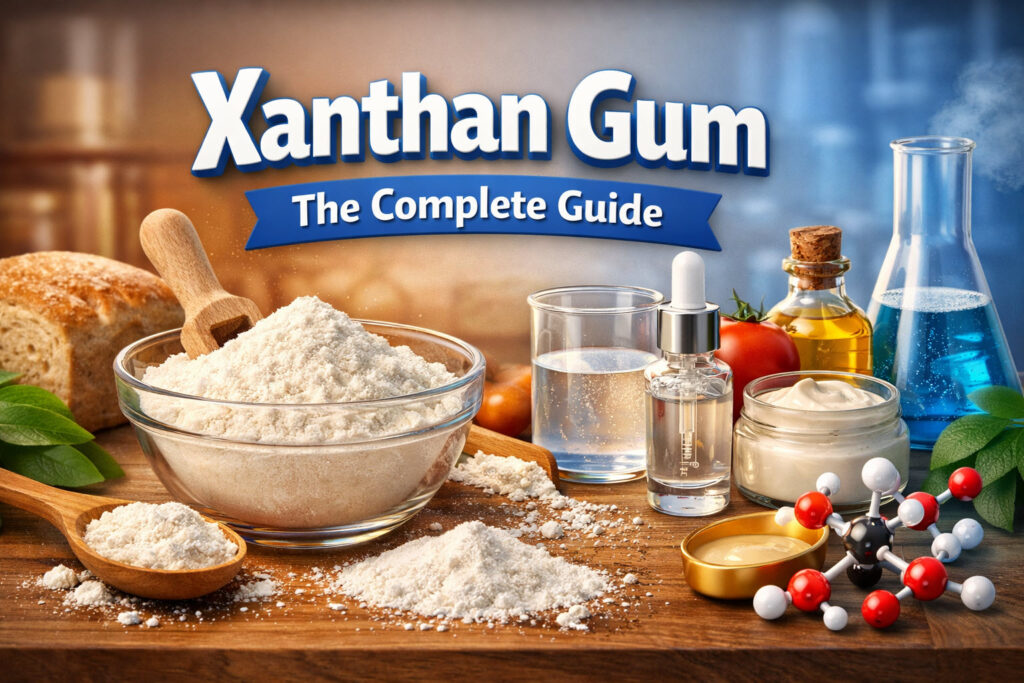
Xanthan Gum Powder – The Complete Guide
Discover the ultimate guide to Xanthan Gum Powder, the versatile ingredient transforming food, cosmetics, and industrial products. From gluten-free baking to smooth sauces, creamy dressings, and skincare formulations, xanthan gum provides unmatched thickening, stabilizing, and emulsifying benefits. Learn how it’s produced through natural fermentation, its unique chemical properties, and how to use it safely in recipes or DIY products. Explore the science, benefits, and practical tips for using xanthan gum in your kitchen, skincare routine, or industrial applications. Whether you’re a food enthusiast, cosmetic formulator, or DIY hobbyist, this guide ensures you get the best out of xanthan gum for texture enhancement, product stability, and high-quality results.
Table of Contents
Introduction to Xanthan Gum Powder
Ever wondered why your salad dressing doesn’t separate or why your skincare cream feels silky smooth every single time? The secret often lies in a humble white powder called xanthan gum powder. It’s one of those behind-the-scenes ingredients doing heavy lifting without asking for attention.
What Is Xanthan Gum Powder?
Xanthan gum powder is a natural polysaccharide produced through fermentation. It looks simple, but don’t be fooled—this ingredient is a powerhouse. Even in tiny amounts, it can thicken, stabilize, and improve texture like magic.
Why Is Xanthan Gum So Popular Today?
From food to cosmetics and even pharmaceuticals, xanthan gum has become a go-to ingredient. Why? Because it’s versatile, efficient, and works well across a wide range of temperatures and pH levels. Think of it as the Swiss Army knife of stabilizers.
The Science Behind Xanthan Gum
How Xanthan Gum Is Made
Xanthan gum is created through a fermentation process using sugars and beneficial bacteria.
Fermentation Process Explained
Here’s a simple way to picture it: bacteria eat sugar, and as they digest it, they produce xanthan gum as a byproduct. This mixture is then purified, dried, and ground into the fine powder we use.
Chemical Structure and Properties
Xanthan gum has a unique molecular structure that allows it to bind with water effectively. This is why it creates thick, stable mixtures without changing flavor or scent.
Key Characteristics of Xanthan Gum Powder
Thickening Power
A pinch goes a long way. Xanthan gum can transform watery liquids into rich, smooth textures almost instantly.
Stabilizing and Emulsifying Abilities
It prevents separation in products like sauces and creams. Oil and water finally learn to get along.
Texture Enhancement
Whether it’s food or skincare, xanthan gum improves mouthfeel and skin feel, giving products a professional finish.
Common Uses of Xanthan Gum Powder
Xanthan Gum in Food Industry
This is where xanthan gum really shines.
Gluten-Free Baking
Without gluten, baked goods can crumble. Xanthan gum steps in like a supportive friend, holding everything together.
Sauces, Dressings, and Beverages
It keeps sauces smooth, dressings creamy, and beverages evenly mixed.
Xanthan Gum in Cosmetics
Skincare and Cream Formulations
Lotions, gels, and serums rely on xanthan gum for consistency and stability.
Xanthan Gum in Pharmaceuticals
It’s used to control viscosity in syrups and suspensions, ensuring accurate dosing.
Industrial Applications
From paints to drilling fluids, xanthan gum proves its versatility beyond consumer products.
Benefits of Xanthan Gum Powder
Improves Consistency and Stability
No more separation, no more uneven textures—just smooth perfection.
Suitable for Vegan and Gluten-Free Diets
Xanthan gum ticks all the right boxes for modern dietary needs.
Cost-Effective Ingredient
Because you need so little, it’s economical for manufacturers and DIY formulators alike.
Xanthan Gum Powder in Skincare and Cosmetics
Why Cosmetic Brands Use Xanthan Gum
It’s gentle, reliable, and works well with active ingredients.
Benefits for Skin Texture
Xanthan gum gives products a luxurious glide without feeling heavy or sticky.
Compatibility With Active Ingredients
It plays nicely with vitamins, acids, and botanical extracts.
How to Use Xanthan Gum Powder Correctly
Recommended Usage Levels
Typically, 0.1% to 1% is enough. More isn’t always better.
Tips to Avoid Clumping
Sprinkle slowly and mix thoroughly.
Mixing Techniques
Pre-mixing with glycerin or oil helps achieve a smooth blend.
Safety, Side Effects, and Allergies
Is Xanthan Gum Safe to Use?
Yes, it’s widely considered safe when used as directed.
Possible Side Effects
In large amounts, it may cause digestive discomfort for some people.
Who Should Avoid Xanthan Gum?
Those with severe sensitivities should consult a professional before use.
Xanthan Gum vs Other Thickeners
Xanthan Gum vs Guar Gum
Xanthan gum is more stable across temperatures.
Xanthan Gum vs Carrageenan
It offers better consistency with less quantity.
Why Xanthan Gum Often Wins
Versatility, stability, and ease of use make it a favorite.
Buying and Storing Xanthan Gum Powder
How to Choose High-Quality Xanthan Gum
Look for food or cosmetic-grade labeling.
Proper Storage Tips
Store in a cool, dry place away from moisture.
Environmental and Sustainability Aspects
Is Xanthan Gum Eco-Friendly?
Yes, it’s biodegradable and derived from renewable sources.
Sustainable Production Practices
Modern fermentation methods reduce waste and energy use.
Future Trends of Xanthan Gum Powder
Innovations in Food and Cosmetics
Clean-label and natural formulations are driving demand.
Growing Market Demand
As consumers seek better textures and stability, xanthan gum remains in demand.
Conclusion
Xanthan gum powder may look simple, but it’s an unsung hero across industries. From keeping your salad dressing smooth to giving skincare that luxurious feel, this ingredient does it all. Reliable, versatile, and efficient—xanthan gum proves that sometimes, the smallest ingredients make the biggest difference.
FAQs
Is xanthan gum natural or synthetic?
Xanthan gum is naturally derived through fermentation.
Can xanthan gum be used in homemade skincare?
Yes, it’s commonly used in DIY creams and gels.
Is xanthan gum safe for daily consumption?
In normal amounts, it’s considered safe.
How much xanthan gum should I use in recipes?
Usually between 0.1% and 1% depending on the application.
Does xanthan gum affect taste or smell?
No, it’s neutral and won’t alter flavor or fragrance.
Related posts:
 Hyaluronic Acid – The Ultimate Guide to Deep Hydration and Youthful Skin
 Niacinamide – The Ultimate Skincare Ingredient Explained
 Propanediol: The Ultimate Guide to This High-Performance, Skin-Friendly Ingredient
 Kojic Acid: Benefits, Uses, Safety, and How It Transforms Your Skin
 Alpha Arbutin: Complete Guide to Benefits, Uses, Safety, and Skincare Science
 Biotin (Vitamin B7): The Complete Guide to Benefits, Uses, and Sources