

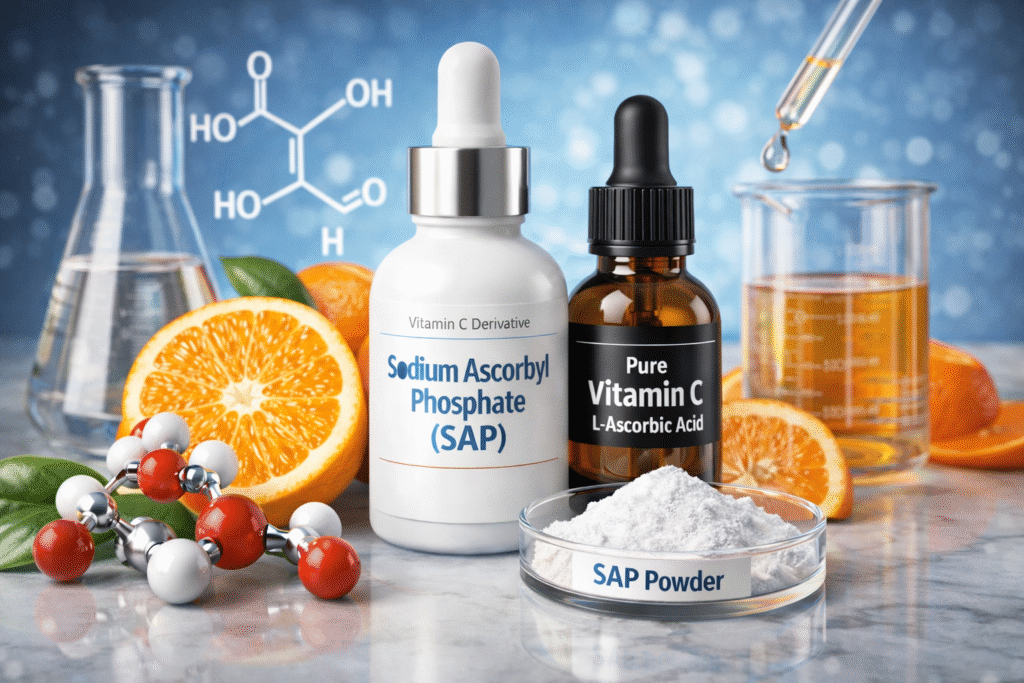
Vitamin C, Sodium Ascorbyl Phosphate (SAP): A Complete Skincare Guide
Introduction to Vitamin C in Skincare
Vitamin C is like that one friend who seems to be good at everything. Brightening? Check. Anti-aging? Check. Fighting acne? Absolutely. But here’s the catch—pure Vitamin C (L-Ascorbic Acid) can be unstable, irritating, and tricky to formulate. That’s where Vitamin C derivatives step in, and one star player among them is Sodium Ascorbyl Phosphate (SAP).
If you’ve ever struggled with irritation from Vitamin C serums or felt confused by the many forms listed on ingredient labels, you’re in the right place. Let’s break it all down in a simple, human way.
Table of Contents
What Is Sodium Ascorbyl Phosphate (SAP)?
Sodium Ascorbyl Phosphate is a water-soluble, stable derivative of Vitamin C. Unlike pure Vitamin C, it doesn’t oxidize easily, doesn’t sting as much, and works beautifully even for sensitive and acne-prone skin.
Think of SAP as Vitamin C’s calmer, more patient sibling. It takes its time, works gently, and still delivers impressive results.
How SAP Is Different from Pure Vitamin C (L-Ascorbic Acid)
L-Ascorbic Acid works fast but can be harsh. SAP, on the other hand:
- Is more stable
- Works at a skin-friendly pH
- Causes less irritation
- Has strong antibacterial properties
This makes SAP ideal for people who want results without redness or burning.
Chemical Structure and Stability of SAP
SAP is created by binding Vitamin C to phosphate and sodium molecules. This structure protects it from air, light, and heat. In simple words? It doesn’t spoil easily.
Why Stability Matters in Skincare Products
Unstable Vitamin C oxidizes quickly, turning brown and losing effectiveness. SAP stays potent for longer, meaning you actually get what you paid for.
Key Benefits of Sodium Ascorbyl Phosphate for Skin
Brightening and Glow Enhancement
SAP helps fade dullness and uneven skin tone by reducing excess melanin production. Over time, skin looks fresher, clearer, and naturally radiant.
Acne Control and Antibacterial Properties
Here’s where SAP really shines. It has proven antibacterial effects against acne-causing bacteria. That means fewer breakouts and calmer skin.
Anti-Aging and Collagen Support
Once converted into active Vitamin C in the skin, SAP stimulates collagen production. Fine lines soften, and skin feels firmer—like giving your skin a gentle workout.
Skin Barrier Strengthening
SAP supports the skin’s natural defense system, helping it retain moisture and resist environmental stress.
Oil Control for Oily and Acne-Prone Skin
By reducing inflammation and balancing oil production, SAP keeps shine under control without drying the skin.
How Sodium Ascorbyl Phosphate Works on Skin
Conversion of SAP into Active Vitamin C
SAP converts into ascorbic acid once absorbed into the skin. It’s slow and steady—like a time-release capsule for your face.
Interaction with Skin Enzymes
Skin enzymes break SAP down efficiently, ensuring gradual delivery of Vitamin C benefits without irritation.
pH Compatibility and Skin Tolerance
SAP works best at a pH of 6–7, which matches natural skin pH. That’s why it’s so well tolerated.
SAP for Different Skin Types
Sensitive Skin
SAP is one of the safest Vitamin C options for sensitive skin. No burning, no drama.
Oily and Acne-Prone Skin
Its antibacterial nature makes SAP a favorite in acne treatments and oil-control formulas.
Dry and Combination Skin
SAP hydrates indirectly by strengthening the skin barrier, making it suitable for dry zones too.
Mature Skin
For aging skin, SAP supports collagen while being gentle enough for daily use.
Ideal Concentration Levels of SAP in Skincare
Beginner-Friendly Percentages
- 1–2%: Maintenance and sensitive skin
- 3–5%: Brightening and acne control
Professional and Clinical-Grade Formulations
- Up to 10%: Used in professional products under controlled formulation
SAP vs Other Vitamin C Derivatives
SAP vs Ascorbyl Glucoside
SAP is better for acne; Ascorbyl Glucoside focuses more on glow.
SAP vs Magnesium Ascorbyl Phosphate (MAP)
MAP is more hydrating, while SAP excels in oil control and acne care.
SAP vs Ethyl Ascorbic Acid
Ethyl Ascorbic Acid works faster but can irritate. SAP is gentler and more stable.
How to Use Sodium Ascorbyl Phosphate in Your Routine
Morning vs Night Use
SAP can be used both morning and night, making it incredibly versatile.
Layering with Other Actives
SAP layers well with:
- Niacinamide
- Hyaluronic Acid
- Zinc
- Aloe Vera
Ingredients That Pair Well with SAP
- Green Tea Extract
- Panthenol
- Centella Asiatica
Ingredients to Avoid Mixing
Avoid combining SAP with:
- Very low-pH acids
- Strong exfoliating acids at the same time
SAP in Professional Skincare Formulations
Serums
Lightweight and fast-absorbing—perfect for daily use.
Gels
Ideal for oily and acne-prone skin types.
Creams and Lotions
Great for dry or mature skin requiring nourishment.
Acne Treatment Products
Often used in anti-acne gels and lotions for long-term clarity.
Side Effects and Safety Profile of SAP
Is SAP Safe for Daily Use?
Yes, SAP is safe for daily, long-term use with minimal side effects.
Pregnancy and Sensitive Skin Safety
SAP is considered pregnancy-safe and suitable for reactive skin when formulated correctly.
How to Choose the Best SAP Product
INCI Label Reading Tips
Look for “Sodium Ascorbyl Phosphate” high on the ingredient list.
Packaging and Storage Considerations
Opaque, airless packaging helps maintain product freshness.
Common Myths About Sodium Ascorbyl Phosphate
- ❌ “It’s weaker than Vitamin C” – False
- ❌ “It doesn’t brighten skin” – False
- ❌ “It’s only for acne” – False
SAP is powerful—it just works smarter, not harsher.
Future of SAP in Advanced Skincare
With the rise of sensitive-skin and barrier-focused formulations, SAP is becoming a hero ingredient in modern skincare.
Conclusion
Sodium Ascorbyl Phosphate is proof that skincare doesn’t need to be aggressive to be effective. It brightens, fights acne, supports collagen, and respects your skin barrier—all without irritation. If you’re looking for a Vitamin C that actually gets along with your skin, SAP might just be your perfect match.
FAQs
1. Is Sodium Ascorbyl Phosphate real Vitamin C?
Yes, it’s a stable derivative that converts into active Vitamin C in the skin.
2. Can SAP be used on acne-prone skin?
Absolutely. It’s one of the best Vitamin C forms for acne.
3. Does SAP brighten skin like L-Ascorbic Acid?
Yes, but more gradually and gently.
4. Can I use SAP with niacinamide?
Yes, they work very well together.
5. Is SAP suitable for beginners?
100%. It’s one of the safest Vitamin C options available.
Related posts:
 Hyaluronic Acid – The Ultimate Guide to Deep Hydration and Youthful Skin
 Niacinamide – The Ultimate Skincare Ingredient Explained
 Coco Betaine (Cocamidopropyl Betaine): Benefits, Uses, Safety, and Complete Guide
 CDEA (Cocamide Diethanolamine): Complete Guide for Cosmetic & Personal Care Formulations
 Guar Hydroxypropyltrimonium Chloride: Comprehensive Guide, Benefits, Uses, and Formulation Insights
 Hydrolyzed Keratin: The Complete Scientific and Cosmetic Authority Guide