

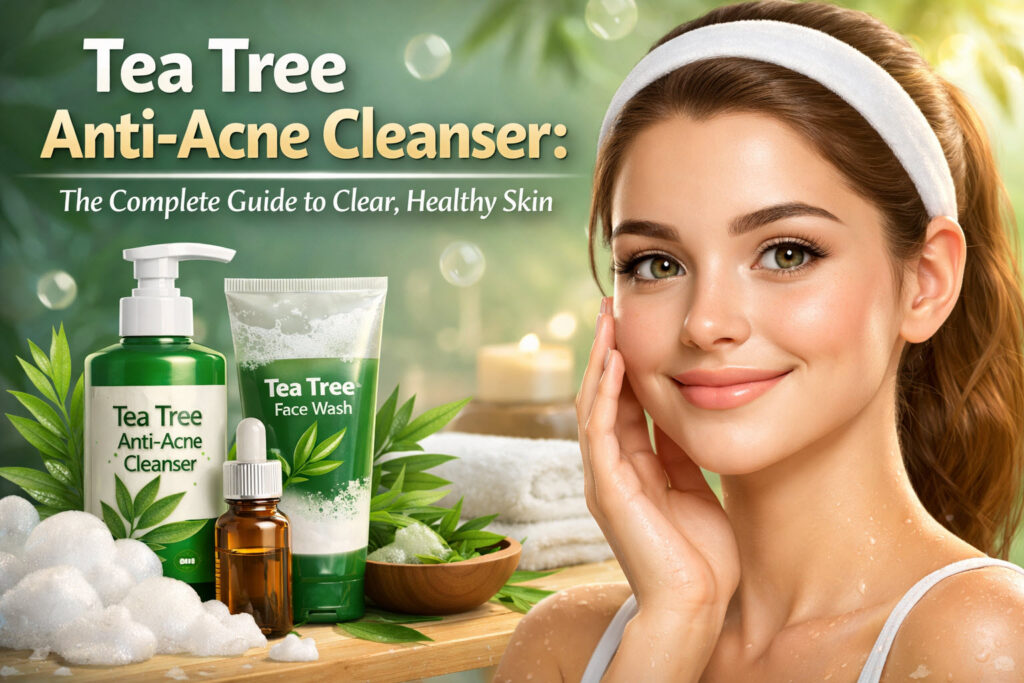
Tea Tree Anti Acne Cleanser: The Complete Guide to Clear, Healthy Skin
A Tea Tree Anti Acne Cleanser is one of the most effective skincare solutions for people struggling with acne, pimples, blackheads, and excess oil. Powered by the natural antibacterial strength of tea tree oil, this cleanser deeply cleanses pores, removes acne-causing bacteria, and helps prevent future breakouts without over-drying the skin.
This cleanser is specially formulated for oily skin, acne prone skin, and combination skin, making it ideal for daily use. Tea tree oil is widely known for its anti inflammatory, antimicrobial, and soothing properties, which help calm redness, reduce swelling, and promote faster healing of active acne. When combined with skin balancing ingredients like glycerin and salicylic acid, a tea tree face wash works gently yet effectively to unclog pores and control excess sebum.
Using a tea tree face wash for acne twice daily helps maintain clear, healthy looking skin by removing dirt, oil, pollution, and makeup residue. Unlike harsh acne cleansers, a well-formulated tea tree anti acne cleanser maintains the skin’s natural moisture barrier, leaving the face refreshed, smooth, and balanced after every wash.
This guide covers everything you need to know about tea tree anti acne cleanser benefits, how it works, who should use it, and how to include it in a complete acne skincare routine. Whether you are dealing with teenage acne, adult breakouts, or oily skin concerns, a tea tree cleanser can be a game changing addition to your skincare regimen.
If you are searching for the best tea tree anti acne cleanser, this complete guide will help you make an informed decision for clearer, healthier, and more confident skin.
Table of Contents
Introduction to Tea Tree Anti Acne Cleanser
Acne can feel like that unwanted guest who just won’t leave. You try everything home remedies, harsh face washes, expensive treatments—but the breakouts keep popping up. That’s where a Tea Tree Anti Acne Cleanser steps in like a calm, reliable friend who actually knows what they’re doing.
Tea tree has been trusted for decades in skincare, especially for acne prone skin. But what makes it so effective, and why is it often recommended by dermatologists? Let’s break it down in a simple, no nonsense way.
What Makes Tea Tree Oil Special?
Tea tree oil is extracted from the leaves of Melaleuca alternifolia. Sounds fancy, right? But its real magic lies in its natural antibacterial and anti inflammatory powers. Think of it as a natural bouncer kicking acne causing bacteria out of your pores before they create chaos.
Why Acne Prone Skin Needs Targeted Cleansing
Regular cleansers often clean the surface but ignore what’s happening inside your pores. Acne prone skin needs something smarter something that cleans, calms, and controls oil without stripping your skin dry. That’s exactly where tea tree anti-acne cleansers shine.
What Is a Tea Tree Anti Acne Cleanser?
A tea tree anti-acne cleanser is a specially formulated face wash designed to fight acne while keeping your skin balanced. It combines tea tree oil with skin friendly ingredients to cleanse deeply without irritation.
Key Characteristics
- Targets acne causing bacteria
- Controls excess sebum
- Helps reduce redness and swelling
- Maintains skin’s natural moisture barrier
Gel vs Foam vs Cream Cleansers
- Gel cleansers: Best for oily and acne prone skin
- Foam cleansers: Lightweight, good for combination skin
- Cream cleansers: Gentler, suitable for sensitive acne prone skin
Choosing the right texture is like choosing the right shoes comfort matters.
How Tea Tree Oil Works on Acne
Antibacterial Properties
Tea tree oil directly attacks Propionibacterium acnes, the bacteria responsible for breakouts. Fewer bacteria mean fewer pimples it’s that simple.
Anti-Inflammatory Benefits
Red, angry pimples? Tea tree helps calm inflammation, making acne look less noticeable and heal faster.
Sebum Control Mechanism
Excess oil is acne’s best friend. Tea tree oil helps regulate sebum production, keeping pores clear and balanced.
Key Ingredients in Tea Tree Anti Acne Cleanser
Tea Tree Oil
The star of the show. Usually used in safe, diluted concentrations to avoid irritation while delivering results.
Salicylic Acid
Often paired with tea tree to exfoliate inside pores, dissolve oil, and prevent future breakouts.
Glycerin and Humectants
These ingredients lock in moisture so your skin doesn’t feel tight or dry after washing.
Soothing Botanical Extracts
Ingredients like aloe vera, chamomile, or green tea help counteract irritation and redness.
Benefits of Using Tea Tree Anti Acne Cleanser
Reduces Pimples and Breakouts
Consistent use can visibly reduce active acne and prevent new ones from forming.
Controls Excess Oil
No more midday shine that makes your skin feel greasy and uncomfortable.
Unclogs Pores Gently
Unlike harsh cleansers, tea tree cleansers work without damaging your skin barrier.
Who Should Use Tea Tree Anti Acne Cleanser?
Oily Skin
If your face turns shiny an hour after washing, this cleanser is your best bet.
Acne-Prone and Combination Skin
Balances oil in the T-zone while keeping cheeks comfortable.
Can Sensitive Skin Use It?
Yes—if the formula is mild and fragrance-free. Always patch test first.
How to Use Tea Tree Anti Acne Cleanser Correctly
Morning Routine
Use a small amount, massage gently for 30–40 seconds, rinse with lukewarm water.
Evening Routine
Cleanse again to remove dirt, oil, sunscreen, and pollution.
Common Mistakes to Avoid
- Over-washing
- Using hot water
- Scrubbing aggressively
Gentle is the keyword here.
Tea Tree Cleanser vs Regular Face Wash
Effectiveness Comparison
Regular cleansers clean. Tea tree cleansers treat. That’s the difference.
Long-Term Skin Health
With consistent use, tea tree cleansers help maintain clearer skin over time.
Possible Side Effects and Safety Tips
Skin Irritation Risks
High concentrations of tea tree oil can cause dryness or irritation.
Patch Testing Importance
Always test behind your ear or on your wrist before full use.
How to Choose the Best Tea Tree Anti-Acne Cleanser
Ingredient Checklist
- Tea Tree Oil (low to moderate %)
- Non comedogenic formula
- Sulfate-free
pH Balance Matters
Look for a cleanser with a pH between 5.5 and 6.5 to protect your skin barrier.
DIY vs Commercial Tea Tree Cleanser
Pros and Cons
DIY sounds tempting but lacks stability and proper preservation.
Why Formulation Matters
Professionally formulated cleansers are safer, more effective, and balanced.
Tea Tree Cleanser in a Complete Acne Routine
Pairing with Toners and Serums
Use with a niacinamide or salicylic acid serum for better results.
Importance of Sunscreen
Acne treatment without sunscreen is like washing a car in the rain pointless.
Myths and Facts About Tea Tree for Acne
Is More Tea Tree Better?
No. More isn’t better it’s irritating.
Natural Doesn’t Always Mean Gentle
Even natural ingredients need proper formulation.
Sustainability and Ethical Sourcing of Tea Tree Oil
Why It Matters for Skin and Planet
Ethically sourced tea tree oil ensures purity, effectiveness, and environmental responsibility.
Dermatologist Tips for Using Tea Tree Anti-Acne Cleanser
Dermatologists often recommend tea tree–based cleansers as a supportive acne treatment, not a harsh fix. To get the best results, follow these expert-backed tips:
- Use it twice daily, not more
Over-cleansing can damage your skin barrier and trigger more oil production. Morning and night is enough. - Choose a low-concentration formula
Effective cleansers usually contain 0.5%–2% tea tree oil. Higher concentrations can irritate the skin. - Massage gently for 30–40 seconds
Let the cleanser do the work. Aggressive rubbing can worsen inflammation and redness. - Always moisturize after cleansing
Acne-prone skin still needs hydration. Use a non-comedogenic, oil-free moisturizer. - Pair with sunscreen during the day
Acne treatments can make skin more sensitive to the sun. A lightweight SPF is essential. - Be patient with results
Dermatologists advise waiting 2–4 weeks to see visible improvements. Consistency matters more than intensity.
Common Mistakes to Avoid When Using Tea Tree Cleanser
Many people stop seeing results because of simple, avoidable mistakes:
- Using hot water
Hot water strips natural oils and increases irritation. Always use lukewarm water. - Overusing the cleanser
Washing your face 3–4 times a day can worsen acne instead of improving it. - Skipping moisturizer
Dry skin produces more oil, leading to more breakouts—this is a common acne trap. - Mixing with too many active ingredients
Using tea tree cleanser alongside strong retinoids or exfoliating acids without guidance can cause irritation. - Expecting overnight results
Acne healing takes time. Quick fixes often lead to long-term skin damage. - Using DIY tea tree oil directly on skin
Undiluted tea tree oil can cause burns, rashes, or allergic reactions.
Who Should NOT Use Tea Tree Anti-Acne Cleanser?
While tea tree cleanser works for many people, it’s not suitable for everyone.
Avoid or use with caution if you have:
- Extremely sensitive skin prone to redness or stinging
- Eczema, rosacea, or broken skin
- Known allergy to tea tree oil or essential oils
- Very dry or compromised skin barrier
- Recent chemical peels, laser treatments, or skin procedures
👉 Dermatologist advice:
If you experience burning, itching, or excessive dryness, discontinue use immediately and consult a skin professional.
Conclusion
A Tea Tree Anti Acne Cleanser is more than just a face wash it’s a daily treatment that keeps acne under control without being harsh on your skin. When used correctly and consistently, it can transform your skincare routine and help you achieve clearer, calmer, healthier looking skin. If acne has been running the show, it’s time to take back control one gentle cleanse at a time.
FAQs
1. What is a Tea Tree Anti-Acne Cleanser used for?
A Tea Tree Anti-Acne Cleanser is used to reduce acne, pimples, and breakouts by killing acne causing bacteria, controlling excess oil, and unclogging pores.
2. Is tea tree cleanser good for acne-prone skin?
Yes, tea tree cleanser is highly effective for acne prone skin because it has antibacterial and anti inflammatory properties that help prevent and heal breakouts.
3. Can I use a tea tree anti-acne cleanser every day?
Yes, most tea tree anti acne cleansers are safe for daily use, typically twice a day, unless your skin is extremely sensitive.
4. Does tea tree face wash help remove pimples?
Tea tree face wash helps reduce pimples by eliminating acne causing bacteria, calming inflammation, and keeping pores clean.
5. Is tea tree cleanser suitable for oily skin?
Yes, tea tree cleanser is ideal for oily skin as it helps regulate sebum production and reduces greasy shine without stripping moisture.
6. Can sensitive skin use tea tree anti-acne cleanser?
Sensitive skin can use tea tree cleanser if the formula is mild and properly diluted. A patch test is recommended before full application.
7. How long does it take to see results from tea tree cleanser?
Visible results usually appear within 2 to 4 weeks of consistent use, depending on skin type and acne severity.
8. Does tea tree cleanser help with blackheads and whiteheads?
Yes, tea tree cleanser helps unclog pores, making it effective against blackheads and whiteheads when used regularly.
9. Is tea tree oil cleanser better than regular face wash for acne?
Tea tree oil cleanser is more effective than regular face wash for acne because it targets bacteria and inflammation rather than just surface cleansing.
10. Can teenagers use tea tree anti acne cleanser?
Yes, tea tree anti-acne cleanser is commonly recommended for teenagers dealing with oily skin and hormonal acne.
Related posts:
 Hyaluronic Acid Serum – The Ultimate Guide to Deep Hydration and Youthful Skin
 Hyaluronic Acid Gel Benefits: Deep Hydration, Plump Skin & Daily Skincare Guide
 Night Repair Cream: The Ultimate Guide to Overnight Skin Renewal
 Titanium Dioxide – Uses, Benefits, Safety, and Applications Explained
 Glutathione Glow Serum – The Ultimate Guide to Radiant, Even-Toned Skin
 Rose Water Toner: The Complete Guide to Natural Skin Refreshment