

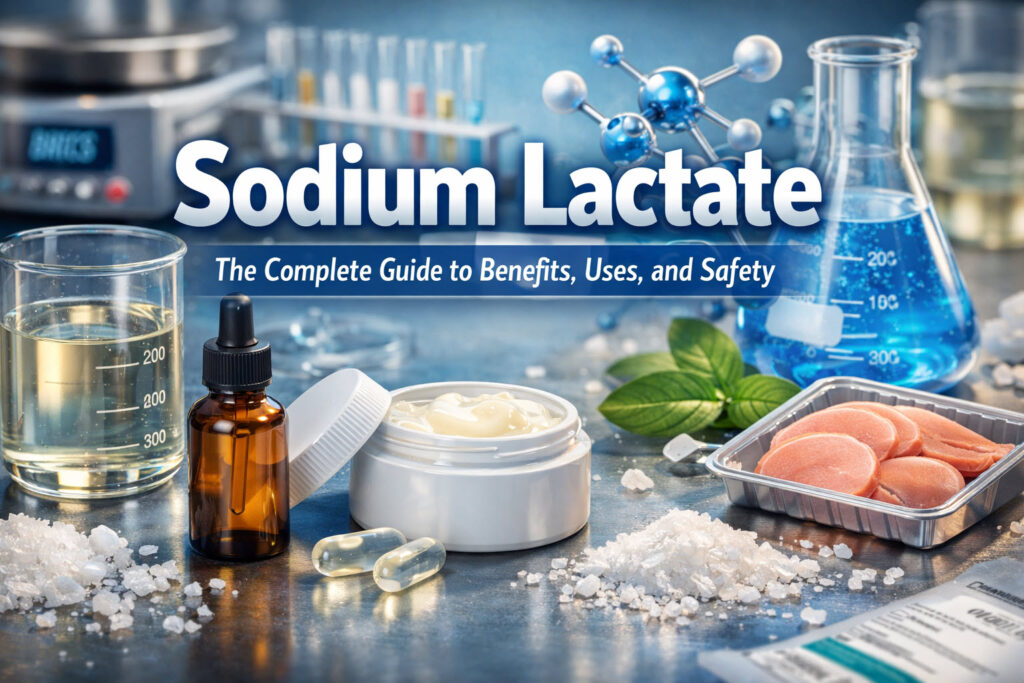
Sodium Lactate – The Complete Guide to Benefits, Uses, and Safety
Sodium Lactate is a powerful, multi-functional ingredient widely used in skincare, cosmetics, soap making, food preservation, and pharmaceutical applications. Known for its exceptional humectant properties, Sodium Lactate helps attract and retain moisture, making it a key component in hydrating serums, creams, lotions, cleansers, and professional cosmetic formulations. As a natural moisturizing factor (NMF) component, it plays a vital role in strengthening the skin barrier, improving elasticity, and reducing dryness and irritation.
In skincare, Sodium Lactate enhances hydration levels, balances pH, and boosts the effectiveness of preservative systems. It is especially valued in modern clean beauty and dermatologist-approved products due to its skin-friendly nature and compatibility with ingredients like hyaluronic acid, niacinamide, panthenol, and glycerin. Unlike exfoliating lactic acid, Sodium Lactate focuses on moisture retention and barrier repair, making it suitable for sensitive, dry, and acne-prone skin types.
Beyond cosmetics, Sodium Lactate is extensively used in soap making to create harder bars, faster unmolding, and improved lather quality. In the food industry, it functions as a preservative and flavor enhancer, helping extend shelf life while maintaining product quality. Its medical and pharmaceutical uses include IV fluids, electrolyte balance, and wound care solutions.
Derived from the fermentation of natural sugars, Sodium Lactate is biodegradable, vegan, and environmentally friendly. Its safety profile, versatility, and effectiveness make it a preferred ingredient across multiple industries. This comprehensive guide explores the benefits, uses, safety considerations, formulation tips, and future trends of Sodium Lactate, helping formulators, skincare brands, and enthusiasts understand why this ingredient is essential in modern product development.
Table of Contents
Introduction to Sodium Lactate
Let’s be honest—ingredient lists can look like chemistry homework. But every once in a while, you’ll spot an ingredient that quietly does a lot of heavy lifting. Sodium lactate is one of those unsung heroes. It doesn’t scream for attention, but once you understand it, you’ll start noticing it everywhere—from skincare to soaps, foods, and even medical solutions.
What Is Sodium Lactate?
Sodium lactate is the sodium salt of lactic acid. In simpler words, it’s a water-loving ingredient known for holding onto moisture like a sponge in a desert. It usually appears as a clear, slightly yellow liquid and is completely water-soluble.
Why Is Sodium Lactate So Popular Today?
Because hydration is everything. In an era where skin barrier health and long-lasting moisture are top priorities, sodium lactate fits right in. It’s effective, versatile, affordable, and works well with modern clean beauty formulations.
Chemical Nature and Composition
Is Sodium Lactate Natural or Synthetic?
Here’s the fun part—it can be both. Sodium lactate is commonly derived from the fermentation of sugars (like corn or beet sugar). That makes it naturally derived, vegan-friendly, and acceptable in most clean-label products.
pH and Solubility Characteristics
Sodium lactate is highly water-soluble and works best in formulations with a pH range of 5–8. This makes it ideal for skincare, haircare, and soap products.
Hygroscopic Nature Explained
“Hygroscopic” simply means it attracts and holds water. Imagine a magnet for moisture—that’s sodium lactate doing its job.
How Sodium Lactate Is Made
Fermentation Process
The production starts with fermenting sugars using friendly bacteria to create lactic acid. That lactic acid is then neutralized with sodium hydroxide, forming sodium lactate.
Difference Between Lactic Acid and Sodium Lactate
Lactic acid exfoliates. Sodium lactate hydrates. Same family, different personalities.
Key Functions of Sodium Lactate
Powerful Humectant Properties
Sodium lactate is part of the skin’s Natural Moisturizing Factor (NMF). Translation? Your skin already loves it.
pH Buffering Ability
It helps maintain a stable pH, which means better product performance and less irritation.
Preservative Booster Role
While it’s not a preservative on its own, sodium lactate enhances preservative systems by reducing water activity.
Sodium Lactate in Skincare
Skin Hydration and Moisture Retention
This ingredient can increase skin moisture content significantly—sometimes even outperforming glycerin.
Barrier Repair Benefits
Healthy skin barriers hold water better. Sodium lactate strengthens this barrier, reducing dryness and sensitivity.
Role in Professional Formulations
You’ll find it in serums, creams, toners, lotions, and even cleansers.
Ideal Usage Levels in Cosmetics
- Leave-on products: 0.5–3%
- Rinse-off products: up to 5%
Sodium Lactate in Hair Care
Scalp Hydration
Dry scalp? Sodium lactate helps rebalance moisture without making hair greasy.
Improving Hair Texture and Shine
It smooths the cuticle, resulting in shinier, softer hair.
Sodium Lactate in Soap Making
Harder Bars and Faster Unmolding
Soap makers love sodium lactate because it creates harder bars and reduces curing time.
Enhanced Lather Quality
More bubbles, better foam—what’s not to love?
Recommended Dosage for Soap
Typically 1–3% of total oils added to cooled lye water.
Sodium Lactate in Food Industry
Food Preservation Uses
It extends shelf life by controlling microbial growth.
Flavor Enhancement Role
It adds mild saltiness without overwhelming flavors.
Common Foods Containing Sodium Lactate
- Processed meats
- Baked goods
- Sauces and dressings
Medical and Pharmaceutical Uses
IV Fluids and Electrolyte Balance
Sodium lactate helps correct metabolic acidosis and supports hydration in medical settings.
Wound Care Applications
Its moisturizing and pH-balancing properties aid healing.
Safety Profile of Sodium Lactate
Is Sodium Lactate Safe for Skin?
Yes—extremely. It’s well-tolerated and suitable for most skin types.
Possible Side Effects
At very high concentrations, it may feel slightly sticky or cause mild irritation on broken skin.
Who Should Avoid It?
Those with severely compromised skin barriers should patch test first.
Sodium Lactate vs Other Humectants
Sodium Lactate vs Glycerin
Sodium lactate offers deeper hydration but can feel tacky at high levels. Glycerin is gentler but less potent.
Sodium Lactate vs Sodium PCA
Both are NMF components, but sodium lactate is more affordable and multifunctional.
How to Use Sodium Lactate in Formulations
Compatibility With Other Ingredients
It pairs beautifully with:
- Hyaluronic acid
- Niacinamide
- Panthenol
Storage and Stability Tips
Store in a cool, sealed container away from direct sunlight.
Sustainability and Environmental Impact
Biodegradability
Sodium lactate is biodegradable and environmentally friendly.
Vegan and Eco-Friendly Status
Plant-derived, cruelty-free, and sustainable—ticks all the boxes.
Common Myths About Sodium Lactate
Is It Too Harsh for Sensitive Skin?
No. When used correctly, it’s gentle and soothing.
Does It Dry Out Skin?
Quite the opposite—it attracts and locks in moisture.
Future Trends and Innovations
Advanced Skincare Applications
Expect to see it in barrier-repair and microbiome-friendly formulas.
Clean Beauty Movement
Its natural origin and multifunctionality make it a clean beauty favorite.
Conclusion
Sodium lactate may not be flashy, but it’s one of the most hardworking ingredients out there. From deep hydration and pH balance to soap hardness and food preservation, it proves that sometimes the quietest ingredients make the biggest impact. Whether you’re a formulator, a skincare enthusiast, or a brand owner, sodium lactate deserves a permanent spot on your radar.
Frequently Asked Questions (FAQs)
1. Is sodium lactate suitable for acne-prone skin?
Yes, it hydrates without clogging pores.
2. Can sodium lactate replace glycerin?
In many formulas, yes—or it can work alongside it.
3. Is sodium lactate safe for daily use?
Absolutely, when used within recommended limits.
4. Does sodium lactate exfoliate skin?
No, unlike lactic acid, it does not exfoliate.
5. Is sodium lactate halal and vegan?
Yes, when derived from plant fermentation.
Related posts:
 Xanthan Gum Powder – The Complete Guide
 Hyaluronic Acid – The Ultimate Guide to Deep Hydration and Youthful Skin
 Niacinamide – The Ultimate Skincare Ingredient Explained
 Propanediol: The Ultimate Guide to This High-Performance, Skin-Friendly Ingredient
 Kojic Acid: Benefits, Uses, Safety, and How It Transforms Your Skin
 Alpha Arbutin: Complete Guide to Benefits, Uses, Safety, and Skincare Science