

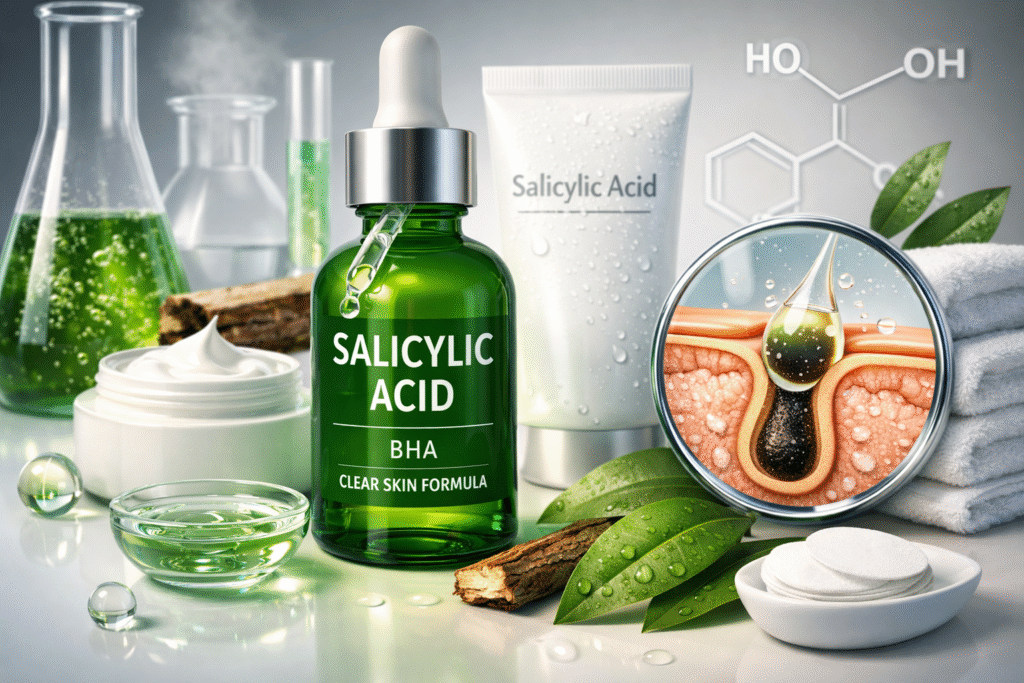
Salicylic Acid – The Ultimate Guide for Clear, Healthy Skin
Table of Contents
Introduction to Salicylic Acid
If you’ve ever struggled with acne, blackheads, or stubborn clogged pores, chances are you’ve already met salicylic acid—whether you realized it or not. This powerhouse ingredient has earned its place as a skincare staple, especially for problem-prone skin.
What Is Salicylic Acid?
Salicylic acid is a beta hydroxy acid (BHA) derived originally from willow bark. In skincare, it’s used as a chemical exfoliant that helps unclog pores, reduce inflammation, and improve overall skin texture. Think of it as a tiny cleaning agent that dives deep into your pores and sweeps out the dirt.
Why Is Salicylic Acid So Popular in Skincare?
Simple—it works. Unlike many trendy ingredients that come and go, salicylic acid has decades of scientific backing. Dermatologists trust it, skincare brands rely on it, and users swear by it for clearer skin.
Understanding the Science Behind Salicylic Acid
Salicylic Acid as a Beta Hydroxy Acid (BHA)
Salicylic acid belongs to the BHA family, which sets it apart from alpha hydroxy acids (AHAs). While AHAs work on the skin’s surface, BHAs go deeper.
Oil-Soluble Nature Explained
Here’s the magic trick: salicylic acid is oil-soluble. That means it can pass through sebum (your skin’s natural oil) and reach inside clogged pores where acne begins.
How It Penetrates Deep into Pores
Imagine pouring warm water down a greasy pipe—that’s salicylic acid dissolving oil buildup, dead skin cells, and debris trapped inside pores.
Key Benefits of Salicylic Acid for Skin
Acne and Blemish Control
Salicylic acid targets acne at the root. It unclogs pores, reduces swelling, and prevents future breakouts, making it a go-to ingredient for acne-prone skin.
Exfoliation and Cell Turnover
By gently exfoliating, salicylic acid removes dead skin cells that cause dullness. The result? Smoother, brighter skin that looks refreshed.
Reducing Blackheads and Whiteheads
Blackheads and whiteheads are basically clogged pores. Salicylic acid clears them out like a skilled plumber fixing a blockage.
Anti-Inflammatory Properties
Another bonus? It calms redness and irritation. That’s why it’s effective even for inflamed acne and sensitive breakouts.
Salicylic Acid for Different Skin Types
Oily and Acne-Prone Skin
This is where salicylic acid shines the most. It controls excess oil, minimizes pores, and reduces breakouts without stripping the skin.
Combination Skin
For combination skin, salicylic acid balances oily areas while keeping breakouts in check—especially in the T-zone.
Dry and Sensitive Skin (Is It Safe?)
Yes, but cautiously. Lower concentrations and limited frequency are key to avoiding dryness or irritation.
Common Uses of Salicylic Acid in Skincare
Cleansers
Salicylic acid cleansers are perfect for daily maintenance, gently exfoliating while cleansing.
Toners
Toners help refine pores and prep the skin for serums and moisturizers.
Serums
Serums offer targeted treatment and higher efficacy, ideal for persistent acne issues.
Spot Treatments
Got a surprise pimple? Spot treatments with salicylic acid help shrink it fast.
Masks and Peels
Weekly masks and peels give a deeper cleanse, leaving skin smooth and clear.
Salicylic Acid Concentrations Explained
Low Strength (0.5% – 1%)
Great for beginners and sensitive skin. These concentrations offer gentle exfoliation.
Medium Strength (2%)
This is the most common and effective concentration for acne treatment.
Professional Strength Treatments
Used under dermatologist supervision for severe skin concerns.
How to Use Salicylic Acid Correctly
Step-by-Step Application Guide
- Cleanse your face
- Apply salicylic acid product
- Follow with moisturizer
- Apply sunscreen during the day
Frequency of Use
Start 2–3 times a week and increase as your skin builds tolerance.
Day vs Night Usage
Nighttime is ideal, but daytime use is fine with proper sun protection.
Salicylic Acid vs Other Exfoliating Acids
Salicylic Acid vs Glycolic Acid
Glycolic acid works on the surface; salicylic acid works deep inside pores.
Salicylic Acid vs Lactic Acid
Lactic acid is gentler and hydrating, while salicylic acid is more powerful for acne.
Which One Should You Choose?
If acne is your main concern, salicylic acid wins.
Side Effects and Precautions
Common Side Effects
- Dryness
- Mild peeling
- Temporary irritation
Who Should Avoid Salicylic Acid?
People allergic to aspirin or with extremely sensitive skin should avoid it.
Patch Testing Importance
Always patch test before full application—better safe than sorry.
Can Salicylic Acid Be Combined with Other Ingredients?
Salicylic Acid and Niacinamide
A perfect duo—oil control meets barrier repair.
Salicylic Acid and Hyaluronic Acid
This combo hydrates while exfoliating, preventing dryness.
Salicylic Acid and Retinol (Use with Caution)
Use on alternate nights to avoid irritation.
Salicylic Acid in Dermatology
Medical Uses Beyond Skincare
Salicylic acid isn’t just for beauty—it’s also used medically.
Dandruff, Warts, and Psoriasis
Its exfoliating power helps treat scalp flakes, warts, and thickened skin conditions.
Myths and Facts About Salicylic Acid
Does It Thin the Skin?
No. Used correctly, it actually strengthens skin renewal.
Is It Only for Acne?
Not at all. It improves texture, tone, and overall clarity.
Tips for Best Results with Salicylic Acid
Do’s and Don’ts
Do moisturize.
Don’t overuse.
Importance of Sunscreen
Exfoliation makes skin sun-sensitive—SPF is non-negotiable.
Conclusion
Salicylic acid is like that reliable friend who always shows up when your skin is acting out. From acne control to smoother texture and clearer pores, it delivers consistent results when used correctly. Whether you’re a skincare beginner or a seasoned enthusiast, salicylic acid deserves a spot in your routine—just remember to start slow and listen to your skin.
Frequently Asked Questions (FAQs)
1. Can I use salicylic acid every day?
Yes, but start slowly and increase frequency based on skin tolerance.
2. Is salicylic acid good for acne scars?
It helps fade post-acne marks over time by improving cell turnover.
3. Can teenagers use salicylic acid?
Yes, especially for acne-prone teenage skin, with proper guidance.
4. Should I moisturize after using salicylic acid?
Absolutely. Moisturizing prevents dryness and irritation.
5. How long does it take to see results?
Visible improvement usually appears within 2–4 weeks.
Related posts:
 Hyaluronic Acid – The Ultimate Guide to Deep Hydration and Youthful Skin
 Niacinamide – The Ultimate Skincare Ingredient Explained
 Vitamin C, Sodium Ascorbyl Phosphate (SAP): A Complete Skincare Guide
 Coco Betaine (Cocamidopropyl Betaine): Benefits, Uses, Safety, and Complete Guide
 Guar Hydroxypropyltrimonium Chloride: Comprehensive Guide, Benefits, Uses, and Formulation Insights
 Hydrolyzed Keratin: The Complete Scientific and Cosmetic Authority Guide