

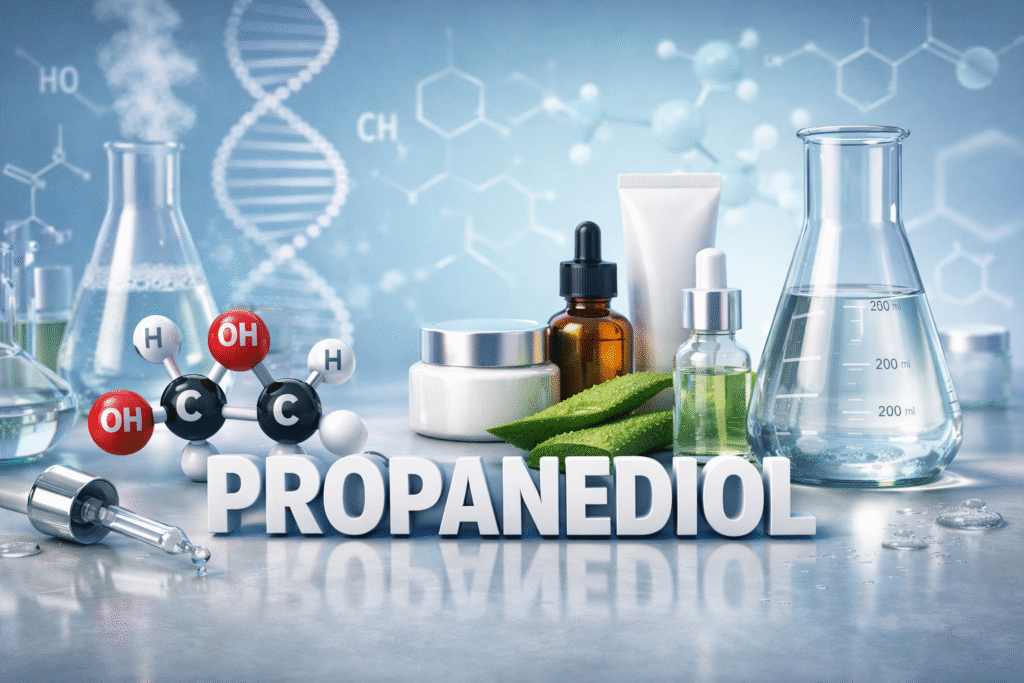
Propanediol: The Ultimate Guide to This High-Performance, Skin-Friendly Ingredient
Table of Contents
Introduction to Propanediol
Propanediol has emerged as one of the most valuable multifunctional ingredients across cosmetics, personal care, pharmaceuticals, and industrial formulations. Known for its exceptional solvency, humectant properties, and skin compatibility, propanediol is widely recognized as a modern, eco-conscious alternative to traditional glycols. We explore its composition, benefits, applications, safety, and formulation advantages in depth, offering a complete and authoritative resource designed for professionals and informed consumers alike.
What Is Propanediol?
Propanediol, chemically identified as 1,3-Propanediol, is a colorless, odorless, viscous liquid derived from renewable plant-based sources, most commonly corn sugar through bio-fermentation. Its molecular structure allows it to function effectively as a humectant, solvent, emollient, and penetration enhancer, making it indispensable in modern formulations.
Key chemical characteristics include:
- Molecular Formula: C₃H₈O₂
- Molecular Weight: 76.09 g/mol
- High purity and stability
- Excellent water miscibility
Why Propanediol Is Preferred Over Traditional Glycols
Propanediol is increasingly replacing propylene glycol and butylene glycol due to its superior performance and gentler profile.
Major Advantages
- Low irritation potential, suitable for sensitive skin
- Non-toxic and non-sensitizing
- Plant-derived and sustainable
- Improved ingredient solubilization
- Enhanced sensory feel without tackiness
These attributes position propanediol as a premium ingredient for clean beauty and dermatologically tested products.
Functional Benefits of Propanediol in Formulations
1. Powerful Humectant Properties
Propanediol attracts and retains moisture within the skin, improving hydration levels, elasticity, and barrier function. It works synergistically with other humectants such as glycerin, sodium PCA, and hyaluronic acid.
2. Superior Solvent Capability
As a solvent, propanediol dissolves active ingredients, botanical extracts, preservatives, and fragrances efficiently, ensuring formulation stability and uniformity.
3. Skin Penetration Enhancement
Propanediol improves the bioavailability of active compounds, allowing deeper and more consistent delivery without compromising skin comfort.
4. Texture and Sensory Enhancement
It imparts a silky, non-greasy feel, reducing heaviness in creams, serums, and lotions while improving spreadability.
Applications of Propanediol in Skincare and Cosmetics
Facial Serums and Treatments
In vitamin C serums, niacinamide solutions, retinol blends, and peptide formulations, propanediol ensures optimal solubility and penetration while maintaining skin tolerance.
Moisturizers and Creams
Propanediol enhances hydration, smoothness, and absorption, making it ideal for daily moisturizers, night creams, and barrier-repair products.
Cleansers and Toners
Its mild nature allows it to function effectively in foaming cleansers, micellar waters, and hydrating toners without causing dryness.
Hair Care Products
Used in shampoos, conditioners, leave-in treatments, and styling products, propanediol improves moisture retention, reduces frizz, and enhances hair softness.
Industrial and Pharmaceutical Uses of Propanediol
Pharmaceutical Formulations
Propanediol acts as a safe excipient and solvent in oral, topical, and injectable medications, ensuring consistent dosing and improved drug stability.
Food and Flavor Industry
Recognized as food-grade, propanediol is used as a carrier for flavors, colors, and additives due to its safety and neutrality.
Industrial Applications
Its use extends to resins, antifreeze alternatives, detergents, and biodegradable solvents, reinforcing its versatility across industries.
Safety Profile and Regulatory Status
Propanediol is globally approved by major regulatory authorities, including:
- FDA (United States)
- COSMOS and ECOCERT
- EU Cosmetic Regulation
- CIR Expert Panel
It is classified as non-carcinogenic, non-mutagenic, and non-reproductive toxic, with extensive safety data supporting long-term use even on compromised skin.
Propanediol in Clean Beauty and Sustainable Formulation
With growing demand for clean, vegan, and environmentally responsible ingredients, propanediol aligns perfectly with modern formulation ethics.
Sustainability Highlights
- Derived from renewable plant sources
- Low carbon footprint compared to petrochemical glycols
- Biodegradable and eco-friendly
- Supports green chemistry principles
These factors make propanediol a cornerstone ingredient in sustainable product development.
Recommended Usage Levels in Formulations
Typical usage concentrations range between 1% and 10%, depending on formulation type and desired functionality:
- Serums: 3–5%
- Creams and lotions: 2–8%
- Cleansers: 1–4%
- Hair products: 2–6%
It integrates seamlessly into both water-based and emulsion systems.
Compatibility With Other Ingredients
Propanediol demonstrates excellent compatibility with:
- Niacinamide
- Alpha arbutin
- Salicylic acid
- Panthenol (Vitamin B5)
- Allantoin
- Botanical extracts
- Preservative systems
This compatibility enhances formulation flexibility and performance.
Future Outlook of Propanediol
As innovation accelerates in cosmetic science and sustainable chemistry, propanediol is positioned to remain a high-demand multifunctional ingredient. Its balance of performance, safety, and sustainability ensures continued adoption across premium and mass-market products.
Conclusion
Propanediol stands as a next-generation, high-performance ingredient that meets the evolving demands of efficacy, safety, and sustainability. Its multifunctional role as a humectant, solvent, penetration enhancer, and sensory modifier makes it indispensable in advanced formulations. By integrating propanediol, brands and formulators achieve superior product performance, enhanced consumer experience, and compliance with global clean beauty standards.
Related posts:
 CDEA (Cocamide Diethanolamine): Complete Guide for Cosmetic & Personal Care Formulations
 Hydrolyzed Keratin: The Complete Scientific and Cosmetic Authority Guide
 Sodium PCA: The Ultimate Guide to Superior Skin Hydration and Barrier Repair
 Phenoxyethanol + Ethylhexylglycerin: The Gold-Standard Preservative System in Modern Skincare
 Decyl Glucoside: A Complete Guide to This Gentle, Natural Surfactant
 Coco Glucoside: The Gentle, Plant-Based Surfactant Revolutionizing Skincare & Haircare