

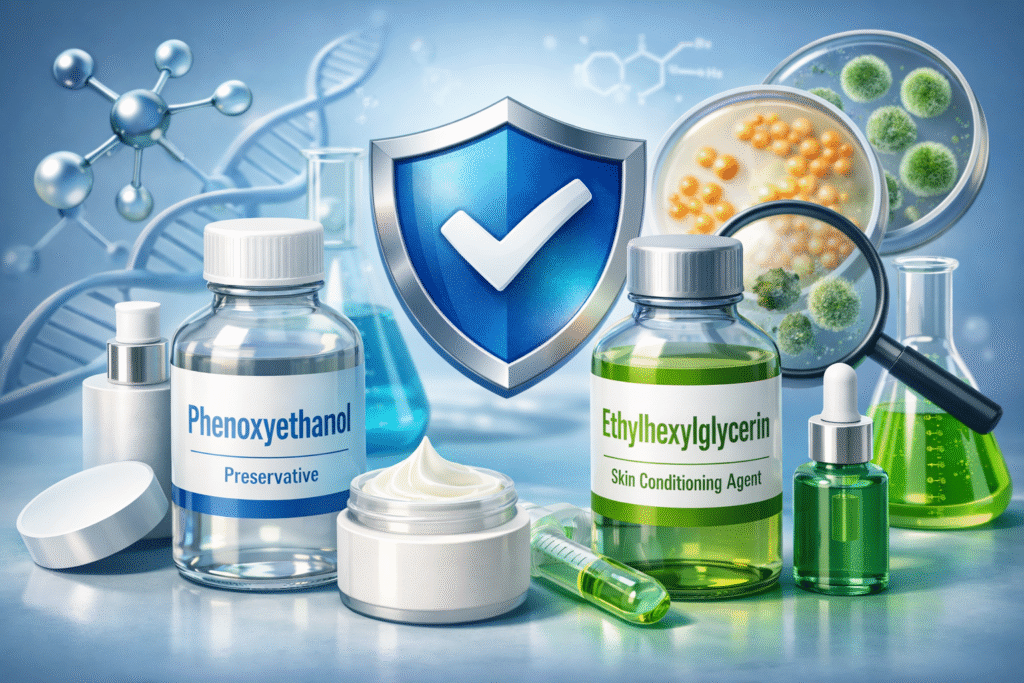
Phenoxyethanol + Ethylhexylglycerin: The Gold-Standard Preservative System in Modern Skincare
Phenoxyethanol + Ethylhexylglycerin is a highly effective, globally approved preservative system widely used in modern skincare, haircare, and personal care formulations. This advanced combination offers broad-spectrum antimicrobial protection against bacteria, yeast, and mold while maintaining excellent skin compatibility. Free from parabens, formaldehyde donors, and harsh preservatives, it aligns perfectly with clean beauty standards and consumer safety expectations.
This preservative blend functions efficiently across a wide pH range (3–10), making it suitable for serums, creams, lotions, cleansers, sunscreens, and sensitive-skin products. Ethylhexylglycerin enhances the efficacy of phenoxyethanol, allowing lower usage levels while also delivering skin-conditioning and deodorizing benefits. Its stability, low irritation potential, and regulatory acceptance across the EU, USA, ASEAN, and global markets make it a preferred choice for professional cosmetic formulators.
Ideal for both leave-on and rinse-off applications, Phenoxyethanol and Ethylhexylglycerin ensure long shelf life, consistent microbial safety, and superior product performance. This preservative system is trusted by dermatological brands and cosmetic manufacturers seeking safe, reliable, and high-performance preservation solutions.
Table of Contents
Introduction to Advanced Cosmetic Preservation
In modern cosmetic formulation, product safety, stability, and performance are non-negotiable. We rely on scientifically validated preservative systems that protect formulations from microbial contamination while maintaining skin compatibility. Among these systems, Phenoxyethanol + Ethylhexylglycerin stands out as one of the most effective, globally accepted, and skin-friendly preservative combinations used in skincare, haircare, and personal care products.
This synergistic blend has become a cornerstone in clean beauty, dermatological formulations, and professional cosmetic manufacturing due to its broad-spectrum antimicrobial activity, excellent formulation flexibility, and regulatory compliance worldwide.
What Is Phenoxyethanol + Ethylhexylglycerin?
Phenoxyethanol is a glycol ether-based preservative widely recognized for its strong activity against Gram-negative bacteria, including Pseudomonas aeruginosa. Ethylhexylglycerin, on the other hand, is a multifunctional ingredient derived from glycerin that enhances antimicrobial efficacy while also acting as a skin-conditioning agent.
When combined, Phenoxyethanol + Ethylhexylglycerin forms a self-preserving system that allows formulators to reduce total preservative load while maintaining exceptional protection against:
- Bacteria
- Yeast
- Mold
- Fungi
This synergy improves both microbial safety and skin tolerance, making it suitable for sensitive-skin formulations.
Why This Preservative System Dominates the Cosmetic Industry
Broad-Spectrum Antimicrobial Protection
We depend on preservative systems that ensure long-term product safety. This combination provides robust protection across a wide pH range, typically from pH 3 to 10, making it compatible with nearly all cosmetic formats.
Paraben-Free and Formaldehyde-Free
Consumers increasingly demand clean-label products. Phenoxyethanol + Ethylhexylglycerin is:
- Paraben-free
- Formaldehyde donor-free
- MIT/MCI-free
This makes it ideal for brands positioning themselves in the clean beauty and dermatological skincare segments.
Mechanism of Action: How the Synergy Works
Phenoxyethanol: The Primary Antimicrobial Agent
Phenoxyethanol disrupts microbial cell membranes, leading to cell leakage and microbial death. Its strength lies in targeting Gram-negative bacteria, which are often resistant to other preservatives.
Ethylhexylglycerin: The Potency Booster
Ethylhexylglycerin enhances the preservative effect by:
- Weakening microbial cell walls
- Increasing phenoxyethanol penetration
- Providing deodorizing benefits
- Acting as a humectant and emollient
This dual action allows for lower phenoxyethanol concentrations while maintaining full antimicrobial efficacy.
INCI Names and Regulatory Identity
- Phenoxyethanol (INCI: Phenoxyethanol)
- Ethylhexylglycerin (INCI: Ethylhexylglycerin)
This system is globally approved and compliant with major cosmetic regulations, including:
- EU Cosmetic Regulation (EC) No 1223/2009
- US FDA Cosmetic Ingredient Review
- ASEAN Cosmetic Directive
- China IECIC
- Health Canada
The maximum allowed concentration of phenoxyethanol in finished products is 1.0%, with ethylhexylglycerin typically used between 0.3–0.7%.
Ideal Usage Levels in Cosmetic Formulation
A standard and effective usage guideline includes:
- Phenoxyethanol: 0.8–1.0%
- Ethylhexylglycerin: 0.3–0.5%
This ratio ensures optimal microbial preservation without compromising skin comfort or sensory profile.
Compatible Product Types
We successfully use Phenoxyethanol + Ethylhexylglycerin in a wide range of cosmetic and personal care products, including:
- Face serums and ampoules
- Moisturizers and lotions
- Sunscreens and after-sun products
- Shampoos and conditioners
- Cleansers and micellar waters
- Baby care products
- Professional dermatological treatments
Its excellent solubility in water and glycols ensures seamless integration into both leave-on and rinse-off formulations.
Skin Safety and Tolerability Profile
This preservative system is extensively tested for dermal compatibility. When used within recommended limits, it demonstrates:
- Low irritation potential
- Non-sensitizing behavior
- Excellent tolerance for sensitive skin
Ethylhexylglycerin further improves the skin feel by reducing dryness often associated with preservatives.
pH Stability and Formulation Flexibility
One of the most significant advantages of this system is its exceptional pH stability. Unlike many organic acids, it does not require acidic conditions to function effectively.
This allows formulators to use it confidently in:
- Vitamin C serums
- Retinol creams
- Niacinamide formulations
- Peptide-based products
- AHA/BHA exfoliants
Comparison With Other Preservative Systems
Versus Parabens
While parabens are effective, they face consumer resistance. Phenoxyethanol + Ethylhexylglycerin delivers similar efficacy with better market acceptance.
Versus Organic Acid Preservatives
Organic acids require low pH and often destabilize formulations. This system works across a broader pH spectrum with less formulation risk.
Clean Beauty Compatibility
Despite misconceptions, this preservative system is widely accepted in modern clean beauty standards due to its:
- Low toxicity profile
- Efficient performance at low concentrations
- Absence of controversial preservatives
Many eco-conscious brands rely on it as a safe compromise between efficacy and clean formulation philosophy.
Manufacturing and Processing Advantages
From a production standpoint, we value this system for its:
- Heat stability
- Easy incorporation during cool-down phase
- Minimal impact on viscosity
- Neutral odor and color
This reduces manufacturing errors and improves batch-to-batch consistency.
Shelf Life and Product Stability
Products preserved with Phenoxyethanol + Ethylhexylglycerin typically achieve:
- 24–36 months shelf life
- Excellent stability under accelerated testing
- Reliable preservation even after repeated consumer use
This makes it ideal for both mass-market and premium skincare lines.
Why Leading Brands Trust Phenoxyethanol + Ethylhexylglycerin
We see this preservative system adopted by dermatologist-approved brands, pharmaceutical-grade skincare, and global cosmetic manufacturers because it delivers:
- Consistent safety
- Regulatory confidence
- Consumer trust
- Superior formulation performance
It represents a balanced, science-backed approach to modern cosmetic preservation.
Final Thoughts on Phenoxyethanol + Ethylhexylglycerin
Phenoxyethanol + Ethylhexylglycerin is not merely a preservative—it is a strategic formulation tool. It enables brands to create safe, stable, and high-performance products that meet global regulations and evolving consumer expectations.
By combining antimicrobial strength with skin-conditioning benefits, this system remains a benchmark standard in cosmetic science and continues to shape the future of professional skincare formulation.
Related posts:
 CDEA (Cocamide Diethanolamine): Complete Guide for Cosmetic & Personal Care Formulations
 Propanediol: The Ultimate Guide to This High-Performance, Skin-Friendly Ingredient
 Hydrolyzed Keratin: The Complete Scientific and Cosmetic Authority Guide
 Sodium PCA: The Ultimate Guide to Superior Skin Hydration and Barrier Repair
 Decyl Glucoside: A Complete Guide to This Gentle, Natural Surfactant
 Coco Glucoside: The Gentle, Plant-Based Surfactant Revolutionizing Skincare & Haircare