

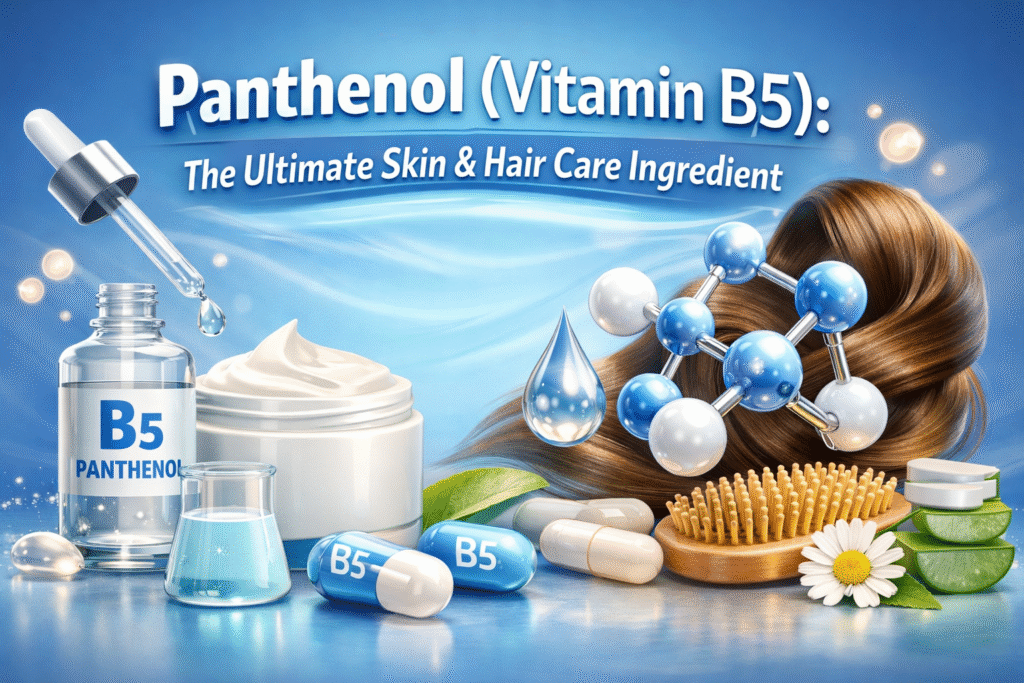
Panthenol (Vitamin B5): The Ultimate Skin & Hair Care Powerhouse
Introduction to Panthenol
Panthenol might sound like a lab-made chemical, but trust me—it’s one of the kindest ingredients your skin and hair will ever meet. If skincare ingredients were people, panthenol would be that calm, reliable friend who always shows up when your skin is irritated, dry, or stressed.
Table of Contents
What Is Panthenol?
Panthenol is the alcohol form of pantothenic acid, also known as Vitamin B5. Once applied to the skin or hair, it converts into vitamin B5, working from within to repair, hydrate, and strengthen.
Why Is Panthenol Called Pro-Vitamin B5?
Because panthenol itself isn’t vitamin B5—it becomes vitamin B5 after absorption. Think of it like raw dough turning into bread once baked. This transformation is what makes panthenol incredibly effective.
The Science Behind Panthenol
Chemical Structure and Forms
Panthenol exists in two main forms used in cosmetics.
D-Panthenol
This is the biologically active form. It’s more expensive but offers superior performance.
DL-Panthenol
A racemic mixture commonly used in cosmetic formulations due to its cost-effectiveness.
How Panthenol Converts to Vitamin B5 in Skin
Once absorbed, enzymes in the skin oxidize panthenol into pantothenic acid, which plays a crucial role in cellular regeneration and lipid synthesis.
How Panthenol Works on Skin
Humectant Properties Explained
Panthenol attracts and binds water like a sponge. It pulls moisture from the environment and locks it into the skin, keeping it plump and hydrated.
Skin Barrier Repair Mechanism
By boosting lipid production, panthenol strengthens the skin barrier—your skin’s first line of defense against pollution, bacteria, and moisture loss.
Anti-Inflammatory Benefits
Panthenol calms redness, itching, and irritation. That’s why it’s a star ingredient in products for eczema-prone and sensitive skin.
Key Benefits of Panthenol for Skin
Deep Hydration and Moisture Retention
Unlike surface-level hydrators, panthenol penetrates deeply, providing long-lasting hydration.
Soothing Irritated and Sensitive Skin
Sunburn? Over-exfoliated skin? Panthenol steps in like aloe vera on steroids—gentle yet powerful.
Improved Skin Elasticity
With regular use, panthenol helps maintain skin softness and flexibility.
Wound Healing and Skin Recovery
It accelerates cell turnover and supports faster healing, making it popular in post-procedure skincare.
Anti-Aging Support
By improving hydration and elasticity, panthenol indirectly reduces the appearance of fine lines.
Panthenol for Hair Care
Strengthening Hair Shafts
Panthenol coats the hair shaft, making strands thicker and more resilient.
Improving Hair Smoothness and Shine
It smooths cuticles, reducing frizz and boosting natural shine.
Scalp Health and Dandruff Control
Its soothing nature helps calm irritated scalps and reduce flakiness.
Panthenol in Skincare Products
Serums
Lightweight and fast-absorbing, perfect for daily hydration.
Creams and Lotions
Locks in moisture and repairs skin overnight.
Cleansers and Toners
Prevents dryness caused by surfactants.
After-Sun and Repair Products
Essential for calming UV-stressed skin.
Panthenol in Haircare Products
Shampoos
Reduces dryness without weighing hair down.
Conditioners
Improves manageability and softness.
Hair Masks and Leave-Ins
Deep conditioning and long-term repair.
Ideal Usage Levels of Panthenol
Recommended Concentrations
- Skincare: 0.5% – 5%
- Haircare: 0.1% – 1%
Overuse Myths and Facts
More isn’t always better. Excessive levels can feel sticky without added benefits.
Panthenol for Different Skin Types
Dry Skin
A hydration hero.
Oily and Acne-Prone Skin
Non-comedogenic and lightweight.
Sensitive and Rosacea-Prone Skin
Reduces redness and strengthens skin resilience.
Panthenol vs Other Humectants
Panthenol vs Glycerin
Glycerin hydrates; panthenol hydrates and repairs.
Panthenol vs Hyaluronic Acid
Hyaluronic acid plumps; panthenol heals and soothes.
Safety, Side Effects, and Compatibility
Is Panthenol Safe for Daily Use?
Absolutely. It’s dermatologist-approved and baby-safe.
Pregnancy and Baby-Safe Products
Commonly used in diaper rash creams.
Allergic Reactions – Rare but Possible
Patch testing is always wise.
How to Formulate with Panthenol
Water Solubility
Fully water-soluble, easy to incorporate.
pH Compatibility
Stable between pH 4–7.
Stability in Formulations
Add during cool-down phase for best results.
Natural vs Synthetic Panthenol
Source Differences
Both perform identically on skin.
Performance Comparison
Effectiveness remains the same regardless of origin.
Panthenol in Professional & Dermatological Treatments
Used in post-laser care, chemical peels, and medical creams due to its healing properties.
Common Myths About Panthenol
- ❌ It’s greasy (False)
- ❌ It clogs pores (False)
- ❌ It’s only for dry skin (False)
Future of Panthenol in Skincare and Haircare
With rising demand for barrier-repair products, panthenol is set to remain a cornerstone ingredient for years to come.
Conclusion
Panthenol isn’t flashy or trendy—but it works. Quietly, consistently, and beautifully. Whether you’re building a skincare brand, formulating at home, or just choosing better products, panthenol is one ingredient you can always trust. Simple, soothing, and scientifically proven—it’s skincare comfort food.
FAQs
1. Can panthenol be used daily?
Yes, it’s gentle enough for everyday use.
2. Is panthenol good for acne-prone skin?
Absolutely. It hydrates without clogging pores.
3. Can panthenol repair damaged hair?
It strengthens and improves hair texture over time.
4. Is panthenol natural?
It can be natural or synthetic—both are effective.
5. Does panthenol lighten skin?
No, but it improves skin health and glow.
Related posts:
 Hyaluronic Acid – The Ultimate Guide to Deep Hydration and Youthful Skin
 Niacinamide – The Ultimate Skincare Ingredient Explained
 Vitamin C, Sodium Ascorbyl Phosphate (SAP): A Complete Skincare Guide
 Coco Betaine (Cocamidopropyl Betaine): Benefits, Uses, Safety, and Complete Guide
 Guar Hydroxypropyltrimonium Chloride: Comprehensive Guide, Benefits, Uses, and Formulation Insights
 Hydrolyzed Keratin: The Complete Scientific and Cosmetic Authority Guide