

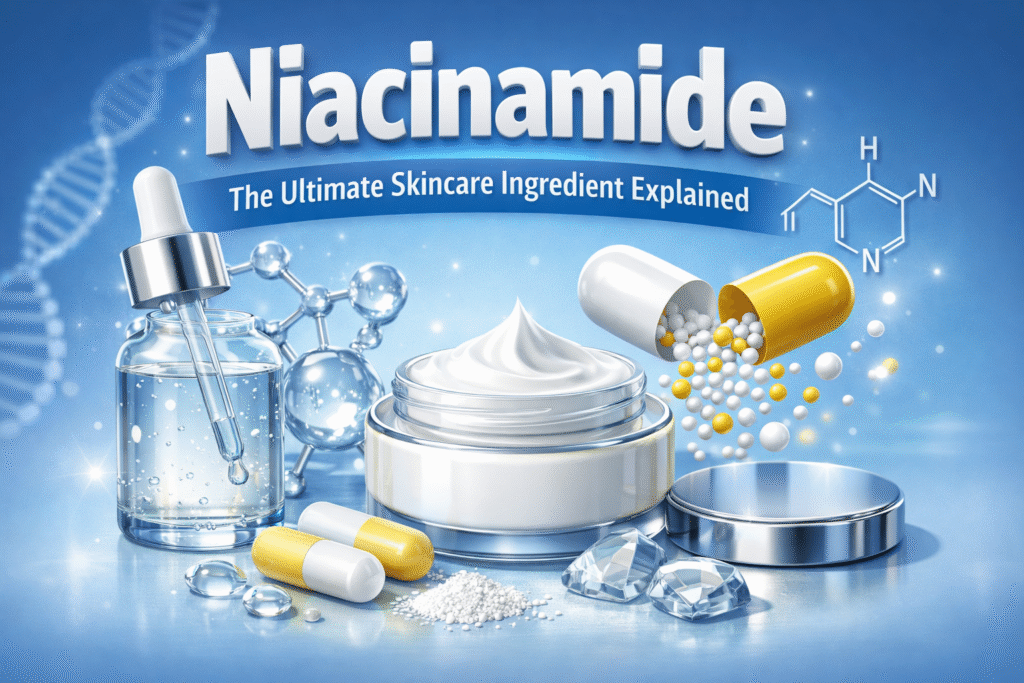
Niacinamide – The Ultimate Skincare Ingredient Explained
If skincare ingredients had a popularity contest, niacinamide would be that quiet overachiever who suddenly tops the class. It’s everywhere—serums, creams, toners—and for good reason. This multitasking powerhouse works behind the scenes to improve your skin in ways you can actually see and feel. Whether you’re battling acne, dullness, pigmentation, or early signs of aging, niacinamide might just be the missing puzzle piece in your routine.
So, what makes niacinamide so special? Let’s break it down in plain, simple language.
Niacinamide is a form of vitamin B3, an essential nutrient your body (and skin) needs to function properly.
The Science Behind Niacinamide
At a cellular level, niacinamide helps your skin produce ceramides, fatty molecules that act like glue holding your skin cells together. Think of your skin barrier as a brick wall—ceramides are the cement. When that wall is strong, your skin stays hydrated, calm, and resilient.
Niacinamide vs Vitamin B3
Vitamin B3 exists in two main forms: niacin and niacinamide. Niacin can cause flushing and irritation, while niacinamide is gentle, stable, and perfect for topical skincare use.
Why Niacinamide Is a Skincare Superstar
Some ingredients do one job well. Niacinamide does many jobs well, and that’s what makes it a fan favorite.
Multi-Functional Benefits
From oil control to brightening, calming redness to smoothing fine lines, niacinamide is like a Swiss Army knife for your skin.
Suitable for Almost All Skin Types
Dry, oily, acne-prone, sensitive—niacinamide doesn’t discriminate. That’s rare in the skincare world.
Top Benefits of Niacinamide for Skin
Let’s talk results.
Strengthens the Skin Barrier
A stronger barrier means less moisture loss, fewer irritations, and healthier-looking skin overall.
Reduces Acne and Breakouts
Niacinamide has anti-inflammatory properties that calm angry pimples and help regulate sebum (oil) production.
Controls Excess Oil Production
If your face turns into an oil slick by noon, niacinamide helps balance things out without over-drying.
Minimizes Pores
By regulating oil and improving elasticity, pores appear smaller and tighter over time.
Brightens Dull Skin
Niacinamide improves uneven tone and gives your skin that fresh, awake glow.
Reduces Hyperpigmentation
Dark spots, acne marks, sun damage—niacinamide helps fade them gradually and safely.
Anti-Aging and Fine Lines
It boosts collagen production, helping skin look firmer and smoother.
Soothes Sensitive and Red Skin
Redness, irritation, and inflammation calm down, making niacinamide ideal for reactive skin.
Niacinamide for Different Skin Types
Niacinamide for Oily Skin
Balances oil, reduces shine, and keeps pores clear.
Niacinamide for Dry Skin
Strengthens the barrier and locks in moisture when paired with hydrating ingredients.
Niacinamide for Acne-Prone Skin
Reduces inflammation, controls oil, and supports healing.
Niacinamide for Sensitive Skin
Gentle, soothing, and non-irritating when used correctly.
Niacinamide Concentrations Explained
2% Niacinamide
Great for beginners and sensitive skin.
5% Niacinamide
The sweet spot for most people—effective and gentle.
10% Niacinamide
Targets acne, oil, and pigmentation more aggressively.
Can You Use Higher Percentages?
Higher isn’t always better. Over 10% may cause irritation for some skin types.
How to Use Niacinamide in Your Skincare Routine
Morning Routine with Niacinamide
Cleanser → Niacinamide serum → Moisturizer → Sunscreen
Night Routine with Niacinamide
Cleanser → Toner → Niacinamide → Treatment → Moisturizer
Layering Niacinamide Correctly
Apply after cleansing and toning, before heavy creams or oils.
Niacinamide with Other Skincare Ingredients
Niacinamide and Hyaluronic Acid
A hydration dream team.
Niacinamide and Salicylic Acid
Perfect for acne-prone and oily skin.
Niacinamide and Vitamin C
Modern formulations can be used together safely—just don’t overdo it.
Niacinamide and Retinol
Helps reduce retinol irritation and boosts anti-aging results.
Common Myths About Niacinamide
Does Niacinamide Cause Purging?
No. It doesn’t increase cell turnover like acids or retinoids.
Can Niacinamide Irritate Skin?
Only if used in very high concentrations or on compromised skin.
Side Effects and Safety
Who Should Avoid Niacinamide?
Very few people. Those with extreme sensitivity should patch test first.
Patch Testing Importance
Always test new products behind your ear or on your wrist.
Niacinamide in Professional Skincare Products
Serums
Most effective and fast-absorbing.
Creams and Moisturizers
Great for daily maintenance.
Toners and Masks
Good for gentle, consistent use.
Niacinamide in DIY and Home Formulations
Safe Usage Guidelines
Use 2–5% for home formulations.
Ideal pH Range
pH 5.0–7.0 for stability and effectiveness.
How Long Does Niacinamide Take to Work?
Short-Term Results
Oil control and hydration within 1–2 weeks.
Long-Term Benefits
Visible improvement in pores, pigmentation, and texture in 6–8 weeks.
Choosing the Right Niacinamide Product
What to Look for on the Label
Clear percentage, minimal fragrance, supportive ingredients.
Ingredients to Avoid
Alcohol-heavy formulas if you have sensitive skin.
Niacinamide vs Other Popular Actives
Niacinamide vs Alpha Arbutin
Niacinamide is broader; arbutin is more targeted for pigmentation.
Niacinamide vs Zinc PCA
Zinc PCA focuses on oil; niacinamide does much more.
Final Thoughts on Niacinamide
Niacinamide is like that reliable friend who always shows up and gets the job done. It’s gentle, powerful, versatile, and backed by science. Whether you’re a skincare beginner or a formulation expert, niacinamide deserves a permanent spot in your routine.
FAQs
1. Can I use niacinamide every day?
Yes, it’s safe for daily morning and night use.
2. Is niacinamide good for acne scars?
Absolutely. It helps fade post-acne marks over time.
3. Can niacinamide be used with sunscreen?
Yes, it works great under sunscreen.
4. Is niacinamide suitable for teenagers?
Yes, especially for oily and acne-prone skin.
5. Can niacinamide replace moisturizer?
No, it supports hydration but doesn’t replace a moisturizer.
Related posts:
 Hyaluronic Acid – The Ultimate Guide to Deep Hydration and Youthful Skin
 Vitamin C, Sodium Ascorbyl Phosphate (SAP): A Complete Skincare Guide
 Coco Betaine (Cocamidopropyl Betaine): Benefits, Uses, Safety, and Complete Guide
 CDEA (Cocamide Diethanolamine): Complete Guide for Cosmetic & Personal Care Formulations
 Guar Hydroxypropyltrimonium Chloride: Comprehensive Guide, Benefits, Uses, and Formulation Insights
 Hydrolyzed Keratin: The Complete Scientific and Cosmetic Authority Guide