

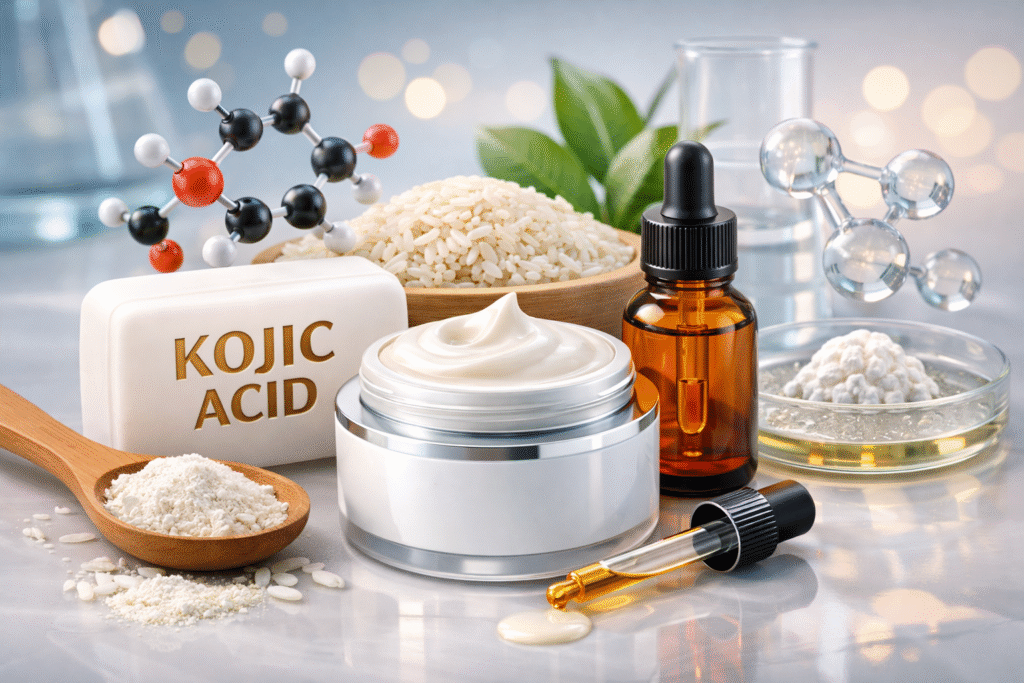
Kojic Acid: Benefits, Uses, Safety, and How It Transforms Your Skin
Discover the power of Kojic Acid for brighter, even-toned skin. Learn how this natural skin-lightening ingredient works, its benefits, safe usage tips, and how to incorporate it into your skincare routine for fading dark spots, acne scars, and hyperpigmentation effectively.
Table of Contents
Introduction to Kojic Acid
If uneven skin tone, dark spots, or stubborn pigmentation have been bothering you, chances are you’ve already heard about kojic acid. It’s one of those skincare ingredients that quietly does the heavy lifting while others steal the spotlight. Think of it like the backstage crew at a concert—without it, the show just wouldn’t shine.
Kojic acid has earned its place in modern skincare thanks to its impressive skin-brightening abilities and gentle yet effective action. But what exactly is it, and why do dermatologists and formulators swear by it? Let’s break it down in simple, honest terms.
What Is Kojic Acid?
Kojic acid is a naturally derived skin-lightening agent widely used in cosmetic and dermatological products. Its main claim to fame is reducing excess melanin—the pigment responsible for dark spots and uneven skin tone.
Natural Origin of Kojic Acid
Kojic acid is produced through the fermentation of certain fungi, especially Aspergillus species. Interestingly, it’s also a byproduct of fermenting rice, which explains its historical use in traditional Japanese skincare. Nature really does know best, doesn’t it?
Chemical Structure Explained Simply
From a chemistry standpoint, kojic acid is an organic compound that interferes with melanin production. But don’t worry—you don’t need a lab coat to understand its effects. Just know this: it tells your skin to slow down pigment production, leading to a brighter, clearer appearance over time.
How Kojic Acid Works on Skin
Kojic acid doesn’t bleach the skin. Instead, it works smartly, targeting the root cause of discoloration.
Tyrosinase Inhibition
Tyrosinase is an enzyme involved in melanin synthesis. Kojic acid blocks this enzyme, acting like a speed breaker on a busy road. Less enzyme activity means less melanin production.
Role in Melanin Reduction
By reducing melanin at its source, kojic acid helps fade existing dark spots and prevents new ones from forming. The result? A more even, radiant complexion that looks naturally healthy.
Key Benefits of Kojic Acid
Skin Brightening
One of the most loved benefits of kojic acid is its ability to enhance skin brightness. With consistent use, dull skin starts looking fresher and more luminous.
Hyperpigmentation Reduction
Whether it’s sunspots, melasma, or post-inflammatory hyperpigmentation, kojic acid helps fade discoloration gradually and safely.
Acne Scar Fading
Acne scars can be stubborn, but kojic acid helps lighten their appearance, making skin look smoother and clearer.
Anti-Aging Support
By reducing oxidative stress and uneven tone, kojic acid indirectly supports anti-aging efforts. Youthful skin isn’t just wrinkle-free—it’s even-toned too.
Common Uses of Kojic Acid in Skincare
Serums and Creams
Kojic acid serums are lightweight and penetrate deeply, while creams offer longer-lasting hydration along with brightening benefits.
Soaps and Cleansers
Kojic acid soaps are popular for body pigmentation, especially underarms, knees, and elbows.
Professional Treatments
Dermatologists often include kojic acid in chemical peels and professional brightening treatments for enhanced results.
Kojic Acid for Different Skin Types
Oily and Acne-Prone Skin
Kojic acid is non-comedogenic, making it suitable for oily and acne-prone skin when formulated correctly.
Dry and Sensitive Skin
Sensitive skin types should opt for lower concentrations and moisturizing formulas to avoid irritation.
Combination Skin
Combination skin benefits well from kojic acid when balanced with soothing ingredients.
How to Use Kojic Acid Safely
Recommended Concentration
Most cosmetic products contain kojic acid between 0.5% to 2%, which is both effective and safe.
Patch Testing Importance
Always patch test before full application. Think of it as a safety rehearsal before the main show.
Frequency of Use
Start with once daily use, preferably at night, and increase gradually if your skin tolerates it well.
Side Effects and Precautions
Common Reactions
Mild tingling, redness, or dryness may occur initially. This usually settles as your skin adjusts.
When to Stop Using Kojic Acid
If you experience persistent irritation, itching, or burning, discontinue use immediately.
Kojic Acid vs Other Skin Brightening Agents
Kojic Acid vs Vitamin C
Vitamin C brightens through antioxidant activity, while kojic acid targets melanin directly. Together, they’re a powerhouse duo.
Kojic Acid vs Alpha Arbutin
Alpha arbutin is gentler, but kojic acid works faster for stubborn pigmentation.
Kojic Acid vs Hydroquinone
Kojic acid is a safer alternative to hydroquinone, with fewer long-term risks.
Best Ingredients to Combine with Kojic Acid
Niacinamide
Helps soothe skin and strengthen the barrier.
Hyaluronic Acid
Boosts hydration and reduces dryness.
Licorice Extract
Enhances brightening while calming irritation.
Ingredients to Avoid Mixing with Kojic Acid
Strong Acids
High concentrations of AHAs or BHAs can increase irritation.
Retinoids (Improper Use)
Using retinoids without proper spacing may overwhelm the skin.
Kojic Acid in Cosmetic Formulations
Stability Challenges
Kojic acid is sensitive to light and air, requiring proper formulation techniques.
Ideal pH Range
The ideal pH for kojic acid stability is 4.5–5.5.
Is Kojic Acid Safe for Long-Term Use?
Yes, when used within recommended concentrations and combined with sun protection, kojic acid is safe for long-term use.
Who Should Avoid Kojic Acid?
Pregnant women, individuals with eczema, or severely sensitive skin should consult a dermatologist before use.
Myths and Facts About Kojic Acid
Myth: Kojic acid bleaches skin
Fact: It only reduces excess pigment, not natural skin color.
Future of Kojic Acid in Skincare
With advanced encapsulation and stabilizing technologies, kojic acid is becoming safer, more effective, and more popular than ever.
Conclusion
Kojic acid is like a gentle editor for your skin—it doesn’t rewrite the whole story, just smooths out the rough patches. From brightening dull skin to fading stubborn dark spots, it’s a reliable, science-backed ingredient when used correctly. Pair it with sunscreen, patience, and a good skincare routine, and you’ll see why it remains a favorite in cosmetic formulations worldwide.
FAQs
1. Can kojic acid be used daily?
Yes, if your skin tolerates it well and you use sunscreen.
2. Is kojic acid suitable for sensitive skin?
Yes, in low concentrations and soothing formulations.
3. How long does kojic acid take to show results?
Visible improvement usually appears within 4–6 weeks.
4. Can I use kojic acid during the day?
It’s better used at night, but daytime use requires strict sun protection.
5. Does kojic acid permanently lighten skin?
No, it only reduces excess pigmentation, not your natural skin tone.
Related posts:
 Hyaluronic Acid – The Ultimate Guide to Deep Hydration and Youthful Skin
 Niacinamide – The Ultimate Skincare Ingredient Explained
 Vitamin C, Sodium Ascorbyl Phosphate (SAP): A Complete Skincare Guide
 Coco Betaine (Cocamidopropyl Betaine): Benefits, Uses, Safety, and Complete Guide
 Propanediol: The Ultimate Guide to This High-Performance, Skin-Friendly Ingredient
 Guar Hydroxypropyltrimonium Chloride: Comprehensive Guide, Benefits, Uses, and Formulation Insights