

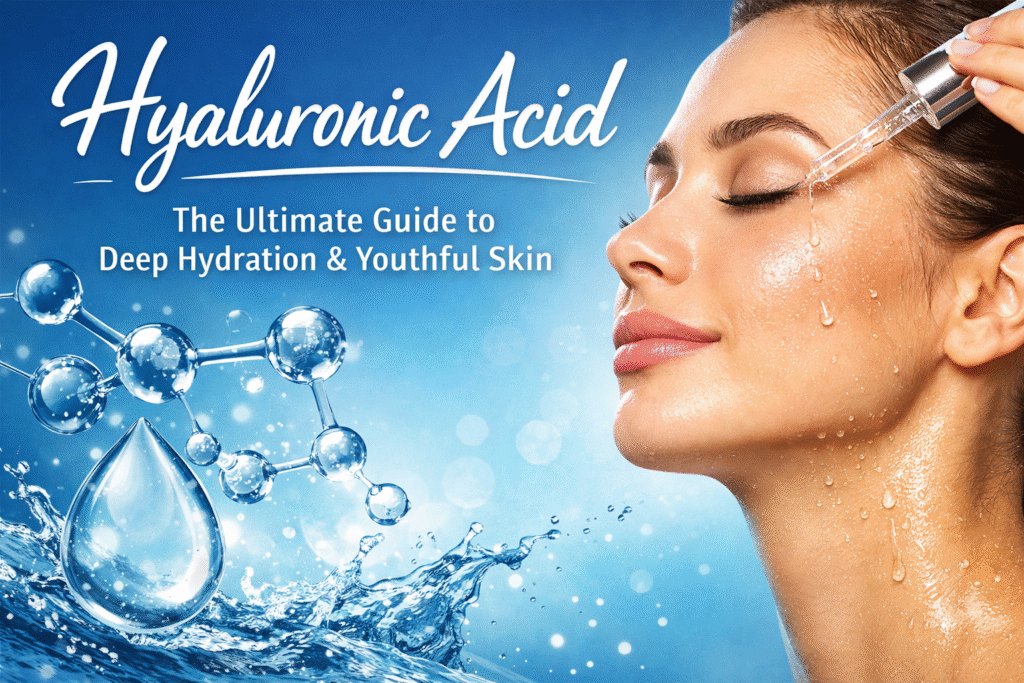
Hyaluronic Acid – The Ultimate Guide to Deep Hydration and Youthful Skin
Table of Contents
Introduction to Hyaluronic Acid
If your skin could talk, it would probably ask for water. And lots of it. That’s where hyaluronic acid steps in like a tall glass of water on a hot summer day. This powerhouse ingredient has become a skincare superstar—and for good reason.
What Is Hyaluronic Acid?
Hyaluronic acid (HA) is a naturally occurring molecule found in our skin, eyes, and joints. Think of it as a moisture magnet. It can hold up to 1,000 times its weight in water, which makes it one of the most effective hydrating ingredients known to science.
Why Is Hyaluronic Acid So Popular in Skincare?
Simple. It works. No matter your age, gender, or skin type, hydration is non-negotiable. Hyaluronic acid delivers instant plumpness, glow, and comfort—without feeling heavy or greasy.
The Science Behind Hyaluronic Acid
Let’s break the lab talk into plain English.
Molecular Structure Explained Simply
Hyaluronic acid is a glycosaminoglycan (don’t worry about pronouncing it). What matters is its sponge-like structure, which traps water molecules and keeps them locked into your skin.
How Hyaluronic Acid Holds Water
Imagine a microscopic net that grabs and holds moisture from the environment and deeper skin layers. That’s exactly how HA works—hydrating your skin from the inside out.
Low vs High Molecular Weight HA
- Low molecular weight HA penetrates deeper for long-term hydration
- High molecular weight HA sits on the surface, giving instant plumpness
The best formulas combine both.
Natural Presence of Hyaluronic Acid in the Body
Hyaluronic Acid in Skin
Our skin naturally contains hyaluronic acid, but here’s the catch—we lose it as we age. Pollution, UV rays, and stress speed up this loss, leading to dryness and wrinkles.
Hyaluronic Acid in Joints and Eyes
HA also lubricates joints and keeps eyes moist. That’s why it’s used in eye drops and joint supplements too.
Key Benefits of Hyaluronic Acid
Intense Hydration
This is HA’s main claim to fame. It quenches thirsty skin instantly and keeps it hydrated for hours.
Anti-Aging and Wrinkle Reduction
Hydrated skin = plumper skin. Fine lines look softer, and your face gets that youthful bounce back.
Skin Barrier Repair
A healthy moisture barrier protects against irritation, pollution, and breakouts. HA strengthens this defense.
Soothing Sensitive and Acne-Prone Skin
Unlike harsh actives, hyaluronic acid calms redness and doesn’t clog pores.
Hyaluronic Acid for Different Skin Types
Oily Skin
Yes, oily skin needs hydration too. HA balances oil production without heaviness.
Dry Skin
For dry skin, HA is like rain in a desert—reviving and refreshing instantly.
Combination Skin
It adapts beautifully, hydrating dry areas without overwhelming oily zones.
Sensitive Skin
Gentle, non-irritating, and fragrance-free—HA is a safe bet.
Hyaluronic Acid in Skincare Products
Serums
Lightweight and fast-absorbing. Perfect for layering.
Gels
Ideal for oily and acne-prone skin, especially in hot climates.
Creams and Moisturizers
Best for sealing hydration and preventing moisture loss.
Professional vs Over-the-Counter Products
Professional formulas often use advanced delivery systems, but OTC products work great when formulated well.
How to Use Hyaluronic Acid Correctly
Application Step-by-Step
- Cleanse your face
- Apply HA on damp skin
- Seal with a moisturizer
Best Time to Apply
Morning and night. Consistency is key.
Common Mistakes to Avoid
Using HA on dry skin without sealing it can actually cause dryness. Always lock it in.
Hyaluronic Acid vs Other Hydrating Ingredients
Hyaluronic Acid vs Glycerin
Glycerin hydrates well, but HA offers deeper and longer-lasting moisture.
Hyaluronic Acid vs Ceramides
Ceramides repair the barrier, HA hydrates. Together? Magic.
Hyaluronic Acid in Professional Treatments
Dermal Fillers
Injectable HA fillers restore volume and contour the face.
Injectable vs Topical HA
Topical hydrates surface layers; injectables work deeper for structural support.
Safety, Side Effects, and Myths
Is Hyaluronic Acid Safe?
Absolutely. It’s biocompatible and suitable for daily use.
Common Myths Debunked
No, HA doesn’t thin skin. No, it’s not only for dry skin. Yes, it works in humid and dry climates.
Choosing the Best Hyaluronic Acid Product
Ingredient List Tips
Look for:
- Sodium Hyaluronate
- Multi-molecular HA
- No alcohol or harsh fragrance
Concentration Matters
More isn’t always better. 0.1%–2% is ideal.
Hyaluronic Acid for Men and Women
Gender-Neutral Skincare Benefits
Skin is skin. HA works universally—hydration has no gender.
Sustainability and Vegan Sources of Hyaluronic Acid
Plant-Based and Bio-Fermented HA
Modern HA is bio-fermented, vegan, cruelty-free, and eco-conscious.
Future of Hyaluronic Acid in Skincare
Advanced Delivery Systems
Encapsulation, cross-linked HA, and smart-release technologies are shaping the future.
Conclusion
Hyaluronic acid isn’t just a trend—it’s a skincare essential. Whether you’re battling dryness, early aging, or dullness, HA delivers hydration like nothing else. Think of it as the foundation of healthy skin. Simple, effective, and timeless.
FAQs
Q1: Can I use hyaluronic acid every day?
Yes, it’s safe for daily morning and night use.
Q2: Can hyaluronic acid cause breakouts?
No, it’s non-comedogenic and acne-safe.
Q3: Should I apply hyaluronic acid before or after moisturizer?
Before moisturizer, always.
Q4: Is hyaluronic acid suitable for sensitive skin?
Absolutely. It soothes and hydrates gently.
Q5: Can I mix hyaluronic acid with vitamin C or niacinamide?
Yes, it pairs beautifully with most actives.
Related posts:
 Niacinamide – The Ultimate Skincare Ingredient Explained
 Vitamin C, Sodium Ascorbyl Phosphate (SAP): A Complete Skincare Guide
 Coco Betaine (Cocamidopropyl Betaine): Benefits, Uses, Safety, and Complete Guide
 CDEA (Cocamide Diethanolamine): Complete Guide for Cosmetic & Personal Care Formulations
 Guar Hydroxypropyltrimonium Chloride: Comprehensive Guide, Benefits, Uses, and Formulation Insights
 Hydrolyzed Keratin: The Complete Scientific and Cosmetic Authority Guide