

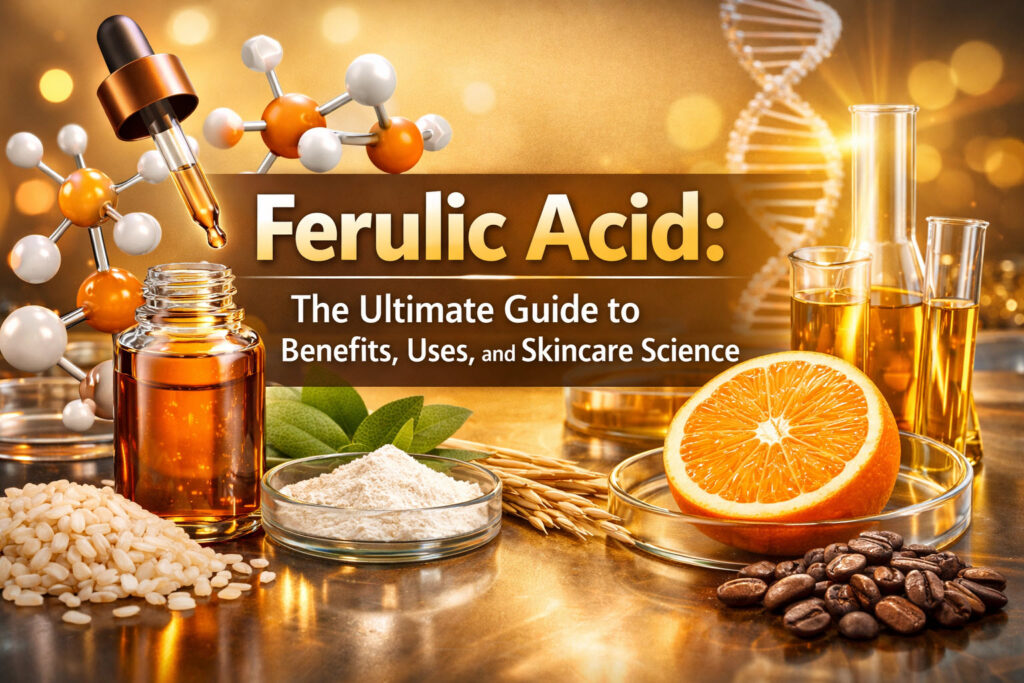
Ferulic Acid: The Ultimate Guide to Benefits, Uses, and Skincare Science
Ferulic Acid is one of the most powerful antioxidants used in modern skincare, known for its ability to protect the skin from environmental damage while enhancing the effectiveness of other active ingredients. Naturally derived from plant sources such as rice bran, oats, wheat, and fruits, ferulic acid plays a crucial role in defending the skin against free radicals caused by UV radiation, pollution, and oxidative stress.
In skincare formulations, ferulic acid is highly valued for its stabilizing properties, especially when combined with Vitamin C and Vitamin E. This powerful trio significantly boosts antioxidant protection, improves skin firmness, reduces fine lines, and enhances overall skin brightness. Ferulic acid also helps strengthen the skin barrier, making it more resilient against premature aging and daily environmental aggressors.
One of the standout benefits of ferulic acid is its anti-aging performance. It helps minimize wrinkles, supports collagen production, and improves skin elasticity, resulting in a smoother and more youthful complexion. Its brightening properties help reduce dullness and uneven skin tone, while its anti-inflammatory nature soothes redness and irritation, making it suitable for sensitive, acne-prone, and mature skin types.
Ferulic acid is most commonly found in lightweight serums designed for daytime use, as it offers added protection against UV-induced damage and works synergistically with sunscreen. When used consistently, it enhances skin clarity, improves texture, and delivers long-lasting antioxidant defense.
Whether you are a skincare enthusiast, a cosmetic formulator, or a brand owner, ferulic acid stands out as a science-backed, high-performance ingredient that delivers visible results. Its versatility, safety profile, and proven effectiveness make it a must-have ingredient in advanced skincare routines and professional cosmetic formulations.
Table of Contents
Introduction to Ferulic Acid
Ever wondered why some skincare products seem to work harder and smarter? The secret often lies in powerful antioxidants—and ferulic acid is one of the best-kept secrets in modern skincare. Think of it as a bodyguard for your skin, shielding it from daily environmental stress while boosting the performance of other active ingredients.
In this guide, we’ll break down everything you need to know about ferulic acid in a simple, friendly, and practical way. Whether you’re a skincare enthusiast or building your own cosmetic brand, this article has you covered.
What Is Ferulic Acid?
Ferulic acid is a plant-based antioxidant naturally found in the cell walls of many foods. In skincare, it’s prized for its ability to neutralize free radicals and enhance the stability of other antioxidants.
In simple terms? It helps slow down visible aging and keeps your skin looking fresh and healthy.
Natural Sources of Ferulic Acid
Ferulic acid occurs naturally in:
- Rice bran
- Oats
- Wheat
- Apples
- Oranges
- Coffee
These foods provide antioxidant benefits internally, while topical application targets the skin directly.
Ferulic Acid in Skincare vs Food
While dietary ferulic acid supports overall health, topical ferulic acid works directly on the skin. Skincare formulations deliver concentrated, targeted protection where your skin needs it most.
Why Ferulic Acid Is a Skincare Superstar
If antioxidants had a popularity contest, ferulic acid would be the quiet overachiever.
Antioxidant Power Explained
Free radicals are unstable molecules caused by UV rays, pollution, and stress. They damage collagen, accelerate wrinkles, and dull the skin. Ferulic acid neutralizes these troublemakers before they cause chaos.
How It Protects Against Free Radicals
Ferulic acid donates electrons to free radicals, stabilizing them. Imagine it like calming an angry crowd—once stabilized, they stop causing damage.
Key Benefits of Ferulic Acid for Skin
Let’s talk real results.
Anti-Aging Benefits
Ferulic acid helps:
- Reduce fine lines and wrinkles
- Protect collagen and elastin
- Slow visible signs of aging
It doesn’t turn back time, but it definitely presses pause.
Brightening and Even Skin Tone
By reducing oxidative stress, ferulic acid improves overall skin clarity and radiance. Over time, skin looks brighter and more even-toned.
Protection from UV Damage
While not a sunscreen, ferulic acid enhances your skin’s defense against sun damage and supports SPF performance.
Anti-Inflammatory Properties
Redness, irritation, and sensitivity? Ferulic acid calms inflammation, making it suitable for sensitive skin types.
Ferulic Acid and Vitamin C: A Powerful Duo
This combo is skincare magic.
How They Work Together
Ferulic acid stabilizes vitamin C, preventing it from oxidizing too quickly. Together, they deliver stronger antioxidant protection.
Stability and Effectiveness Boost
Studies show that vitamin C + vitamin E + ferulic acid can increase antioxidant protection by up to 8 times. That’s teamwork done right.
Ferulic Acid for Different Skin Types
Good news—it’s versatile.
Oily and Acne-Prone Skin
Lightweight and non-comedogenic, ferulic acid helps control inflammation without clogging pores.
Dry and Sensitive Skin
Its calming and protective properties strengthen the skin barrier and reduce sensitivity.
Mature Skin
Perfect for aging skin, ferulic acid supports firmness and smoothness.
How to Use Ferulic Acid in Your Skincare Routine
Using it correctly makes all the difference.
Best Time to Apply
Morning is ideal. Ferulic acid protects your skin throughout the day from UV rays and pollution.
Layering with Other Actives
Apply after cleansing and toning, before moisturizer and sunscreen. It pairs well with:
- Vitamin C
- Vitamin E
- Hyaluronic acid
Avoid layering with strong exfoliating acids at the same time.
Ferulic Acid Serum vs Cream
- Serums: Lightweight, fast-absorbing, higher potency
- Creams: More moisturizing, ideal for dry skin
Choose based on your skin type and routine.
Recommended Concentration of Ferulic Acid
Most effective formulations contain 0.3% to 1% ferulic acid. Higher isn’t always better—balance is key.
Side Effects and Safety Considerations
Ferulic acid is generally safe and well-tolerated. Rare side effects may include:
- Mild irritation
- Temporary redness
Always patch test before full use.
Ferulic Acid in Professional Formulations
In cosmetic manufacturing, ferulic acid is used to:
- Stabilize antioxidants
- Enhance product shelf life
- Improve overall formula performance
It’s a favorite among professional formulators for good reason.
Common Myths About Ferulic Acid
- Myth: It’s only for aging skin
Truth: It benefits all skin types - Myth: It replaces sunscreen
Truth: It supports SPF but doesn’t replace it
Future of Ferulic Acid in Skincare
With rising demand for antioxidant-rich products, ferulic acid is set to remain a hero ingredient in:
- Anti-aging serums
- Brightening treatments
- Professional skincare lines
Its science-backed performance keeps it ahead of trends.
Conclusion
Ferulic acid may not shout for attention, but it quietly delivers powerful results. From fighting free radicals to boosting other antioxidants, it’s one of the smartest additions to any skincare routine. If you want healthier, brighter, and more resilient skin, ferulic acid is definitely worth the hype.
Frequently Asked Questions (FAQs)
1. Can I use ferulic acid every day?
Yes, it’s safe for daily use, especially in the morning.
2. Is ferulic acid suitable for sensitive skin?
Absolutely. It’s known for its calming and protective properties.
3. Can ferulic acid be used at night?
Yes, though it’s most beneficial during the day for environmental protection.
4. Does ferulic acid lighten skin?
It helps brighten and even skin tone but does not bleach the skin.
5. Can ferulic acid be used with retinol?
Yes, but use them at different times—ferulic acid in the morning, retinol at night.
Related posts:
 CDEA (Cocamide Diethanolamine): Complete Guide for Cosmetic & Personal Care Formulations
 Propanediol: The Ultimate Guide to This High-Performance, Skin-Friendly Ingredient
 Hydrolyzed Keratin: The Complete Scientific and Cosmetic Authority Guide
 Alpha Arbutin: Complete Guide to Benefits, Uses, Safety, and Skincare Science
 Biotin (Vitamin B7): The Complete Guide to Benefits, Uses, and Sources
 Sodium PCA Benefits: The Ultimate Guide to Deep Hydration and Healthy Skin