

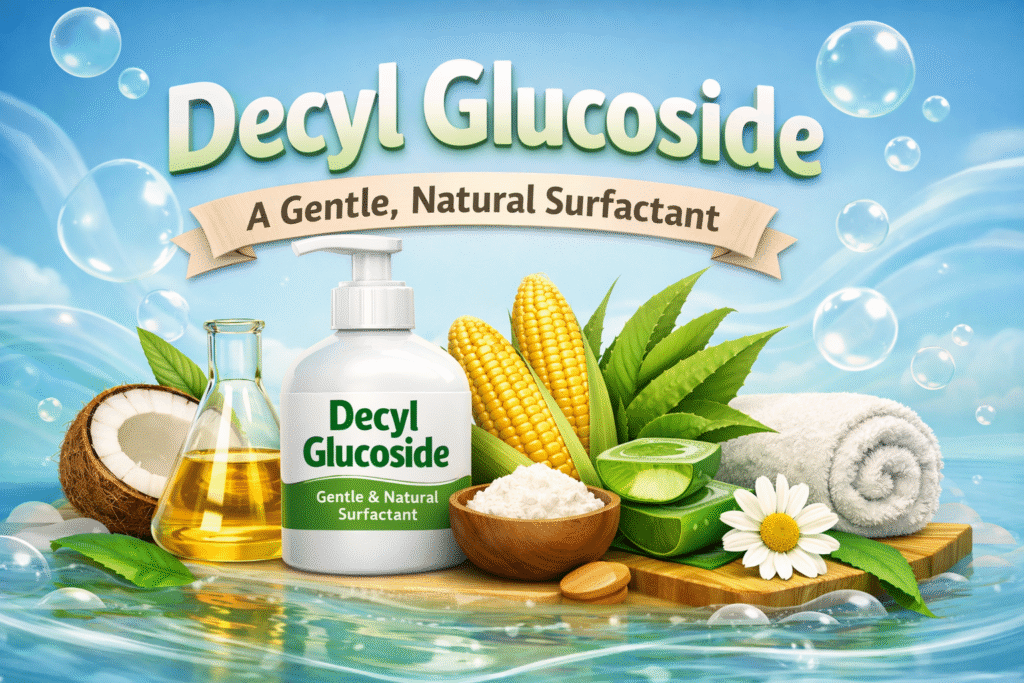
Decyl Glucoside: A Complete Guide to This Gentle, Natural Surfactant
Decyl Glucoside is a gentle, plant-derived, non-ionic surfactant widely used in modern skincare, haircare, and baby care formulations. Known for its mild cleansing power, Decyl Glucoside effectively removes dirt, excess oil, and impurities without disrupting the skin’s natural moisture barrier. Derived from renewable sources such as coconut oil and glucose, it is biodegradable, eco-friendly, and ideal for sulfate-free cosmetic products.
This versatile ingredient is commonly found in face washes, shampoos, body cleansers, and baby products due to its excellent skin compatibility and low irritation potential. Decyl Glucoside works well with botanical extracts and other mild surfactants, making it a preferred choice for clean beauty and natural cosmetic formulations. Suitable for all skin types—including sensitive, dry, oily, and acne-prone skin—Decyl Glucoside supports gentle cleansing while maintaining hydration and skin comfort.
Table of Contents
Introduction to Decyl Glucoside
Ever picked up a face wash labeled “gentle,” “sulfate-free,” or “natural” and wondered what actually makes it so mild? Chances are, Decyl Glucoside is doing the heavy lifting behind the scenes. This humble ingredient has quietly become a superstar in modern skincare and haircare—and for good reason.
Think of Decyl Glucoside as that polite cleaner who does their job without making a mess. It cleans effectively but doesn’t strip your skin or hair like harsh detergents. In today’s world of conscious beauty, that balance matters more than ever.
What Is Decyl Glucoside?
At its core, Decyl Glucoside is a non-ionic surfactant derived from natural sources. It’s commonly used as a cleansing agent in personal care products.
Chemical Nature of Decyl Glucoside
Decyl Glucoside is formed by combining glucose (from plants like corn) with decyl alcohol (from coconut or palm kernel oil). The result? A mild surfactant that attracts both oil and water, making it excellent at lifting away dirt without being aggressive.
Source and Raw Materials
What makes Decyl Glucoside especially appealing is its plant-based origin. It fits beautifully into natural, organic, vegan, and eco-conscious formulations.
Why Decyl Glucoside Is So Popular in Skincare and Haircare
Popularity doesn’t happen by accident. Decyl Glucoside checks almost every box formulators care about.
Mildness and Skin Compatibility
Unlike harsh sulfates, Decyl Glucoside respects your skin barrier. It cleans without shouting. That’s why it’s widely used in facial cleansers and baby products.
Eco-Friendly and Biodegradable Profile
In an age where sustainability matters, Decyl Glucoside shines. It’s readily biodegradable, making it safer for waterways and the environment.
How Decyl Glucoside Works
Let’s break it down without the chemistry headache.
Understanding Surfactants in Simple Terms
Surfactants are like bridges. One end loves water, the other loves oil. This allows them to grab onto dirt and rinse it away.
Cleansing Mechanism Explained
Decyl Glucoside gently surrounds oil, makeup, and impurities, lifting them from the skin and hair so water can wash them away—no irritation required.
Key Benefits of Decyl Glucoside
Benefits for Skin
- Extremely gentle cleansing
- Non-drying and non-irritating
- Helps maintain the skin’s natural moisture balance
Benefits for Hair
- Cleans scalp without stripping natural oils
- Improves hair softness and manageability
- Suitable for daily use shampoos
Benefits for Babies and Sensitive Users
This ingredient is often found in baby washes because it’s tear-free, mild, and skin-friendly.
Uses of Decyl Glucoside in Cosmetic Products
Face Cleansers
Perfect for gel and foam cleansers, especially for sensitive and acne-prone skin.
Shampoos and Hair Cleansers
Used alone or blended with other surfactants to create sulfate-free shampoos.
Body Washes and Hand Washes
Provides gentle foam and effective cleansing without dryness.
Baby Care Products
A top choice for baby shampoos and washes due to its exceptional mildness.
Decyl Glucoside for Different Skin Types
Oily and Acne-Prone Skin
Cleans excess oil without triggering overproduction—a rare balance.
Dry and Sensitive Skin
No tight, squeaky-clean feeling here. Skin feels calm and comfortable.
Combination Skin
Balances cleansing across oily and dry areas without irritation.
Decyl Glucoside in Natural and Organic Formulations
Role in Sulfate-Free Products
It’s a cornerstone ingredient in sulfate-free cleansing systems.
Compatibility with Herbal Extracts
Works beautifully with aloe vera, green tea, chamomile, neem, and other botanical extracts.
Recommended Usage Levels
Typical Percentage in Formulations
- Face cleansers: 5–10%
- Shampoos/body washes: 8–15%
Formulation Tips for Best Performance
- Combine with amphoteric surfactants for better foam
- Avoid high heat to prevent viscosity loss
pH Compatibility and Stability
Ideal pH Range
Works best between pH 5.0–7.0, making it skin-friendly.
Stability in Different Formulas
Stable in a wide range of formulations when properly preserved.
Is Decyl Glucoside Safe?
Dermatological Safety
Widely regarded as safe and non-irritating when used correctly.
Regulatory and Compliance Status
Approved globally for cosmetic use and compliant with clean beauty standards.
Decyl Glucoside vs Other Surfactants
Decyl Glucoside vs SLS/SLES
- Much milder
- Non-stripping
- Better for sensitive skin
Decyl Glucoside vs Coco Glucoside
Both are gentle, but Decyl Glucoside is slightly milder and lighter in feel.
Advantages and Limitations
Pros
- Plant-derived
- Gentle and non-toxic
- Eco-friendly
Cons
- Lower foam compared to sulfates
- Higher cost than conventional surfactants
How to Formulate with Decyl Glucoside
Simple Formulation Example
A basic gentle face wash can be built using Decyl Glucoside, glycerin, botanical extracts, and a suitable preservative.
Common Mistakes to Avoid
- Over-thickening with salt
- Using very low pH
- Heating excessively
Future of Decyl Glucoside in Clean Beauty
As consumers demand kinder, greener products, Decyl Glucoside is set to become even more popular. It’s not a trend—it’s a shift.
Conclusion
Decyl Glucoside is proof that cleansing doesn’t have to be harsh to be effective. Gentle, biodegradable, and versatile, it’s a hero ingredient for modern skincare and haircare. Whether you’re a formulator, brand owner, or conscious consumer, this ingredient deserves a spot on your radar—and in your formulations.
FAQs
1. Is Decyl Glucoside suitable for daily use?
Yes, it’s gentle enough for daily skincare and haircare routines.
2. Can Decyl Glucoside cause skin irritation?
It’s very unlikely when used within recommended limits.
3. Is Decyl Glucoside natural or synthetic?
It’s derived from natural plant-based sources.
4. Does Decyl Glucoside foam well?
It produces mild, creamy foam—less than sulfates but skin-friendly.
5. Can Decyl Glucoside be used in baby products?
Absolutely. It’s one of the safest surfactants for baby care.
Related posts:
 Coco Glucoside: The Gentle, Plant-Based Surfactant Revolutionizing Skincare & Haircare
 Sodium PCA: The Ultimate Guide to Superior Skin Hydration and Barrier Repair
 Phenoxyethanol + Ethylhexylglycerin: The Gold-Standard Preservative System in Modern Skincare
 CDEA (Cocamide Diethanolamine): Complete Guide for Cosmetic & Personal Care Formulations
 Propanediol: The Ultimate Guide to This High-Performance, Skin-Friendly Ingredient
 Hydrolyzed Keratin: The Complete Scientific and Cosmetic Authority Guide