

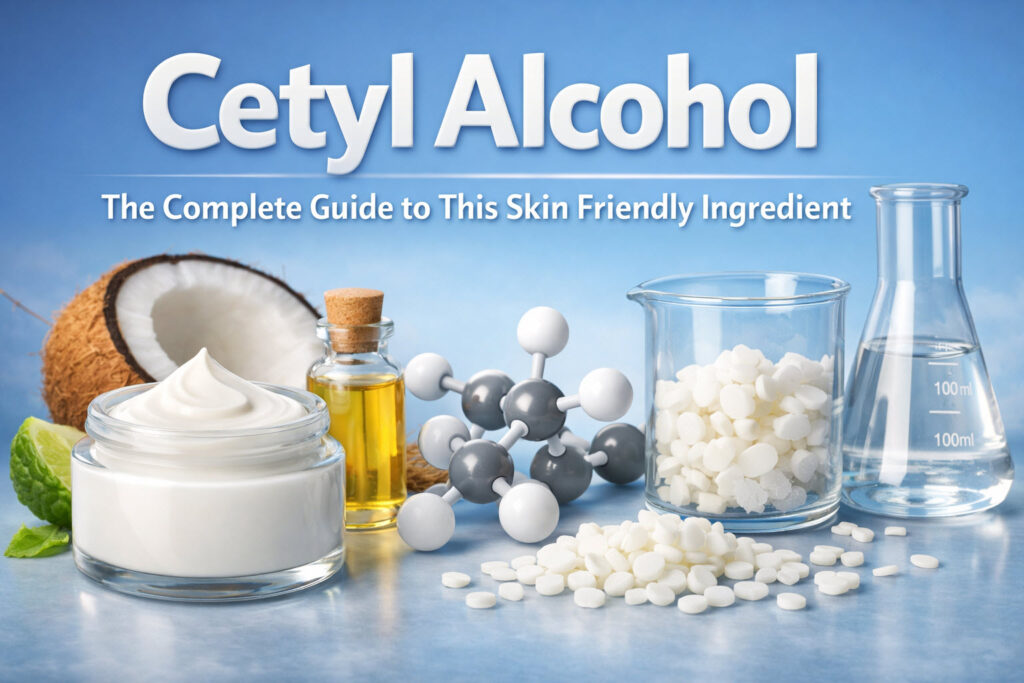
Cetyl Alcohol: The Complete Guide to This Skin-Friendly Ingredient
Cetyl Alcohol is one of the most widely used yet misunderstood ingredients in modern skincare and haircare formulations. Despite the word “alcohol” in its name, cetyl alcohol is a skin-friendly fatty alcohol that works as an emollient, thickening agent, and stabilizer. Unlike drying alcohols that strip moisture from the skin, cetyl alcohol helps lock in hydration, strengthen the skin barrier, and improve product texture, making it a staple ingredient in moisturizers, creams, lotions, conditioners, and serums.
Derived primarily from plant-based sources such as coconut oil or palm oil, cetyl alcohol is commonly found in clean beauty, vegan, and dermatologist-approved products. It enhances the creamy consistency of formulations while delivering a smooth, luxurious feel on application. For individuals with dry skin, sensitive skin, or aging skin, cetyl alcohol plays a key role in preventing moisture loss and supporting long-lasting hydration.
In skincare, cetyl alcohol acts as a non-comedogenic emollient, meaning it does not clog pores and is generally safe for acne-prone skin. It is frequently combined with other fatty alcohols like cetearyl alcohol or stearyl alcohol to improve stability and sensory performance. Dermatologists and cosmetic chemists consider cetyl alcohol safe, effective, and well-tolerated for daily use across all skin types.
In haircare products, cetyl alcohol provides excellent conditioning benefits, helping to reduce frizz, improve manageability, and leave hair feeling soft and smooth without weighing it down. Its ability to coat the hair shaft lightly makes it especially beneficial for dry, damaged, or chemically treated hair.
Overall, cetyl alcohol is a multifunctional cosmetic ingredient that enhances formulation quality while delivering real benefits to the skin and hair. Understanding the difference between fatty alcohols and drying alcohols can help consumers make informed choices and confidently include cetyl alcohol-based products in their beauty routines.
Table of Contents
Introduction to Cetyl Alcohol
If you’ve ever flipped over a moisturizer bottle and spotted cetyl alcohol on the ingredient list, you might have paused. Alcohol? On my skin? Sounds scary, right? Don’t worry—you’re not alone. Cetyl alcohol is one of the most misunderstood ingredients in skincare and haircare, and honestly, it doesn’t deserve the bad reputation it sometimes gets.
Let’s clear the fog and talk about what cetyl alcohol really is, why brands love it, and whether it deserves a spot in your daily routine.
What Is Cetyl Alcohol?
Cetyl alcohol is a fatty alcohol derived from natural sources like coconut or palm oil. Unlike drying alcohols that evaporate quickly and can leave your skin tight, cetyl alcohol is creamy, moisturizing, and gentle. Think of it as the cozy blanket of skincare ingredients—soft, comforting, and protective.
Why Cetyl Alcohol Is Commonly Misunderstood
The word alcohol triggers alarm bells for many skincare lovers. We’ve been trained to avoid alcohols because they can dry out the skin. But here’s the twist: not all alcohols are bad. Cetyl alcohol belongs to a completely different family, and lumping it in with harsh alcohols is like confusing olive oil with gasoline—they’re just not the same.
The Chemical Nature of Cetyl Alcohol
Is Cetyl Alcohol an Alcohol?
Yes… but also no (at least not in the way you’re thinking). Chemically speaking, cetyl alcohol is an alcohol, but functionally, it behaves more like an emollient than a solvent.
Difference Between Fatty Alcohols and Drying Alcohols
Drying alcohols like ethanol or denatured alcohol evaporate quickly and can disrupt the skin barrier. Fatty alcohols—such as cetyl alcohol—do the opposite. They soften the skin, lock in moisture, and improve texture. One strips, the other soothes.
Sources of Cetyl Alcohol
Natural Sources
Cetyl alcohol is commonly derived from:
- Coconut oil
- Palm oil
These plant-based sources make it a popular choice in modern formulations.
Synthetic vs Plant-Derived Cetyl Alcohol
While cetyl alcohol can be synthesized in labs, most cosmetic-grade cetyl alcohol today is plant-derived, making it suitable for clean beauty and vegan formulations.
How Cetyl Alcohol Is Made
Manufacturing Process Explained Simply
In simple terms, fatty acids are extracted from plant oils and then processed to create cetyl alcohol. The result is a waxy, white solid that melts beautifully into creams and lotions, giving them that luxurious feel we all love.
Cetyl Alcohol in Skincare
Why Skincare Products Use Cetyl Alcohol
Brands use cetyl alcohol because it:
- Improves product texture
- Stabilizes emulsions
- Enhances skin feel
Without it, many creams would feel thin, greasy, or unstable.
Texture, Stability, and Sensory Feel
Ever noticed how a good moisturizer glides smoothly and absorbs nicely? Cetyl alcohol plays a huge role in that silky experience. It’s like the behind-the-scenes hero of formulation.
Benefits of Cetyl Alcohol for Skin
Moisturizing Properties
Cetyl alcohol is an excellent emollient, meaning it fills in the tiny cracks between skin cells, making your skin feel smoother and more hydrated.
Skin Barrier Support
A healthy skin barrier equals happy skin. Cetyl alcohol helps reinforce this barrier, reducing moisture loss and protecting against environmental stressors.
Suitable for Sensitive Skin
Because it’s non-irritating and gentle, cetyl alcohol is often used in products designed for sensitive and compromised skin.
Cetyl Alcohol in Hair Care
Conditioning Benefits
In hair conditioners and masks, cetyl alcohol acts as a conditioning agent, helping hair feel soft, manageable, and nourished.
Frizz Control and Hair Smoothness
If frizz is your enemy, cetyl alcohol is your ally. It smooths the hair cuticle, reduces static, and adds that salon-like finish.
Is Cetyl Alcohol Safe?
Dermatological Safety Profile
Cetyl alcohol has a long history of safe use in cosmetics. Dermatologists widely consider it safe for daily use.
FDA and CIR Safety Assessment
Regulatory bodies like the Cosmetic Ingredient Review (CIR) panel have evaluated cetyl alcohol and confirmed it is safe when used as intended.
Cetyl Alcohol for Acne-Prone Skin
Is Cetyl Alcohol Comedogenic?
Good news: cetyl alcohol is considered low-comedogenic, meaning it’s unlikely to clog pores for most people.
Myths vs Facts
The myth that cetyl alcohol causes acne often comes from confusion with other heavier ingredients. In reality, it’s usually well tolerated—even by acne-prone skin.
Cetyl Alcohol for Dry and Aging Skin
Anti-Aging Support
By supporting hydration and barrier health, cetyl alcohol indirectly helps reduce the appearance of fine lines and dryness-related aging.
Long-Lasting Hydration Benefits
It doesn’t just hydrate temporarily—it helps keep moisture locked in for hours.
Cetyl Alcohol vs Other Fatty Alcohols
Cetyl Alcohol vs Stearyl Alcohol
Cetyl alcohol is lighter, while stearyl alcohol is slightly heavier. Both are beneficial, often used together for balanced texture.
Cetyl Alcohol vs Cetearyl Alcohol
Cetearyl alcohol is a blend of cetyl and stearyl alcohols, combining the benefits of both into one powerhouse ingredient.
Cetyl Alcohol in Natural and Organic Products
Is Cetyl Alcohol Vegan?
Yes, when derived from plant sources, cetyl alcohol is 100% vegan.
Clean Beauty Perspective
Most clean beauty brands accept cetyl alcohol due to its safety, performance, and plant-based origin.
Potential Side Effects of Cetyl Alcohol
Rare Reactions and Allergies
Allergic reactions are extremely rare but possible. If irritation occurs, discontinue use.
Who Should Patch Test First
If you have ultra-sensitive or allergy-prone skin, a patch test is always a smart move.
How to Identify Cetyl Alcohol on Ingredient Labels
INCI Name and Common Combinations
Look for:
- Cetyl Alcohol
- Cetearyl Alcohol (a blend)
It’s usually listed in the middle of the ingredient list.
Should You Avoid Cetyl Alcohol?
Who Can Benefit the Most
People with dry, sensitive, or aging skin often benefit the most from cetyl alcohol-containing products.
When to Be Cautious
If you’ve had past reactions to fatty alcohols, proceed carefully and patch test.
Final Thoughts on Cetyl Alcohol
Cetyl alcohol is one of those ingredients that proves why ingredient knowledge matters. It’s gentle, effective, and incredibly versatile—far from the villain it’s sometimes made out to be.
People also ask
Is cetyl alcohol safe for skin?
Yes, cetyl alcohol is considered safe for skin. It is a fatty alcohol that works as an emollient, helping to soften the skin, reduce moisture loss, and improve product texture. It is non-irritating, non-drying, and widely approved by dermatologists and cosmetic safety panels.
Is cetyl alcohol halal or haram?
Cetyl alcohol is generally considered halal when it is plant-derived (from sources like coconut or palm oil). It is not intoxicating and is chemically different from ethanol (khamr alcohol). However, for strict halal compliance, it’s best to choose products labeled halal-certified.
What is cetyl alcohol used for?
Cetyl alcohol is used in skincare and haircare products as:
- A moisturizer (emollient)
- A thickening agent
- An emulsion stabilizer
- A conditioning agent for hair
It improves texture, stability, and overall product performance.
Is cetyl alcohol good or bad for hair?
Cetyl alcohol is good for hair. It helps:
- Reduce frizz
- Improve softness and smoothness
- Make hair more manageable
It is commonly found in conditioners, masks, and leave-in treatments.
Which alcohols should I avoid in hair products?
You should avoid drying alcohols, especially if you have dry or damaged hair:
- Alcohol Denat.
- Ethanol
- Isopropyl Alcohol
- SD Alcohol
These can strip moisture and weaken hair over time.
Should you avoid cetearyl alcohol?
No, you generally should not avoid cetearyl alcohol. It is a blend of cetyl and stearyl alcohols and is hair- and skin-friendly. It helps with hydration, smooth texture, and product stability.
Is it haram to use hair products with alcohol?
It depends on the type of alcohol. Fatty alcohols like cetyl and cetearyl alcohol are usually considered permissible (halal) because they are non-intoxicating and used externally. Intoxicating alcohols derived from khamr may be avoided by those following strict Islamic rulings.
What’s the most damaging thing for hair?
The most damaging factors for hair include:
- Excessive heat styling
- Chemical treatments (bleaching, relaxing)
- Harsh shampoos
- Frequent friction and rough handling
These cause dryness, breakage, and split ends.
Which alcohol is best for hair?
The best alcohols for hair are fatty alcohols, including:
- Cetyl Alcohol
- Stearyl Alcohol
- Cetearyl Alcohol
- Behenyl Alcohol
They condition hair and help retain moisture.
What is a natural alternative to cetyl alcohol?
Natural alternatives include:
- Beeswax
- Shea butter
- Cocoa butter
- Plant-based emulsifying waxes
These offer similar thickening and moisturizing benefits.
Can alcohol increase hair growth?
No, alcohol does not directly increase hair growth. In fact, drying alcohols can harm the scalp if overused. Healthy hair growth depends on scalp care, nutrition, and gentle hair practices.
What is the difference between cetyl alcohol and cetearyl alcohol?
- Cetyl alcohol: A single fatty alcohol with lightweight moisturizing properties.
- Cetearyl alcohol: A blend of cetyl and stearyl alcohols, offering richer texture and stronger conditioning.
Both are safe and commonly used in cosmetics.
Conclusion
Cetyl alcohol is a skin-loving, hair-smoothing, formulation-enhancing ingredient that deserves appreciation, not fear. It moisturizes, protects, and improves texture without the drying effects commonly associated with alcohols. Whether you’re building a skincare routine or formulating your own products, cetyl alcohol is a quiet hero worth keeping around.
FAQs
1. Is cetyl alcohol bad for your skin?
No, cetyl alcohol is generally beneficial and helps moisturize and protect the skin barrier.
2. Can cetyl alcohol cause acne?
It is low-comedogenic and unlikely to cause acne for most skin types.
3. Is cetyl alcohol safe for sensitive skin?
Yes, it’s often used in products formulated for sensitive skin.
4. Is cetyl alcohol natural or synthetic?
It can be both, but most cosmetic cetyl alcohol is plant-derived.
5. Should I avoid cetyl alcohol if I have oily skin?
Not necessarily. Many oily skin products use it safely for texture and stability.
Related posts:
 Hyaluronic Acid – The Ultimate Guide to Deep Hydration and Youthful Skin
 Niacinamide – The Ultimate Skincare Ingredient Explained
 Propanediol: The Ultimate Guide to This High-Performance, Skin-Friendly Ingredient
 Kojic Acid: Benefits, Uses, Safety, and How It Transforms Your Skin
 Alpha Arbutin: Complete Guide to Benefits, Uses, Safety, and Skincare Science
 Glycolic Acid – The Complete Guide to Benefits, Uses, Safety, and Skincare Science