

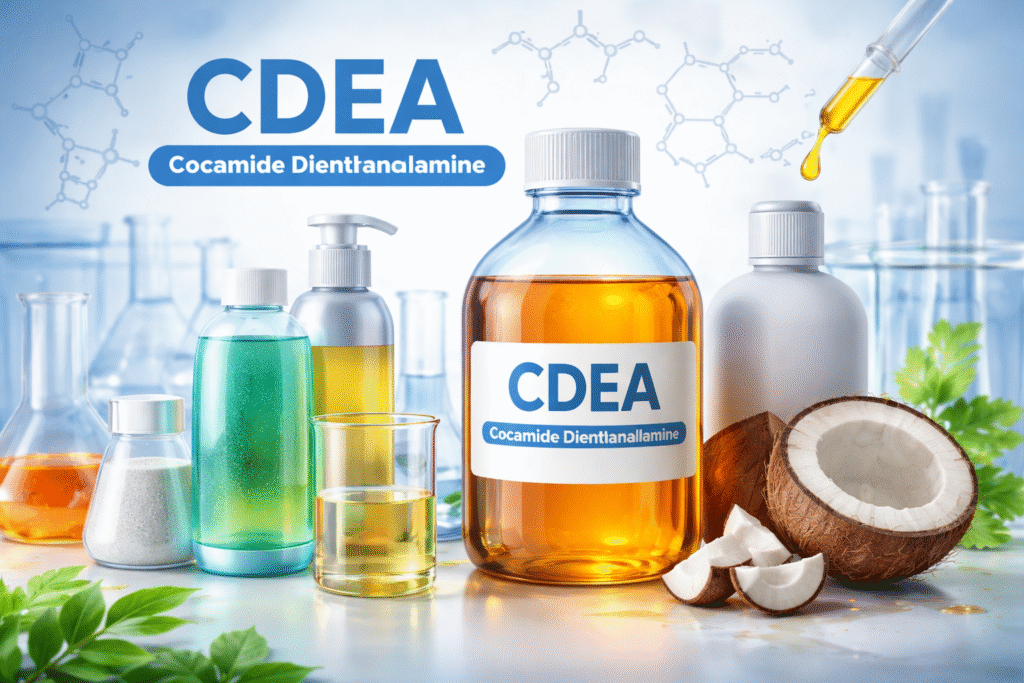
CDEA (Cocamide Diethanolamine): Complete Guide for Cosmetic & Personal Care Formulations
Introduction to CDEA
If you’ve ever wondered why your shampoo feels rich, your hand wash lathers like a dream, or your body wash has that luxurious thickness, chances are CDEA is working behind the scenes. Cocamide Diethanolamine might sound like a mouthful, but in the world of cosmetics and personal care, it’s a quiet hero.
Let’s break it down in a simple, human way—no lab coat required.
Table of Contents
What Does CDEA Stand For?
CDEA stands for Cocamide Diethanolamine, a non-ionic surfactant derived from fatty acids of coconut oil reacted with diethanolamine. In simple terms, it’s a helper ingredient that improves foam, thickness, and stability in cleansing products.
Why CDEA Is Widely Used in Formulations
Think of CDEA like the supporting actor who makes the star shine brighter. While primary surfactants do the cleaning, CDEA enhances performance by:
- Boosting foam
- Thickening formulations
- Improving texture and feel
Chemical Overview of Cocamide Diethanolamine
Chemical Structure and Origin
CDEA is produced from coconut-derived fatty acids, which gives it partial natural appeal. However, the chemical processing involved makes it semi-synthetic rather than fully natural.
How CDEA Is Manufactured
The process involves reacting coconut fatty acids with diethanolamine under controlled conditions. The result is a viscous liquid or semi-solid material with excellent surfactant-enhancing properties.
Role of Fatty Acids from Coconut Oil
Lauric and myristic acids from coconut oil are key contributors. These fatty acids are responsible for CDEA’s ability to stabilize foam and improve viscosity.
Physical and Chemical Properties of CDEA
Appearance, Solubility, and pH
- Appearance: Pale yellow to amber viscous liquid
- Solubility: Soluble in water
- pH (10% solution): 9.0–11.0
Stability and Compatibility
CDEA is stable across a wide pH range and compatible with:
- Anionic surfactants
- Amphoteric surfactants
- Non-ionic surfactants
This makes it extremely versatile.
Functional Role of CDEA in Products
Foam Booster Properties
Ever notice how foam makes a product feel more effective? CDEA increases foam volume and stability, making cleansers feel richer and more satisfying.
Viscosity Enhancer
CDEA thickens formulations naturally, often reducing the need for additional thickeners like salt or gums.
Emulsifying and Stabilizing Effects
It helps keep oil and water components evenly mixed, improving shelf stability and product appearance.
Applications of CDEA in Personal Care
Shampoos and Hair Cleansers
In shampoos, CDEA:
- Enhances lather
- Improves spreadability
- Adds a smooth after-feel
Liquid Hand Wash and Body Wash
CDEA gives hand and body washes that gel-like, premium texture consumers love.
Face Cleansers and Bath Products
Used in controlled amounts, it improves mildness and foam quality in facial cleansers and bubble baths.
Benefits of Using CDEA
Cost-Effectiveness
Compared to many modern surfactants, CDEA is affordable and highly efficient.
Improved Sensory Feel
Products feel:
- Thicker
- Creamier
- More luxurious
Enhanced Product Performance
It enhances the performance of primary surfactants without overpowering them.
Recommended Usage Levels
Typical Percentage in Formulations
- Shampoos: 1–3%
- Hand Wash: 1–4%
- Body Wash: 1–3%
Factors Affecting Dosage
Dosage depends on:
- Surfactant system
- Desired viscosity
- Regulatory limits
Safety Profile of Cocamide Diethanolamine
Skin and Eye Safety
At recommended levels, CDEA is considered safe for rinse-off products. However, high concentrations may cause irritation.
Regulatory Status Globally
FDA, EU, and ASEAN Guidelines
- Allowed in rinse-off products
- Restricted in leave-on products
- Must meet purity standards (low nitrosamine content)
CDEA vs Other Foam Boosters
CDEA vs Cocamidopropyl Betaine
| Feature | CDEA | CAPB |
|---|---|---|
| Foam Boosting | High | Medium |
| Mildness | Moderate | High |
| Clean Beauty | Less favored | More accepted |
CDEA vs Lauramide DEA
CDEA offers better solubility and smoother viscosity compared to Lauramide DEA.
Natural vs Synthetic Debate
Is CDEA Natural or Semi-Synthetic?
Although derived from coconut oil, chemical processing makes CDEA semi-synthetic.
Consumer Perception and Clean Beauty Trends
Clean beauty brands are moving toward DEA-free formulations, even though CDEA remains effective and safe when used correctly.
Advantages and Disadvantages of CDEA
Key Advantages
- Excellent foam booster
- Strong thickening effect
- Cost-efficient
Potential Drawbacks
- Not ideal for clean-label brands
- Regulatory scrutiny in some regions
Storage and Handling Guidelines
Shelf Life and Storage Conditions
- Shelf life: 12–24 months
- Store in cool, dry place
- Protect from moisture
Handling Precautions
Use gloves and avoid prolonged skin contact during manufacturing.
CDEA in Commercial Manufacturing
Why Manufacturers Prefer CDEA
It simplifies formulation, reduces cost, and ensures consistent product quality.
Role in Mass-Market Products
Widely used in:
- Shampoos
- Liquid soaps
- Household cleaners
Alternatives to Cocamide Diethanolamine
DEA-Free Alternatives
- Cocamidopropyl Betaine
- Coco Glucoside
- Sodium Lauroyl Sarcosinate
When to Replace CDEA
Replace when:
- Targeting clean beauty market
- Developing baby or sensitive-skin products
Future of CDEA in Cosmetics
Market Trends
While usage is declining in premium brands, CDEA remains dominant in mass-market formulations.
Innovation and Reformulation
Manufacturers are focusing on low-nitrosamine grades and hybrid surfactant systems.
Conclusion
Cocamide Diethanolamine may not be glamorous, but it’s undeniably powerful. From boosting foam to perfecting viscosity, CDEA has earned its place in cosmetic chemistry. While trends may shift toward cleaner alternatives, CDEA continues to deliver reliable performance, especially in rinse-off products. Used responsibly, it remains a valuable formulation ally.
Frequently Asked Questions (FAQs)
1. Is Cocamide Diethanolamine safe for skin?
Yes, when used within recommended limits in rinse-off products.
2. Why is CDEA controversial?
Concerns relate to nitrosamine formation if improperly manufactured.
3. Can CDEA be used in face wash?
Yes, but in low concentrations and rinse-off formulations only.
4. Is CDEA natural?
It is semi-synthetic, derived from coconut fatty acids.
5. What is the best alternative to CDEA?
Cocamidopropyl Betaine is the most common alternative.
Related posts:
 Propanediol: The Ultimate Guide to This High-Performance, Skin-Friendly Ingredient
 Hydrolyzed Keratin: The Complete Scientific and Cosmetic Authority Guide
 Sodium PCA: The Ultimate Guide to Superior Skin Hydration and Barrier Repair
 Phenoxyethanol + Ethylhexylglycerin: The Gold-Standard Preservative System in Modern Skincare
 Decyl Glucoside: A Complete Guide to This Gentle, Natural Surfactant
 Coco Glucoside: The Gentle, Plant-Based Surfactant Revolutionizing Skincare & Haircare