

Biotin (Vitamin B7): The Complete Guide to Benefits, Uses, and Sources
Biotin, also known as Vitamin B7, is a vital water-soluble B-complex vitamin that plays a key role in maintaining healthy hair, skin, nails, and metabolism. This complete guide to biotin explores its powerful benefits, daily requirements, natural food sources, supplement uses, deficiency symptoms, and safety considerations.
Widely known as the beauty vitamin, biotin supports keratin production, helping reduce hair fall, strengthen brittle nails, and improve overall skin health. It also contributes to energy production by assisting the metabolism of carbohydrates, fats, and proteins, making it essential for overall wellness.
In this in-depth article, you’ll discover how biotin works inside the body, who may benefit most from supplementation, the best biotin-rich foods, and whether high-dose biotin is safe. We also cover biotin’s role in skincare and haircare products, common myths, potential side effects, and important precautions such as its effect on lab and thyroid test results.
Whether you’re struggling with hair thinning, dull skin, weak nails, or simply want to optimize your nutritional intake, this guide provides science-backed, easy-to-understand information to help you make informed decisions about biotin for beauty and health.
Table of Contents
Introduction to Biotin
If you’ve ever searched for solutions to hair fall, brittle nails, or dull skin, chances are you’ve stumbled across biotin. It’s everywhere—supplements, shampoos, serums, and even skincare labels. But what exactly is biotin, and does it really live up to the hype?
Let’s break it down in simple, human terms—no lab-coat language, no confusing jargon. Think of this guide as your friendly deep dive into Biotin (Vitamin B7).
What Is Biotin (Vitamin B7)?
Biotin is a water-soluble B vitamin, also known as Vitamin B7 or Vitamin H. Like other B vitamins, it plays a crucial role in helping your body convert food into energy. But biotin has a special reputation—it’s the vitamin most associated with healthy hair, glowing skin, and strong nails.
Because your body doesn’t store biotin, you need a steady intake through food or supplements. The good news? Biotin is found in many everyday foods.
Why Biotin Is Called the Beauty Vitamin
Biotin earned its “beauty vitamin” nickname because of its role in keratin production. Keratin is the structural protein that makes up your hair, skin, and nails. Think of keratin as the bricks and biotin as the construction manager making sure everything is built properly.
Understanding Biotin in the Body
How Biotin Works at the Cellular Level
Biotin works behind the scenes. You won’t feel it kick in like caffeine, but it’s constantly supporting vital biochemical reactions.
Role in Enzyme Activation
Biotin acts as a coenzyme, meaning it helps enzymes do their job. Specifically, it activates enzymes involved in fatty acid synthesis, amino acid metabolism, and glucose production.
Biotin and Metabolism
Without enough biotin, your metabolism can slow down. Your body struggles to convert carbs, fats, and proteins into usable energy. That’s why biotin is often linked to energy levels and overall vitality.
Health Benefits of Biotin
Biotin for Hair Growth
This is the big one. Biotin supports keratin infrastructure, which can help improve hair strength and thickness—especially if you’re deficient.
Does biotin magically grow hair overnight? No. But if your hair loss is linked to low biotin levels, supplementation can make a noticeable difference over time.
Biotin for Skin Health
Dry, flaky, irritated skin can be a sign of biotin deficiency. Biotin helps maintain healthy fatty acid distribution in the skin, which supports hydration and barrier function.
In simple words: biotin helps your skin hold onto moisture and stay smooth.
Biotin for Nail Strength
Brittle, splitting nails are another classic sign of low biotin. Studies have shown that biotin supplementation can increase nail thickness and reduce splitting.
If your nails break faster than you can trim them, biotin might be worth considering.
Biotin and Energy Production
Feeling tired even after a full night’s sleep? Biotin plays a role in converting glucose into energy. While it’s not a stimulant, it supports steady, sustainable energy production.
Biotin and Brain Function
Your nervous system relies on biotin for proper signaling. Severe deficiency can lead to neurological symptoms like depression, fatigue, and tingling sensations.
Biotin Deficiency
Causes of Biotin Deficiency
Biotin deficiency is rare, but it can happen due to:
- Poor diet
- Long-term antibiotic use
- Excessive alcohol consumption
- Certain genetic conditions
- Eating raw egg whites frequently (they contain avidin, which blocks biotin absorption)
Common Signs and Symptoms
Hair, Skin, and Nail Symptoms
- Hair thinning or hair loss
- Dry, scaly skin
- Brittle nails
Neurological Symptoms
- Fatigue
- Depression
- Tingling in hands and feet
- Muscle cramps
Daily Biotin Requirements
Recommended Daily Intake
The average recommended daily intake for adults is around 30 micrograms (mcg) per day. Most people meet this requirement through diet alone.
Biotin Needs by Age and Gender
- Infants: 5–6 mcg
- Children: 8–12 mcg
- Adults: 30 mcg
- Pregnant women: 30 mcg
- Breastfeeding women: 35 mcg
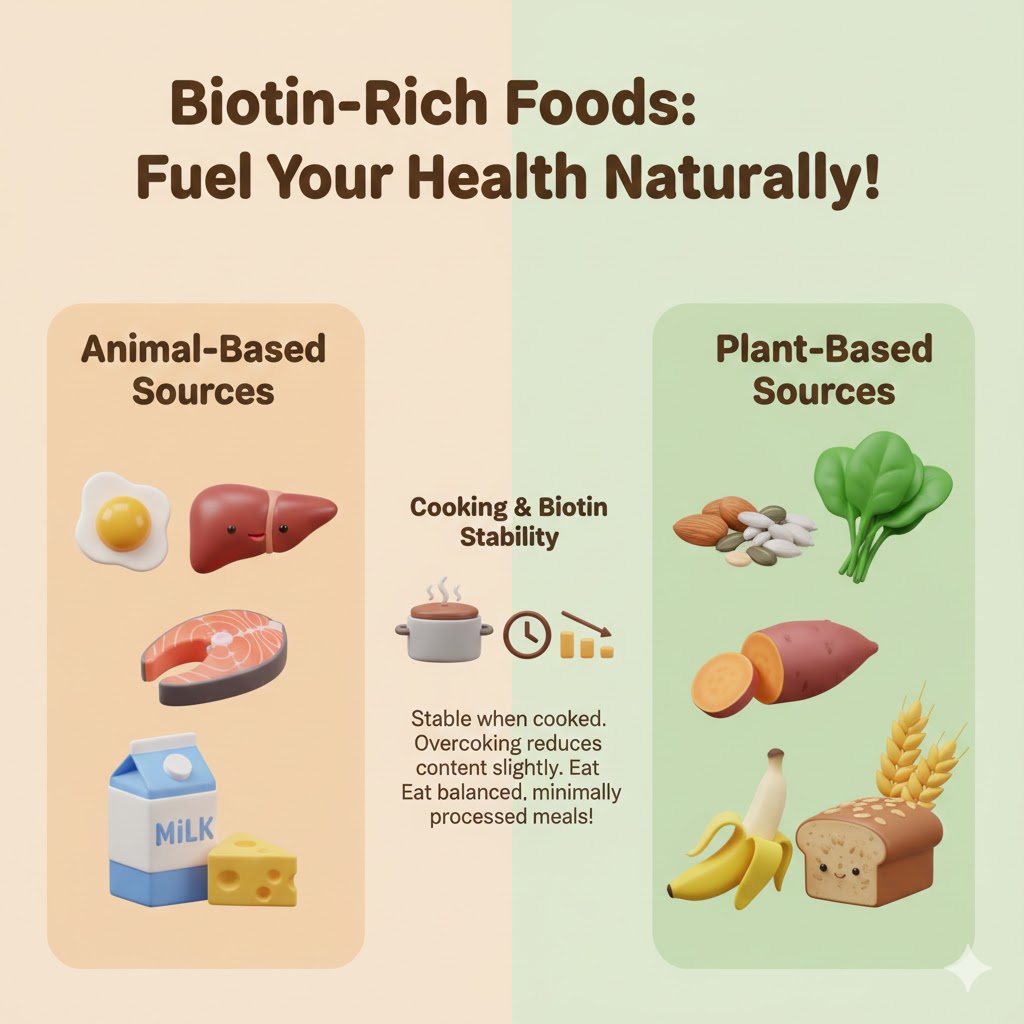
Natural Food Sources of Biotin
Animal-Based Sources
- Egg yolks
- Liver
- Salmon
- Dairy products
Plant-Based Sources
- Nuts and seeds (almonds, sunflower seeds)
- Sweet potatoes
- Spinach
- Bananas
- Whole grains
Cooking and Biotin Stability
Biotin is relatively stable during cooking, but overcooking can reduce its content slightly. Balanced, minimally processed meals are your best bet.
Biotin Supplements
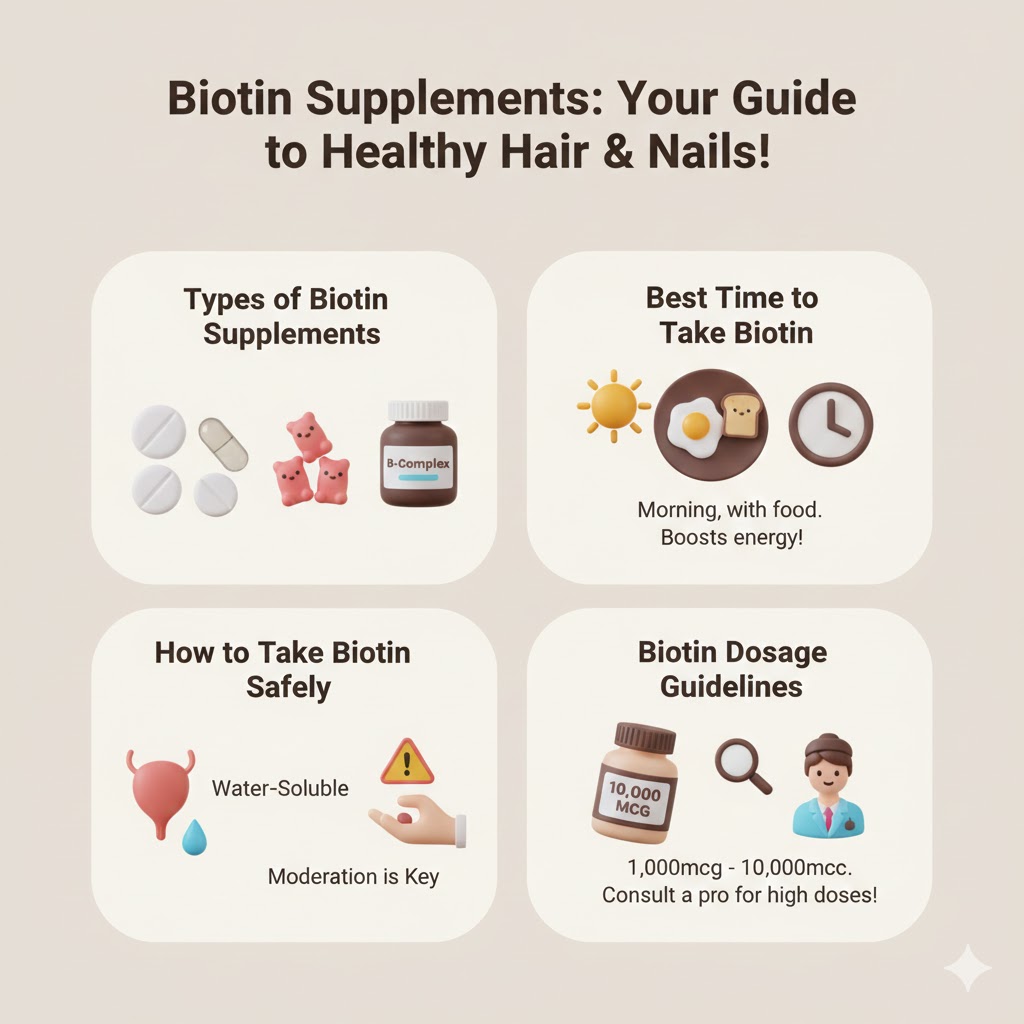
Types of Biotin Supplements
Biotin supplements come in:
- Tablets
- Capsules
- Gummies
- Combined B-complex formulas
How to Take Biotin Safely
Biotin is water-soluble, so excess amounts are usually excreted in urine. Still, moderation is key.
Best Time to Take Biotin
Biotin is best taken in the morning, preferably with food, to support daily energy metabolism.
Biotin Dosage Guidelines
Common supplement dosages range from 1,000 mcg to 10,000 mcg, especially in hair and nail supplements. High doses should only be taken after consulting a healthcare professional.
Biotin in Skincare and Cosmetics
Topical Biotin Benefits
Topical biotin helps strengthen the skin barrier and improve hydration. While it doesn’t penetrate as deeply as oral biotin, it still supports surface-level skin health.
Biotin in Hair Care Products
Biotin shampoos and serums help coat the hair shaft, making hair appear thicker and shinier. Think of it as a cosmetic boost rather than a cure.
Myths and Facts About Biotin
Does More Biotin Mean Faster Hair Growth?
No. Taking excessive biotin won’t speed up hair growth if you’re not deficient. Your body uses what it needs and discards the rest.
Can Everyone Benefit from Biotin?
Not necessarily. People with adequate biotin levels may see little to no benefit from supplementation.
Potential Side Effects and Precautions
Is Biotin Safe for Long-Term Use?
Yes, biotin is generally safe. However, very high doses may interfere with lab test results, especially thyroid and heart tests.
Drug Interactions and Warnings
Always inform your doctor if you’re taking high-dose biotin, particularly before blood tests.
Biotin for Special Conditions
Biotin During Pregnancy
Biotin is safe during pregnancy when taken within recommended limits and supports fetal development.
Biotin for Diabetics
Biotin may help improve glucose metabolism, but it should not replace prescribed diabetes treatments.
Biotin and Thyroid Tests
High-dose biotin can skew thyroid test results, leading to misdiagnosis. Stop biotin supplements at least 48 hours before testing.
Conclusion
Biotin (Vitamin B7) may not be a miracle cure, but it’s an essential nutrient with real, science-backed benefits. From supporting metabolism and energy production to strengthening hair, skin, and nails, biotin plays a quiet yet powerful role in overall wellness.
If you’re deficient, biotin can be a game-changer. If you’re not, maintaining a balanced diet may be all you need. Like most things in health, consistency and moderation matter more than megadoses.
Frequently Asked Questions (FAQs)
1. How long does biotin take to work for hair growth?
Most people notice improvements after 2–3 months of consistent use.
2. Can biotin cause acne?
In some people, high doses may trigger breakouts due to interference with vitamin B5 absorption.
3. Is biotin suitable for vegetarians?
Yes, many plant-based foods are rich in biotin.
4. Can I take biotin every day?
Yes, daily intake is safe within recommended limits.
5. Is biotin good for men and women both?
Absolutely. Biotin benefits are not gender-specific.
Related posts:
 CDEA (Cocamide Diethanolamine): Complete Guide for Cosmetic & Personal Care Formulations
 Propanediol: The Ultimate Guide to This High-Performance, Skin-Friendly Ingredient
 Hydrolyzed Keratin: The Complete Scientific and Cosmetic Authority Guide
 Disodium EDTA: Benefits, Uses, Safety, and Role in Cosmetics & Skincare
 Decyl Glucoside: A Complete Guide to This Gentle, Natural Surfactant
 Alpha Arbutin: Complete Guide to Benefits, Uses, Safety, and Skincare Science