

Alpha Hydroxy Acids and Beta Hydroxy Acids (AHA & BHA): The Complete Skincare Guide
Alpha Hydroxy Acids (AHA) and Beta Hydroxy Acids (BHA) are powerful chemical exfoliants that transform dull, uneven skin into a smooth, radiant complexion. This complete skincare guide explains how AHA and BHA work, their key differences, benefits, and how to choose the right one for your skin type. Learn expert tips on using AHA and BHA safely to treat acne, reduce pigmentation, unclog pores, improve texture, and achieve long-lasting glow. Perfect for beginners and skincare enthusiasts looking to upgrade their exfoliation routine.
Table of Contents
Introduction to Chemical Exfoliation
What Is Exfoliation?
Think of exfoliation like spring cleaning for your skin. Every day, dead skin cells build up on the surface, making your complexion look dull, rough, and tired. Exfoliation removes these dead cells and reveals the fresher, smoother skin hiding underneath.
Physical vs Chemical Exfoliants
Physical exfoliants use scrubs or beads to manually slough off dead skin. Chemical exfoliants, like AHA and BHA, work smarter, not harder. They dissolve the bonds holding dead cells together, allowing them to shed naturally—no harsh rubbing required.
What Are Alpha Hydroxy Acids (AHAs)?
Definition and Origin of AHAs
Alpha Hydroxy Acids are water-soluble acids derived from fruits, milk, and sugar. They work on the skin’s surface, making them ideal for improving texture, tone, and overall radiance.
Common Types of AHAs
Glycolic Acid
Derived from sugarcane, glycolic acid has the smallest molecular size, allowing it to penetrate deeply and work quickly. It’s powerful, effective, and a favorite in anti-aging products.
Lactic Acid
Sourced from milk, lactic acid is gentler than glycolic acid and great for sensitive or dry skin. It exfoliates while also hydrating the skin.
Mandelic Acid
Extracted from bitter almonds, mandelic acid has a larger molecule, making it slower-penetrating and ideal for sensitive and acne-prone skin.
Citric Acid
Found in citrus fruits, citric acid helps exfoliate while also balancing the skin’s pH and boosting brightness.
What Are Beta Hydroxy Acids (BHAs)?
Definition and Properties of BHAs
BHAs are oil-soluble acids, meaning they can penetrate deep into pores. This makes them especially effective for oily, acne-prone skin.
Salicylic Acid – The Star BHA
Salicylic acid is the most well-known BHA. It exfoliates inside the pores, dissolves excess oil, and calms inflammation—making it a hero ingredient for acne control.
How AHAs Work on the Skin
Surface-Level Exfoliation
AHAs loosen the “glue” holding dead skin cells together on the surface. Once these cells shed, skin appears smoother and brighter.
Skin Renewal and Cell Turnover
By encouraging faster cell turnover, AHAs help reduce fine lines, pigmentation, and rough texture over time.
How BHAs Work on the Skin
Oil-Soluble Action
BHAs cut through oil like a key sliding into a lock. They reach deep into pores where dirt and sebum hide.
Deep Pore Cleansing
This deep cleansing action helps prevent clogged pores, blackheads, and breakouts before they even start.
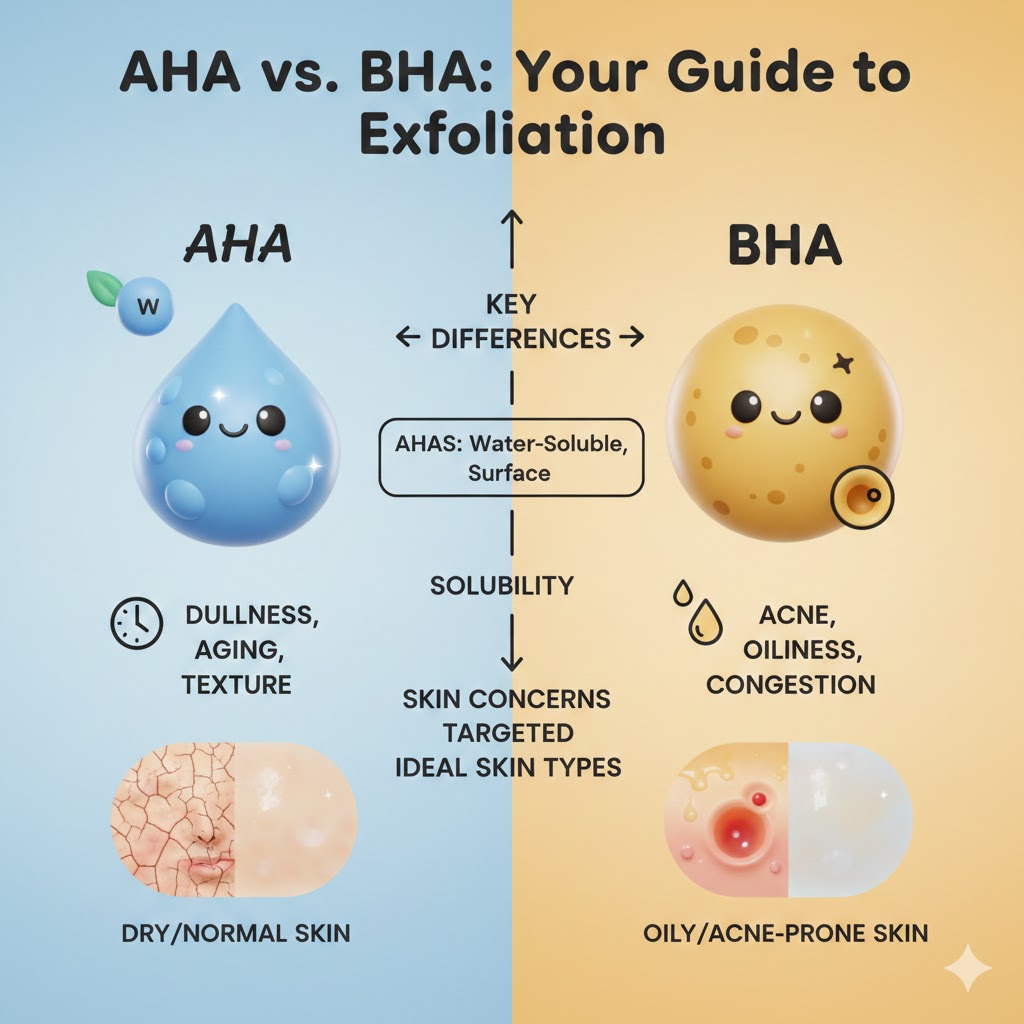
Key Differences Between AHA and BHA
Solubility
AHAs are water-soluble and work on the skin’s surface. BHAs are oil-soluble and work inside the pores.
Skin Concerns Targeted
AHAs focus on dullness, aging, and texture. BHAs target acne, oiliness, and congestion.
Ideal Skin Types
Dry and normal skin love AHAs. Oily and acne-prone skin benefits most from BHAs.
Benefits of AHAs for Skin
Brightening and Glow
AHAs remove dull surface cells, revealing a natural, healthy glow.
Anti-Aging Benefits
With regular use, AHAs help smooth fine lines and improve skin elasticity.
Improved Texture
Rough patches fade away, leaving skin soft and even-toned.
Benefits of BHAs for Skin
Acne Control
BHAs clear pores and reduce acne-causing bacteria.
Reduced Blackheads and Whiteheads
Consistent use helps keep pores clean and visibly smaller.
Anti-Inflammatory Effects
Salicylic acid calms redness and irritation, making it suitable for inflamed acne.
AHA vs BHA – Which One Should You Choose?
For Dry and Dull Skin
AHAs are your best friend. They exfoliate gently and boost hydration.
For Oily and Acne-Prone Skin
BHAs dive deep into pores to control oil and breakouts.
For Sensitive Skin
Mandelic acid or low-strength lactic acid works best, while mild BHAs can help with gentle acne control.
Can You Use AHA and BHA Together?
Layering vs Combination Products
You can use them together, but beginners should choose products formulated with both rather than layering separately.
Precautions When Using Both
Overuse can damage the skin barrier. Start slow and listen to your skin.
How to Use AHA and BHA Safely
Frequency of Use
Start 2–3 times a week and gradually increase if your skin tolerates it.
Importance of Sunscreen
Exfoliated skin is sun-sensitive. Daily sunscreen is non-negotiable.
Patch Testing
Always patch test new products to avoid unwanted reactions.

AHA & BHA in Skincare Products
Cleansers
Gentle and beginner-friendly, ideal for daily exfoliation.
Toners
Provide light exfoliation and prep skin for serums.
Serums
More concentrated and effective for targeted concerns.
Peels
High-strength treatments best used occasionally.
Common Side Effects and How to Avoid Them
Irritation and Redness
Use lower concentrations and moisturize well.
Over-Exfoliation
Too much exfoliation can cause breakouts and sensitivity. Less is more.
Myths and Misconceptions About AHA & BHA
Acids Damage the Skin
When used correctly, they strengthen and improve skin health.
Daily Use Is Always Better
Not true. Overuse can harm the skin barrier.
Tips for Beginners
Starting with Low Concentrations
Begin with mild formulas and build up gradually.
Building a Routine Gradually
Introduce one acid at a time to avoid irritation.
Conclusion
Alpha Hydroxy Acids and Beta Hydroxy Acids are like skilled personal trainers for your skin—guiding it toward smoother texture, clearer pores, and a radiant glow. Whether you’re battling dullness or breakouts, choosing the right acid and using it wisely can transform your skincare routine. Start slow, stay consistent, and let your skin do the talking.
FAQs
1. Can I use AHA or BHA every day?
Some mild formulas can be used daily, but most people benefit from 2–3 times a week.
2. Is AHA or BHA better for acne scars?
AHAs are better for fading acne scars and pigmentation, while BHAs prevent new breakouts.
3. Can sensitive skin use chemical exfoliants?
Yes, with gentle acids like mandelic or lactic acid and low concentrations.
4. Should I use AHA/BHA in the morning or night?
Nighttime is best to avoid sun sensitivity.
5. How long does it take to see results?
Visible improvements usually appear within 4–6 weeks of consistent use.
Related posts:
 CDEA (Cocamide Diethanolamine): Complete Guide for Cosmetic & Personal Care Formulations
 Salicylic Acid – The Ultimate Guide for Clear, Healthy Skin
 Propanediol: The Ultimate Guide to This High-Performance, Skin-Friendly Ingredient
 Hydrolyzed Keratin: The Complete Scientific and Cosmetic Authority Guide
 Decyl Glucoside: A Complete Guide to This Gentle, Natural Surfactant
 Alpha Arbutin: Complete Guide to Benefits, Uses, Safety, and Skincare Science