

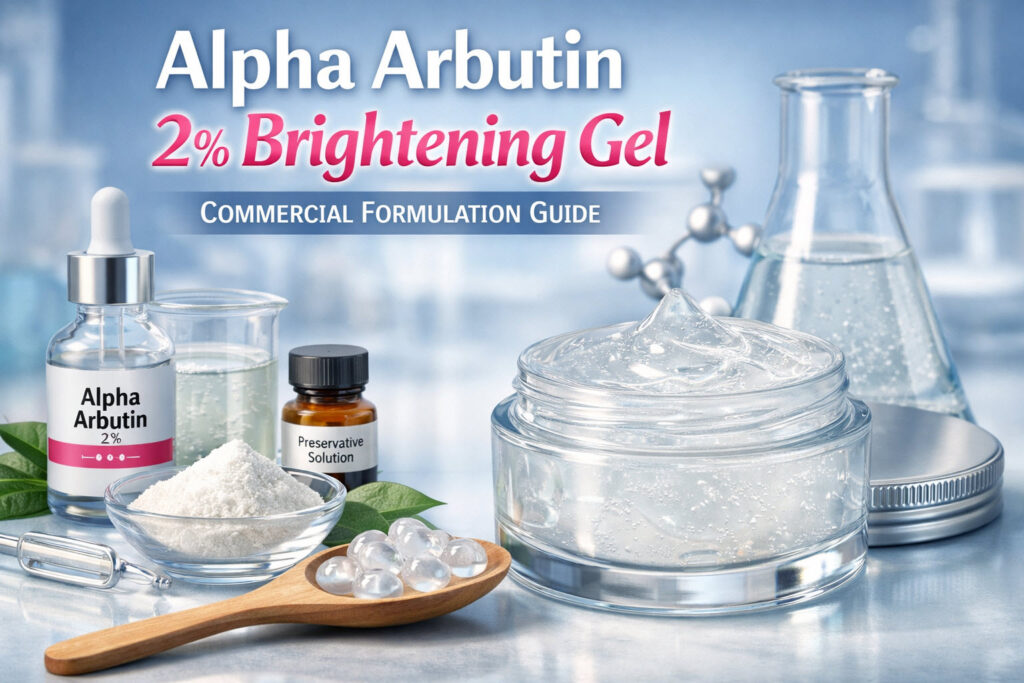
Alpha Arbutin 2% Brightening Gel – Commercial Formulation Guide
Alpha Arbutin 2% Brightening Gel – Commercial Formulation Guide is a complete, professional resource designed for cosmetic formulators, skincare brands, and entrepreneurs who want to develop an effective and market-ready skin brightening gel.
This guide explains how to formulate a 2% Alpha Arbutin gel, a globally trusted and scientifically proven ingredient for reducing hyperpigmentation, dark spots, melasma, acne marks, and uneven skin tone. Alpha Arbutin works by inhibiting excess melanin production, making it a safer and gentler alternative to hydroquinone.
The formulation is water-based, lightweight, and non-sticky, making it ideal for all skin types, including oily, acne-prone, and sensitive skin. This commercial formula uses Xanthan Gum as a natural gelling agent, offering a carbomer-free option that aligns with clean beauty and natural skincare trends.
Inside this detailed guide, you will find:
- A commercial-grade ingredient list with percentages and functions
- Step-by-step manufacturing SOP following cosmetic industry standards
- pH control, stability considerations, and preservation guidance
- Ideal texture, appearance, and packaging recommendations
This formulation is suitable for private label manufacturing, indie skincare brands, cosmetic chemistry students, and online skincare businesses looking to launch brightening serums or gels in competitive markets.
Whether you are building a skincare brand or expanding your product portfolio, this guide provides everything needed to create a safe, effective, and market-ready Alpha Arbutin 2% Brightening Gel.
Table of Contents
Product Description
Alpha Arbutin 2% Brightening Gel is a lightweight, fast-absorbing gel-based serum designed to visibly reduce hyperpigmentation, dark spots, acne marks, and uneven skin tone. Powered with 2% Alpha Arbutin, a clinically proven skin-brightening active, this gel works by inhibiting excess melanin production without irritating the skin.
The non-greasy gel texture makes it suitable for all skin types, including oily, acne-prone, and sensitive skin. Ideal for daily use, this formulation promotes a clearer, brighter, and more radiant complexion with consistent application.
Uses
- Reduces dark spots & hyperpigmentation
- Brightens dull and uneven skin tone
- Fades acne scars & sun spots
- Improves overall skin clarity
- Suitable for daily AM & PM skincare routine
Key Benefits
- ✔ Clinically effective 2% Alpha Arbutin
- ✔ Gentle alternative to hydroquinone
- ✔ Water-based, non-sticky gel texture
- ✔ Suitable for sensitive skin
- ✔ Enhances skin radiance and glow
- ✔ Compatible with Vitamin C & Niacinamide routines
Commercial Formulation (1000 g Batch Size)
Phase A – Water Phase
| Ingredient | INCI Name | Percentage (%) | Weight (g) | Function |
|---|---|---|---|---|
| Purified Water | Aqua | 84.80% | 848 g | Solvent, base of formulation |
| Glycerin | Glycerin | 4.00% | 40 g | Humectant, hydration |
| Propanediol | Propanediol | 3.00% | 30 g | Humectant, penetration enhancer |
| Disodium EDTA | Disodium EDTA | 0.10% | 1 g | Chelating agent |
Phase B – Active Phase
| Ingredient | INCI Name | Percentage (%) | Weight (g) | Function |
|---|---|---|---|---|
| Alpha Arbutin | Alpha-Arbutin | 2.00% | 20 g | Skin brightening, melanin control |
| Sodium Hyaluronate | Sodium Hyaluronate | 0.20% | 2 g | Deep hydration, plumping |
Phase C – Gelling & Preservation
| Ingredient | INCI Name | Percentage (%) | Weight (g) | Function |
|---|---|---|---|---|
| Carbomer | Carbomer | 0.50% | 5 g | Gel former |
| Phenoxyethanol & Ethylhexylglycerin | Phenoxyethanol, Ethylhexylglycerin | 0.80% | 8 g | Broad-spectrum preservative |
| Triethanolamine (TEA) | Triethanolamine | 0.60% | 6 g | pH adjustment & gel neutralization |
Total: 100% = 1000 g
Target Specifications
- pH Range: 5.0 – 5.5
- Texture: Clear, lightweight gel
- Appearance: Transparent to slightly opalescent
- Skin Type: All skin types
Detailed Manufacturing SOP (Step-by-Step)
Step 1: Preparation
- Clean and sanitize all equipment, vessels, and utensils.
- Wear PPE (gloves, mask, hair cover).
- Measure all ingredients accurately.
Step 2: Phase A – Water Phase
- Add Purified Water to the main mixing vessel.
- Start slow stirring (300–500 rpm).
- Add Disodium EDTA and mix until completely dissolved.
- Add Glycerin and Propanediol, continue mixing for 10 minutes.
Step 3: Phase B – Active Dissolution
- In a separate beaker, dissolve Alpha Arbutin in a small portion of Phase A water.
- Stir gently until fully dissolved (avoid heating).
- Add Sodium Hyaluronate slowly and allow it to hydrate fully (30–45 minutes).
- Add Phase B into the main vessel with gentle stirring.
Step 4: Phase C – Gel Formation
- Sprinkle Carbomer slowly into the batch while mixing to avoid clumping.
- Allow the carbomer to fully hydrate (15–20 minutes).
- Add Phenoxyethanol & Ethylhexylglycerin, mix thoroughly.
Step 5: pH Adjustment
- Slowly add Triethanolamine (TEA) drop by drop.
- Monitor pH continuously.
- Stop once pH reaches 5.0–5.5.
- Gel will form instantly upon neutralization.
Step 6: Homogenization
- Mix at low speed for 10 minutes to remove air bubbles.
- Avoid excessive shear.
Step 7: Quality Control
- Check pH, viscosity, clarity, odor, and microbial stability.
- Perform patch testing if required.
Step 8: Filling & Packaging
- Fill into airless pump bottles or glass droppers.
- Label with batch number, MFG & EXP date.
- Store away from heat and sunlight.
Suggested Label Claims (Optional)
- Dermatologically Tested
- Hydroquinone-Free
- Alcohol-Free
- Suitable for Sensitive Skin
- Vegan & Cruelty-Free
Related posts:
 Vitamin C Face Wash – Complete Product Formulation
 Kojic Acid: Benefits, Uses, Safety, and How It Transforms Your Skin
 Niacinamide Toner – Commercial Formulation Step by Step Guide
 Day Cream with SPF (Broad Spectrum Protection)
 Night Repair Cream – Advanced Overnight Skin Renewal Formula
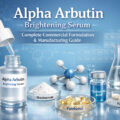 Alpha Arbutin Brightening Serum Complete Commercial Formulation & Manufacturing Guide