

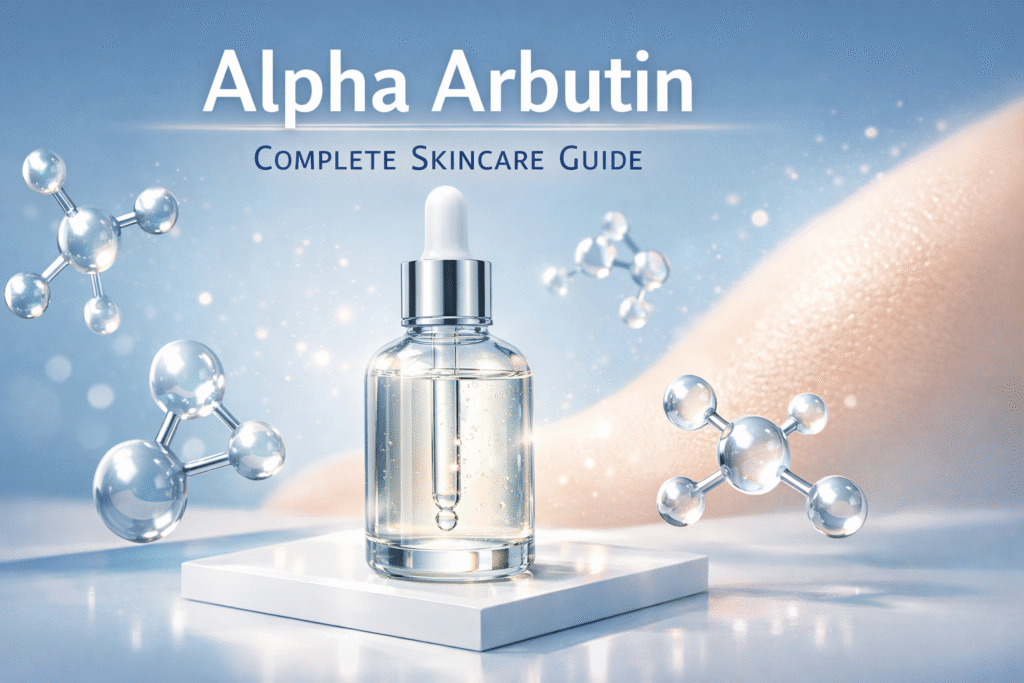
Alpha Arbutin: Complete Guide to Benefits, Uses, Safety, and Skincare Science
Alpha Arbutin is a powerful yet gentle skincare ingredient known for reducing hyperpigmentation, dark spots, and uneven skin tone. This complete guide explains how Alpha Arbutin works, its benefits for different skin types, how to use it safely, and why it’s one of the most effective alternatives to harsh brightening agents. Learn how Alpha Arbutin helps achieve brighter, clearer, and more radiant skin with consistent use.
If glowing, even-toned skin feels like a never-ending chase, Alpha Arbutin might just be the calm, reliable friend your skincare routine is missing. It’s gentle, effective, and backed by science—no drama, no harsh surprises. Whether you’re dealing with stubborn dark spots, acne scars, or uneven skin tone, Alpha Arbutin has quietly earned its place as a skincare hero.
Table of Contents
Let’s break it all down in simple, real-world terms.
What Is Alpha Arbutin?
Alpha Arbutin is a water-soluble skin-brightening ingredient derived from natural sources like bearberry, cranberry, and pear plants. In cosmetic science, it’s prized for being stable, safe, and highly effective—a rare combination.
Natural Origin and Chemical Structure
Chemically, Alpha Arbutin is a glycosylated hydroquinone. Don’t panic at the word “hydroquinone”—Alpha Arbutin releases it slowly and safely, making it far gentler on the skin.
Alpha Arbutin vs Beta Arbutin
Here’s the simple version:
- Alpha Arbutin: More stable, more effective, works at lower concentrations
- Beta Arbutin: Less stable, weaker, slower results
That’s why modern skincare formulations almost always choose Alpha Arbutin.
How Alpha Arbutin Works on Skin
Think of melanin like paint. Too much paint in one area creates dark spots. Alpha Arbutin helps control how much paint gets released.
Role in Melanin Inhibition
Alpha Arbutin inhibits tyrosinase, the key enzyme responsible for melanin production. By slowing this process, it helps prevent excess pigmentation.
Tyrosinase Enzyme Explained
Tyrosinase acts like a factory switch. Alpha Arbutin gently turns that switch down—not off, just balanced.
Key Benefits of Alpha Arbutin for Skin
Brightening and Glow Enhancement
Regular use leads to a visibly brighter complexion without irritation. It’s like turning up the lights evenly instead of spotlighting flaws.
Hyperpigmentation and Dark Spot Reduction
From sun spots to melasma, Alpha Arbutin works gradually to fade discoloration while keeping the skin barrier intact.
Acne Marks and Post-Inflammatory Pigmentation
Those annoying brown or red marks left after acne? Alpha Arbutin helps them fade faster and more evenly.
Alpha Arbutin for Different Skin Types
Oily and Acne-Prone Skin
Lightweight and non-comedogenic, Alpha Arbutin won’t clog pores or trigger breakouts.
Dry and Sensitive Skin
Unlike harsh brightening agents, it doesn’t sting or peel when formulated correctly.
Combination and Normal Skin
Balanced skin loves balanced ingredients—and Alpha Arbutin fits right in.
Alpha Arbutin vs Other Brightening Ingredients
Alpha Arbutin vs Vitamin C
- Vitamin C = fast glow, antioxidant boost
- Alpha Arbutin = targeted pigmentation control
Together? Even better.
Alpha Arbutin vs Kojic Acid
Kojic acid works fast but can irritate. Alpha Arbutin works slower but safer.
Alpha Arbutin vs Niacinamide
Niacinamide strengthens the skin barrier; Alpha Arbutin corrects tone. They’re teammates, not competitors.
How to Use Alpha Arbutin in Your Skincare Routine
Ideal Concentration Levels
- 0.2% – 2% is the sweet spot
- Higher doesn’t mean better—balance matters
AM vs PM Usage
You can use it morning and night, but sunscreen is non-negotiable during the day.
Layering Order with Other Actives
Cleanser → Toner → Alpha Arbutin Serum → Moisturizer → Sunscreen (AM)
Best Ingredient Combinations with Alpha Arbutin
Hyaluronic Acid
Boosts hydration and improves penetration.
Niacinamide
Enhances brightening while calming redness.
Tranexamic Acid
A powerhouse combo for stubborn pigmentation.
Who Should Avoid Alpha Arbutin?
Pregnancy and Medical Conditions
Generally considered safe, but always consult a professional if pregnant or under treatment.
Side Effects and Safety Profile
Is Alpha Arbutin Safe for Daily Use?
Yes. When used within recommended limits, it’s one of the safest brightening agents available.
Alpha Arbutin in Cosmetic Formulations
Serums
Most effective delivery system due to water solubility.
Creams and Lotions
Great for beginners or sensitive skin users.
Myths and Facts About Alpha Arbutin
Myth: It bleaches skin
Fact: It evens tone, not skin color
Myth: It works overnight
Fact: Real results take consistency
How Long Does Alpha Arbutin Take to Work?
Visible improvement usually appears within 4–8 weeks, depending on pigmentation depth and routine consistency.
Expert Tips for Best Results
- Always use sunscreen
- Be patient—slow correction is safer correction
- Combine with barrier-repair ingredients
Conclusion
Alpha Arbutin is proof that skincare doesn’t have to be harsh to be effective. It works quietly, steadily, and respectfully with your skin—no burning, no drama, just results. If even-toned, radiant skin is your goal, Alpha Arbutin deserves a permanent spot in your routine.
Frequently Asked Questions (FAQs)
1. Can Alpha Arbutin be used daily?
Yes, it’s safe for daily use when formulated correctly.
2. Can I use Alpha Arbutin with Vitamin C?
Absolutely. Use Vitamin C first, then Alpha Arbutin.
3. Is Alpha Arbutin safe for sensitive skin?
Yes, it’s one of the gentlest brightening ingredients.
4. Does Alpha Arbutin lighten natural skin tone?
No, it only reduces excess pigmentation.
5. Do I need sunscreen with Alpha Arbutin?
Yes. Sunscreen is essential for best results.
Related posts:
 CDEA (Cocamide Diethanolamine): Complete Guide for Cosmetic & Personal Care Formulations
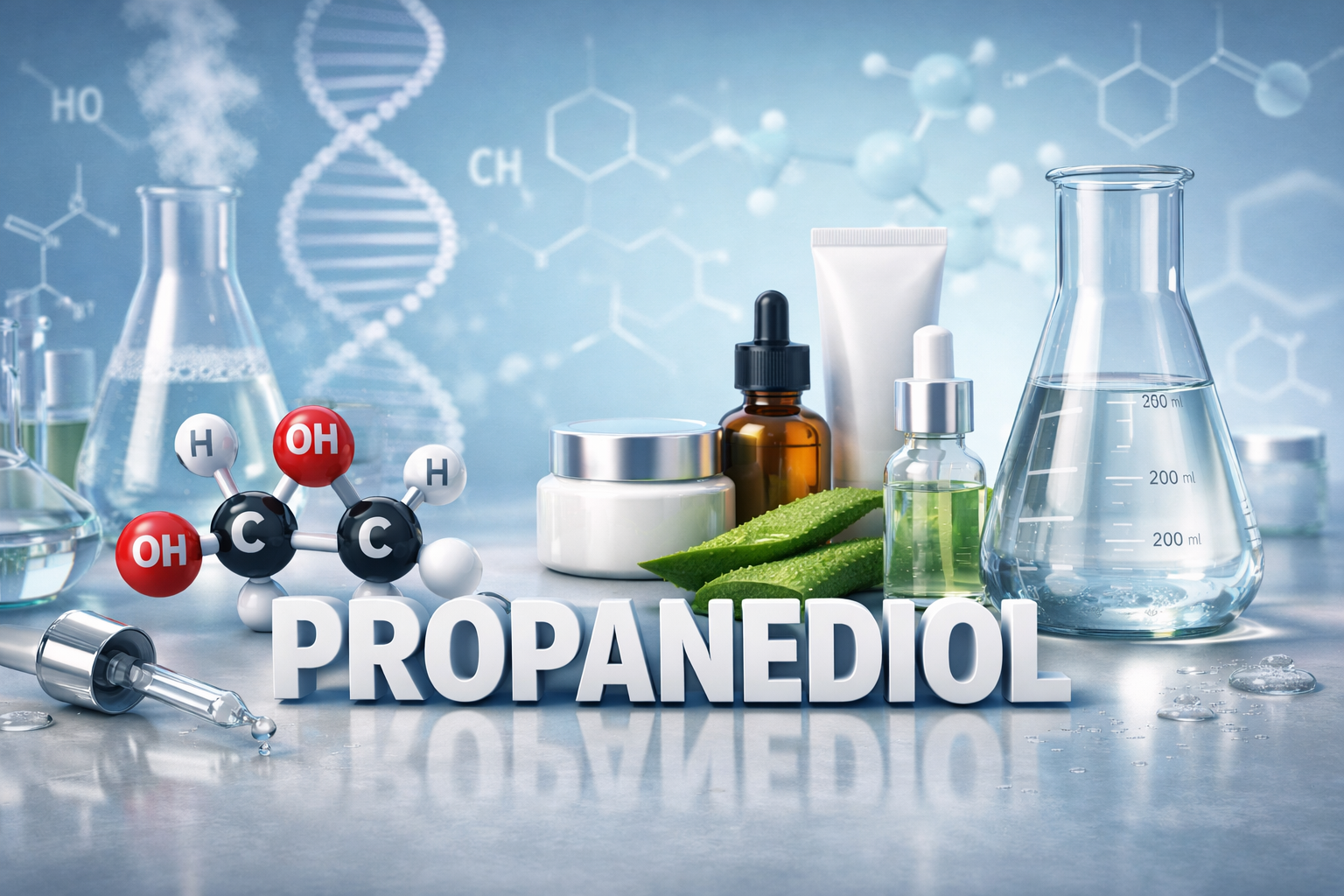 Propanediol: The Ultimate Guide to This High-Performance, Skin-Friendly Ingredient
 Hydrolyzed Keratin: The Complete Scientific and Cosmetic Authority Guide
 Sodium PCA: The Ultimate Guide to Superior Skin Hydration and Barrier Repair
 Decyl Glucoside: A Complete Guide to This Gentle, Natural Surfactant
 Coco Glucoside: The Gentle, Plant-Based Surfactant Revolutionizing Skincare & Haircare