

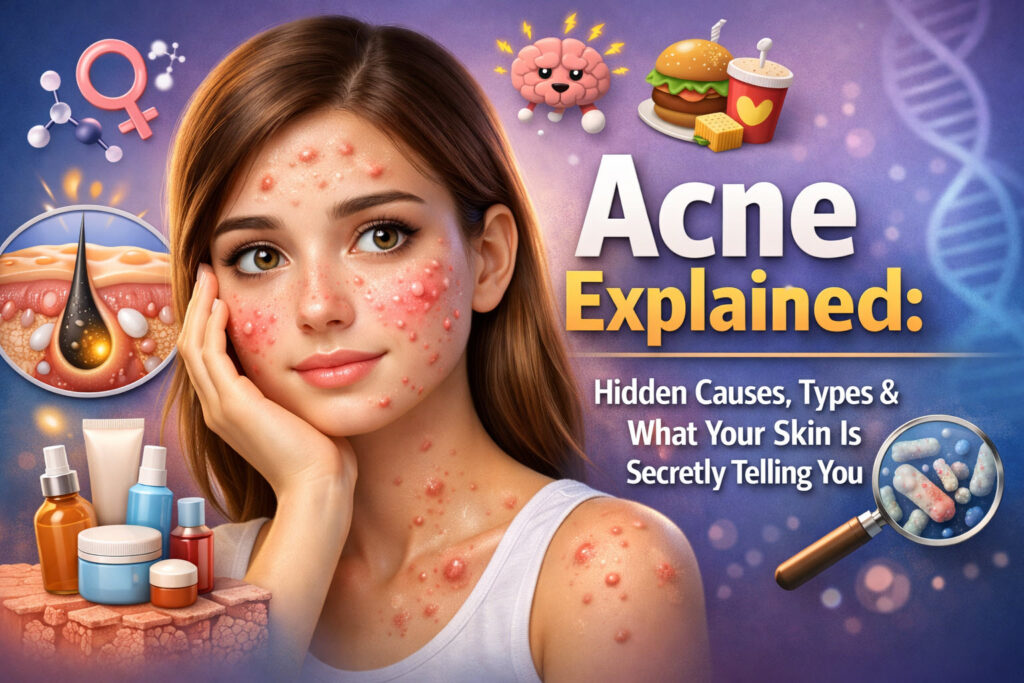
Acne Explained: Hidden Causes, Types & What Your Skin Is Secretly Telling You
Acne is one of the most common skin conditions worldwide, affecting teenagers and adults alike. This comprehensive guide, “Acne Explained: Hidden Causes, Types & What Your Skin Is Secretly Telling You,” dives deep into the real reasons behind breakouts and how to treat them effectively. If you’ve ever searched for how to get rid of acne fast, hormonal acne treatment, cystic acne causes, best skincare routine for acne-prone skin, or acne scars treatment, this detailed breakdown will give you clear, science-backed answers.
Acne forms when excess sebum (oil), dead skin cells, and bacteria clog pores, leading to inflammation, pimples, blackheads, whiteheads, and even painful cystic acne. But the real story goes beyond clogged pores. Hormonal imbalance, stress-induced cortisol spikes, poor gut health, high-glycemic diets, dairy consumption, and improper skincare products can all trigger persistent breakouts. Understanding these hidden acne causes is the first step toward clear skin.
Different types of acne require different treatments. Hormonal acne often appears on the chin and jawline. Cystic acne forms deep under the skin and can cause scarring. Fungal acne looks similar to regular acne but requires antifungal care instead of traditional acne medication. Using the wrong products can worsen inflammation and damage your skin barrier.
This article also explores dermatologist-recommended ingredients such as salicylic acid, benzoyl peroxide, niacinamide serum, retinoids for acne, and non-comedogenic moisturizers. These clinically proven treatments help unclog pores, reduce oil production, fight acne-causing bacteria, and prevent future breakouts. Additionally, we discuss lifestyle factors like stress management, balanced diet plans for clear skin, hydration, and proper skincare layering techniques.
If you struggle with adult acne, acne scars, oily skin, sensitive acne-prone skin, or recurring breakouts before your period, this guide explains what your skin is secretly telling you. With the right routine, consistency, and knowledge, achieving clear, healthy skin is possible.
Whether you’re looking for best acne treatment in 2026, dermatologist skincare tips, acne prevention strategies, or natural remedies for pimples, this SEO-optimized guide covers everything you need to understand acne from root cause to recovery.
Table of Contents
Introduction to Acne
Acne. That uninvited guest that shows up before an important event. Sound familiar?
But here’s the thing — acne isn’t just about a random pimple. It’s your skin waving a red flag. It’s your body whispering (sometimes shouting), “Something’s off.”
Let’s decode what your skin is really trying to tell you.
Why Acne Is More Than Just a Surface Problem
Most people think acne starts on the skin. It doesn’t.
It starts beneath the surface — in your hormones, gut, stress levels, and even lifestyle habits. Your skin is simply the messenger. And breaking the messenger won’t solve the message.
The Emotional and Psychological Impact of Acne
Let’s be honest. Acne doesn’t just affect your face — it affects your confidence.
Avoiding mirrors. Canceling plans. Layering makeup. Comparing yourself on social media.
If you’ve been there, you’re not alone. Acne can impact self-esteem deeply. But understanding it? That’s empowering.
What Exactly Is Acne?
At its core, acne is an inflammatory skin condition. But what does that really mean?
How Acne Forms Under the Skin
It’s a four-step process:
The Role of Sebum
Sebum is your skin’s natural oil. It’s not evil — it protects and hydrates. But when produced in excess, it becomes problematic.
Dead Skin Cells and Pore Blockage
Your skin constantly sheds cells. When these mix with excess oil, pores clog. Think of it like a sink filled with grease and debris.
Bacteria and Inflammation
Enter Cutibacterium acnes. This bacteria feeds on trapped oil, multiplies, and triggers inflammation.
Boom — a pimple is born.
The Hidden Causes of Acne
Let’s dig deeper.
Hormonal Imbalances
Hormones are like chemical messengers. When androgens rise (especially during puberty, periods, PCOS, or stress), oil production increases.
That’s why jawline acne often screams “hormonal.”
Stress and Cortisol Spikes
Stressed? Your body releases cortisol. Cortisol tells your oil glands to work overtime.
More oil = more clogged pores.
Stress acne is very real.
Diet and Gut Health
Ever noticed breakouts after junk food or dairy?
High-glycemic foods spike insulin. Insulin influences hormones. Hormones increase oil.
See the chain reaction?
Your gut and skin are connected like Wi-Fi — you can’t see it, but it’s there.
Poor Skincare Habits
Overwashing. Harsh scrubs. Skipping moisturizer.
Ironically, trying too hard can damage your skin barrier — making acne worse.
Environmental Triggers
Pollution, humidity, sweat, dirty pillowcases — they all contribute.
Your skin absorbs more than you think.
Different Types of Acne You Should Know
Not all acne is created equal.
Whiteheads and Blackheads
These are non-inflammatory. Whiteheads are closed clogged pores. Blackheads are open ones oxidized by air.
Papules and Pustules
Red, tender bumps? Papules.
Papules with pus? Pustules.
These are inflammatory.
Nodules and Cystic Acne
Deep. Painful. Under-the-skin bumps.
These require professional care. Don’t self-treat aggressively.
Hormonal Acne
Usually on chin and jawline. Cyclical. Worsens before periods.
Fungal Acne (Malassezia Folliculitis)
Tiny, itchy, uniform bumps. Often mistaken for regular acne.
Antifungal treatment works — not traditional acne products.
What Your Acne Location Is Secretly Telling You
Your face has clues.
Forehead Breakouts
Often linked to stress, poor sleep, or hair products clogging pores.
Cheek Acne
Dirty phones. Pillowcases. Pollution exposure.
Chin and Jawline Acne
Hormones. Especially in women.
Back and Body Acne
Sweat. Tight clothing. Gym gear. Hormones.
Acne Myths That Are Secretly Making It Worse
Let’s bust a few.
“Oily Skin Doesn’t Need Moisturizer”
Wrong. Dehydrated skin produces MORE oil.
Moisturizer balances it.
“Popping Pimples Makes Them Heal Faster”
It spreads bacteria and increases scarring.
Hands off.
“Only Teenagers Get Acne”
Adult acne is rising — especially in women 25–40.
Hormones don’t retire at 18.
How to Treat Acne the Right Way
Simple beats complicated.
Building a Simple Acne-Friendly Routine
Cleansing
Use gentle, sulfate-free cleansers. Twice daily is enough.
Treatment Serums
Salicylic acid for clogged pores.
Niacinamide for oil control.
Retinoids for cell turnover.
Moisturizing
Lightweight, non-comedogenic moisturizer.
Always.
Sunscreen
Acne treatments increase sun sensitivity. SPF is non-negotiable.
When to See a Dermatologist
If acne is painful, persistent, or leaving scars — seek professional help.
Early treatment prevents long-term damage.
Natural vs Medical Treatments – What Actually Works?
Salicylic Acid
Unclogs pores. Great for blackheads.
Benzoyl Peroxide
Kills acne-causing bacteria.
Retinoids
Increase cell turnover. Gold standard for acne.
Niacinamide
Reduces inflammation and oil production.
Lifestyle Adjustments
Sleep. Water. Whole foods. Exercise.
Skincare alone isn’t magic.
Preventing Acne Long-Term
Quick fixes fade. Consistency wins.
Hormone Balance
Consult professionals if cycles are irregular.
Stress Management
Meditation. Walking. Journaling.
Lower cortisol = calmer skin.
Clean Diet and Hydration
Low sugar. Balanced meals. Plenty of water.
Consistency Over Quick Fixes
Acne takes weeks to improve. Patience is key.
Think of it like growing a plant — you don’t dig it up daily to check roots.
How to Use Acne Products Properly: Step-by-Step Guide
1. Start with a Gentle Cleanser
- Use a mild, sulfate-free cleanser twice a day — morning and night.
- Avoid harsh scrubs or over-washing, which can strip your skin and trigger more oil production.
- Tip: Use lukewarm water, not hot, to protect your skin barrier.
2. Apply Targeted Acne Treatments
- Salicylic Acid: Helps unclog pores. Apply on affected areas after cleansing.
- Benzoyl Peroxide: Kills acne-causing bacteria. Start with a small amount once daily to avoid irritation.
- Retinoids: Promote cell turnover and prevent clogged pores. Apply at night, and always use sunscreen during the day.
- Niacinamide: Reduces inflammation and controls excess oil. Can be layered with other treatments.
Pro Tip: Introduce one active ingredient at a time to monitor skin tolerance.
3. Moisturize Daily
- Even oily, acne-prone skin needs hydration.
- Use a lightweight, non-comedogenic moisturizer to maintain the skin barrier.
- This helps reduce dryness and irritation caused by acne treatments.
4. Always Use Sunscreen
- Many acne treatments increase sun sensitivity.
- Apply broad-spectrum SPF 30 or higher every morning, even on cloudy days.
- Opt for oil-free, non-comedogenic formulas to prevent breakouts.
5. Avoid Touching Your Face
- Picking, popping, or rubbing pimples spreads bacteria and worsens inflammation.
- Keep your hands clean and avoid unnecessary contact with your face.
6. Apply Products in the Correct Order
Step-by-Step Order:
- Cleanser
- Acne treatment (serums, spot treatments)
- Moisturizer
- Sunscreen (morning routine)
- Layering products correctly ensures maximum absorption and effectiveness.
7. Be Patient and Consistent
- Acne treatments take 4–8 weeks to show results.
- Consistency is more important than intensity — don’t over-apply or switch products too often.
- Track your skin’s progress weekly to identify what works best.
8. Patch Test New Products
- Apply a small amount on the jawline or behind the ear for 24 hours.
- Watch for redness, irritation, or burning before applying to the full face.
9. Combine with Healthy Lifestyle Habits
- Drink plenty of water to support skin hydration.
- Follow a low-glycemic diet with fruits, vegetables, and whole grains.
- Manage stress through exercise, meditation, or sleep hygiene.
10. Know When to Seek Professional Help
- If acne is painful, cystic, or causing scarring, consult a dermatologist.
- Certain medications, like prescription retinoids or hormonal therapy, require medical supervision.
Quick Recap: Cleanse → Treat → Moisturize → Protect → Repeat. Patience + consistency = clearer, healthier skin.
Dermatologist Tips for Managing Acne Safely and Effectively
1. Keep Your Routine Simple
Overloading your skin with too many active ingredients can damage your skin barrier. Stick to a gentle cleanser, targeted treatment (like salicylic acid or retinoid), lightweight moisturizer, and sunscreen.
2. Treat Based on Acne Type
Not all acne is the same.
- Blackheads/Whiteheads: Salicylic acid works well.
- Inflammatory acne: Benzoyl peroxide or topical antibiotics (prescribed).
- Cystic or hormonal acne: May require prescription retinoids or oral medication.
Using the wrong product can worsen inflammation.
3. Protect Your Skin Barrier
Harsh scrubs, alcohol-based toners, and over-exfoliation increase redness and breakouts. A healthy barrier heals faster and prevents scarring.
4. Use Sunscreen Daily
Many acne treatments increase sun sensitivity. Choose a non-comedogenic, oil-free SPF 30 or higher to prevent hyperpigmentation and post-acne marks.
5. Be Patient With Treatments
Acne treatments typically take 4–8 weeks to show visible improvement. Switching products too quickly disrupts progress.
6. Avoid Picking or Popping Pimples
This increases the risk of infection, deeper inflammation, and permanent acne scars.
7. Consider Hormonal Evaluation
Persistent jawline acne, irregular cycles, or severe adult acne may indicate hormonal imbalance (such as PCOS). Seek medical evaluation when necessary.
8. Consult a Dermatologist for Severe Cases
Painful cystic acne, frequent scarring, or acne that doesn’t improve with over-the-counter treatments requires professional care.
Common Acne Mistakes That Make Breakouts Worse
1. Overwashing the Face
Washing more than twice daily strips natural oils and triggers excess sebum production.
2. Skipping Moisturizer
Oily skin still needs hydration. Dehydrated skin produces more oil, worsening acne.
3. Mixing Too Many Actives
Combining retinol, exfoliating acids, benzoyl peroxide, and vitamin C without guidance can irritate the skin.
4. Ignoring Diet and Lifestyle
High-sugar diets, chronic stress, poor sleep, and dehydration can trigger hormonal fluctuations and inflammation.
5. Using Heavy or Comedogenic Makeup
Non-comedogenic and oil-free products are safer for acne-prone skin.
6. Expecting Overnight Results
Acne is a medical skin condition. Quick fixes often damage long-term progress.
7. Self-Prescribing Strong Medications
Using prescription treatments (like oral isotretinoin or antibiotics) without medical supervision can cause serious side effects.
YMYL (Your Money or Your Life) Skincare Content Compliance
Since acne treatment involves health-related decisions, content must follow responsible standards:
1. Provide Evidence-Based Information
Recommendations should align with dermatological research and widely accepted medical guidelines.
2. Avoid Medical Claims Without Qualification
Do not claim a product can “cure acne permanently.” Use balanced language such as “may help reduce breakouts.”
3. Encourage Professional Consultation
Always advise readers to consult a licensed dermatologist for severe, persistent, or painful acne.
4. Avoid Absolute Guarantees
Skin responds differently for each individual. Avoid statements like “This works for everyone.”
5. Include Safety Warnings
Mention potential side effects of common ingredients:
- Retinoids: irritation, dryness, sun sensitivity
- Benzoyl peroxide: dryness, bleaching fabrics
- Salicylic acid: irritation in sensitive skin
6. Transparency in Product Promotion
If recommending products, disclose affiliations and avoid misleading claims.
7. Avoid Harmful DIY Advice
Home remedies like toothpaste, lemon juice, or baking soda can damage the skin barrier and are not dermatologist-approved.
Important Note
Acne can sometimes signal underlying hormonal, metabolic, or inflammatory conditions. Persistent, severe, or scarring acne should always be evaluated by a qualified healthcare professional.
Medical Disclaimer
Important Notice: The content provided on this website/blog, including articles, guides, images, are for informational and educational purposes only. It is not intended to be a substitute for professional medical advice, diagnosis, or treatment.
While we strive to provide accurate, evidence-based skincare and acne-related information, individual skin conditions vary. Always consult a licensed dermatologist, physician, or qualified healthcare professional before starting any new skincare routine, using topical or oral medications, or making changes to your diet or lifestyle that could affect your skin or overall health.
Do Not Ignore Professional Advice: If you have severe, persistent, or painful acne, cysts, scarring, or signs of infection, seek immediate medical attention. Relying solely on online information may delay necessary treatment and could worsen your condition.
Product & Treatment Information: Mentions of skincare products, ingredients, or treatments do not constitute an endorsement. Results may vary depending on skin type, health conditions, and other individual factors. Always patch test new products and discontinue use if irritation occurs.
By using this website/blog, you acknowledge that the information provided is for general educational purposes, and the authors or owners of this content are not responsible for any adverse effects, injuries, or complications that may result from the use or misuse of any information presented here.
Your Skin, Your Health: Remember, your skin is unique. The safest and most effective care is personalized care under the guidance of a professional.
Conclusion
Acne isn’t your enemy. It’s information.
It tells you when hormones shift. When stress rises. When your gut is unhappy. When your skincare routine needs tweaking.
Instead of fighting your skin, listen to it.
Because once you understand acne — you stop fearing it.
And that’s powerful.
FAQs
1. What causes acne on the face?
Acne is caused by clogged pores, excess oil (sebum), dead skin cells, bacteria, and inflammation. Hormonal changes, stress, diet, and lifestyle factors can also trigger breakouts.
2. How can I get rid of acne fast?
Fast acne treatment includes using salicylic acid, benzoyl peroxide, or retinoids, maintaining a gentle skincare routine, staying hydrated, and avoiding picking or squeezing pimples.
3. What is hormonal acne and how to treat it?
Hormonal acne appears mainly on the chin and jawline due to fluctuations in hormones like estrogen and testosterone. Treatments include topical retinoids, benzoyl peroxide, hormonal therapy, and lifestyle adjustments.
4. Can adult acne be prevented?
Yes, adult acne can be managed by maintaining a consistent skincare routine, balancing hormones, reducing stress, eating a low-glycemic diet, and avoiding comedogenic products.
5. What are the different types of acne?
Common types include blackheads, whiteheads, papules, pustules, nodules, cystic acne, hormonal acne, and fungal acne, each requiring different treatment approaches.
6. Is it safe to use acne creams with retinoids?
Yes, retinoids are effective for acne but should be introduced gradually, used at night, and paired with sunscreen during the day to avoid irritation and sun sensitivity.
7. How long does it take for acne treatment to work?
Most acne treatments show visible results in 4–8 weeks. Consistency is key, and switching products too quickly can hinder progress.
8. Can diet affect acne?
Yes, high-sugar, high-glycemic, and dairy-heavy diets can worsen acne by affecting hormone levels and triggering inflammation. A balanced diet supports clearer skin.
9. Should I see a dermatologist for acne?
You should consult a dermatologist for severe, cystic, or persistent acne, acne that causes scarring, or if over-the-counter treatments aren’t effective.
10. Can acne scars be treated?
Yes, acne scars can be treated with chemical peels, laser therapy, microneedling, retinoids, or professional dermatological procedures, depending on the scar type and severity.
Related posts:
 Salicylic Acid – The Ultimate Guide for Clear, Healthy Skin
 Acne: Causes, Types, Treatments, and Answers to the Most Common Questions
 Niacinamide – The Ultimate Skincare Ingredient Explained
 Niacinamide Serum – The Ultimate Guide to Brighter, Healthier Skin
 Hyperpigmentation: Causes, Types, Treatments, and Complete Skincare Guide
 Rosacea: Causes, Symptoms, Types, Treatments, and Skincare Tips
Excellent deep dive into the root causes of breakouts. It’s so often overlooked how much stress and gut health impact the skin barrier. I found the distinction between hormonal and fungal acne especially helpful for anyone trying to build a proper skincare routine. Thanks for sharing these science-backed tips!
Thank you so much! You’ve hit on such a crucial point—skincare is rarely just about what we put on the surface. Understanding the “inside-out” connection between gut health, stress, and the skin barrier is often the missing piece of the puzzle for long-term clarity.
I’m really glad the distinction between hormonal and fungal acne cleared things up for you. Using the wrong products on fungal acne can actually make it worse, so getting that diagnosis right is the first step toward a routine that actually works.
I appreciate you stopping by and recognizing the science behind the tips. It’s all about working with our biology, not against it!