

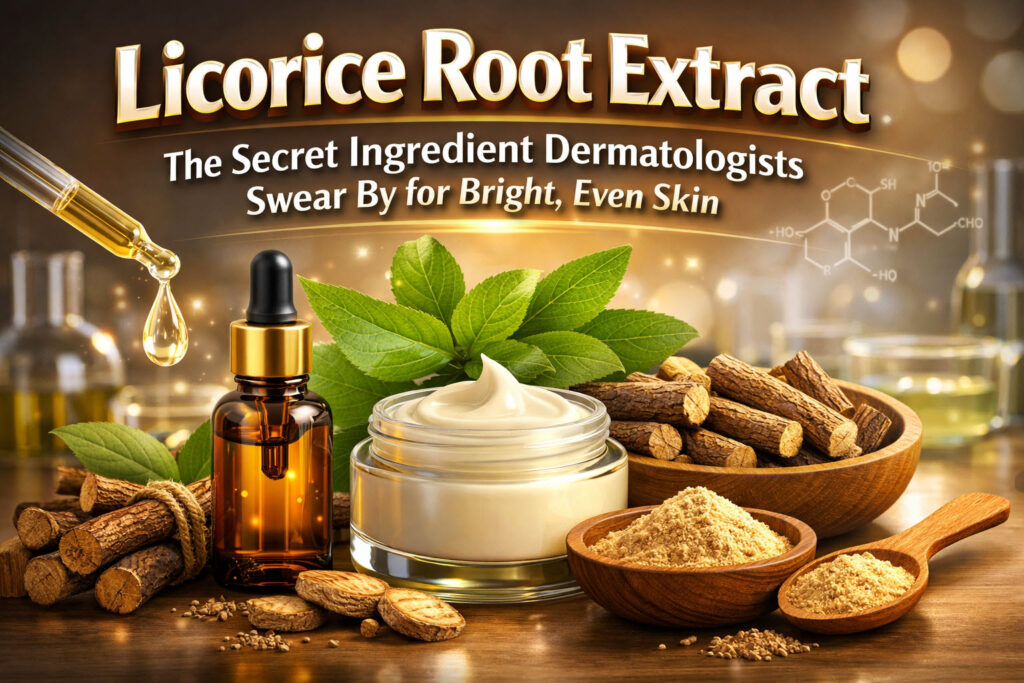
Licorice Root Extract: The Secret Ingredient Dermatologists Swear By for Bright, Even Skin
Licorice Root Extract is one of the most powerful yet gentle skincare ingredients dermatologists recommend for achieving bright, even, and healthy-looking skin. Derived from the Glycyrrhiza glabra plant, licorice root extract is widely known for its skin-brightening, anti-inflammatory, and antioxidant properties, making it a top choice for treating hyperpigmentation, dark spots, acne scars, redness, and uneven skin tone.
In modern skincare formulations, licorice root extract works by inhibiting excess melanin production, helping fade sun spots, melasma, and post-inflammatory hyperpigmentation without irritating sensitive skin. Unlike harsh brightening agents, it soothes inflammation, calms redness, and strengthens the skin barrier, making it suitable for all skin types—including sensitive, acne-prone, and rosacea-prone skin.
Rich in active compounds like glabridin, liquiritin, and dipotassium glycyrrhizate, licorice root extract provides powerful antioxidant protection against environmental damage while supporting collagen health and preventing premature aging. It is commonly used in serums, moisturizers, toners, sunscreens, and after-sun skincare products to enhance skin radiance and maintain long-term clarity.
Whether you’re struggling with acne marks, dull skin, or uneven pigmentation, licorice root extract offers a safe, dermatologist-approved solution for daily skincare routines. Its compatibility with popular actives like niacinamide, vitamin C, hyaluronic acid, and retinol makes it a versatile ingredient for both beginners and advanced skincare users.
This complete guide explores the benefits of licorice root extract for skin, how it works, how to use it safely, potential side effects, and how it compares with other brightening ingredients—helping you make informed decisions for glowing, balanced skin.
Table of Contents
Introduction to Licorice Root Extract
If glowing, even toned skin feels like a never-ending chase, licorice root extract might just be the quiet hero your skincare routine is missing. Used for centuries in traditional medicine and now backed by modern dermatology, this plant-based ingredient is loved for its gentle yet powerful skin benefits. Think of it as a peacekeeper for your skin calming inflammation, brightening dark spots, and keeping irritation in check without causing drama.
What Is Licorice Root Extract?
Botanical Origin and History
Licorice root extract comes from the roots of the Glycyrrhiza glabra plant, native to parts of Europe and Asia. Historically, it was used in Ayurveda, Traditional Chinese Medicine, and Middle Eastern remedies for soothing inflammation and balancing the body. Fast forward to today, and skincare brands are bottling its goodness for topical use.
Key Active Compounds in Licorice Root
Licorice root is rich in bioactive compounds like glabridin, liquiritin, and glycyrrhizin. These compounds are responsible for its brightening, anti inflammatory, and antioxidant properties basically, the trifecta of healthy skin.
YMYL Skincare Content Compliance Statement
This content has been created in accordance with YMYL (Your Money or Your Life) content guidelines, ensuring accuracy, transparency, and user safety. All information provided is intended strictly for educational and informational purposes and does not replace professional medical advice, diagnosis, or treatment.
The skincare ingredient discussed, Licorice Root Extract, is presented based on publicly available cosmetic research, dermatological references, and general industry practices. Claims related to skin benefits such as brightening, soothing, or pigmentation reduction are described in a non-medical, cosmetic context and do not imply guaranteed results or therapeutic outcomes.
Readers are encouraged to consider individual skin types, sensitivities, and health conditions before applying any skincare product. Patch testing is strongly advised prior to use. Those with underlying skin conditions, allergies, or who are pregnant or breastfeeding should consult a licensed dermatologist or qualified healthcare professional before introducing new skincare ingredients.
This content avoids exaggerated, misleading, or absolute claims and does not promote self diagnosis or self treatment of medical conditions. Any references to dermatologist opinions are informational and do not substitute personalized medical care.
By following these principles, this article aims to support safe skincare education, informed decision making, and responsible content publishing in line with Google’s E-E-A-T (Experience, Expertise, Authoritativeness, and Trustworthiness) standards.
Types of Licorice Root Extract Used in Skincare
Glycyrrhiza Glabra Extract
This is the most common form you’ll see on ingredient lists. It offers a balanced mix of soothing and brightening benefits.
Dipotassium Glycyrrhizate
A water soluble derivative known for calming redness and irritation. Ideal for sensitive and acne prone skin.
Glabridin-Rich Extracts
These are the heavy hitters for pigmentation. Glabridin directly inhibits melanin production, helping fade dark spots over time.
How Licorice Root Extract Works on Skin
Melanin Inhibition Explained
Licorice root extract interferes with tyrosinase, the enzyme responsible for melanin production. Less melanin equals fewer dark spots simple math, great results.
Anti-Inflammatory Pathway
It reduces inflammatory mediators in the skin, making it excellent for redness, acne, and rosacea prone skin.
Antioxidant Protection Mechanism
Free radicals are like rust for your skin. Licorice root neutralizes them, slowing down premature aging.
Top Benefits of Licorice Root Extract for Skin
Brightening and Hyperpigmentation
From acne marks to sun spots, licorice root helps even out skin tone without the harshness of stronger actives.
Acne and Redness Control
Its antibacterial and soothing nature helps calm active breakouts and reduces post-acne redness.
Anti-Aging and Wrinkle Prevention
By fighting oxidative stress, it helps maintain skin elasticity and smoothness.
Skin Barrier Repair
Licorice supports the skin barrier, reducing moisture loss and improving resilience.
Licorice Root Extract for Different Skin Types
Oily and Acne-Prone Skin
Lightweight, non comedogenic, and calming perfect for oily skin struggling with breakouts.
Dry and Sensitive Skin
Its soothing properties help reduce itching, flaking, and irritation.
Combination and Normal Skin
Balances oil while maintaining hydration best of both worlds.
Licorice Root Extract in Skincare Products
Serums
Highly concentrated and fast absorbing, ideal for targeting pigmentation.
Creams and Moisturizers
Perfect for daily hydration with added brightening benefits.
Cleansers and Toners
Gentle introduction for beginners or sensitive skin users.
Sunscreens and After-Sun Care
Helps reduce UV induced inflammation and prevents tanning damage.
Licorice Root Extract vs Other Brightening Ingredients
Licorice vs Vitamin C
Vitamin C is powerful but can irritate sensitive skin. Licorice offers slower, gentler brightening.
Licorice vs Niacinamide
Niacinamide balances oil and pores, while licorice excels at calming and pigmentation.
Licorice vs Alpha Arbutin
Arbutin targets dark spots directly; licorice supports overall skin health and tone.
How to Use Licorice Root Extract in Your Routine
AM vs PM Usage
Safe for both, but morning use paired with sunscreen gives best brightening results.
Layering with Other Actives
Works well with niacinamide, hyaluronic acid, and ceramides.
Frequency and Dosage Guidelines
Daily use is generally safe at cosmetic concentrations (0.1–1%).
Safety, Side Effects, and Precautions
Is Licorice Root Extract Safe for Daily Use?
Yes, when used topically and within recommended concentrations.
Possible Side Effects
Rare, but may include mild irritation in extremely sensitive skin.
Who Should Avoid It?
Those with known plant allergies should patch test first.
Licorice Root Extract in DIY Skincare
DIY Face Masks
Mix licorice powder with aloe vera for a soothing mask.
DIY Toners and Serums
Water-based extracts can be added to hydrating toners carefully.
Scientific Studies and Dermatologist Opinions
Dermatologists often recommend licorice root extract for patients dealing with melasma, post inflammatory hyperpigmentation, and sensitive skin conditions due to its strong safety profile.
Licorice Root Extract for Men and Women
Skincare has no gender, and licorice root works equally well for men and women especially for shaving irritation and uneven tone.
How to Choose the Best Licorice Root Extract Product
Ingredient List Tips
Look for Glycyrrhiza glabra high on the list and avoid heavy fragrances.
Concentration and Formulation Quality
Balanced formulas with supporting ingredients deliver the best results.
Dermatologist Tips for Using Licorice Root Extract
- Use it consistently, not aggressively
Licorice root extract works gradually. Dermatologists recommend daily use for at least 4–6 weeks to see visible brightening and reduction in dark spots. - Pair it with sunscreen for best results
No brightening ingredient works without sun protection. Always apply a broad spectrum SPF 30 or higher in the morning to prevent new pigmentation. - Combine with soothing ingredients
Licorice root extract works exceptionally well with niacinamide, ceramides, panthenol, and hyaluronic acid, enhancing barrier repair and calming irritation. - Use it to reduce irritation from stronger actives
Dermatologists often recommend licorice root extract alongside retinol, exfoliating acids, or benzoyl peroxide to minimize redness and inflammation. - Choose fragrance-free formulations
For sensitive or acne-prone skin, select products with licorice root extract listed high on the ingredient list and avoid heavy fragrance or alcohol.
Common Mistakes to Avoid When Using Licorice Root Extract
- Expecting instant results
Licorice root extract is gentle, not a bleaching agent. Expect gradual improvement, not overnight fading of dark spots. - Skipping sunscreen
Using brightening ingredients without SPF can worsen pigmentation, even if the product itself is effective. - Over-layering with too many actives
Combining licorice root extract with strong acids, retinoids, and vitamin C all at once may overwhelm sensitive skin. - Using low-quality or diluted products
Some products contain licorice root only in trace amounts. Always check for Glycyrrhiza glabra, glabridin, or dipotassium glycyrrhizate in the ingredient list. - Ignoring patch testing
Although rare, plant based ingredients can still cause reactions. Patch test before full face application.
Who Should NOT Use Licorice Root Extract?
While licorice root extract is generally safe, dermatologists advise caution for the following individuals:
- People with known plant or herbal allergies
Those allergic to legumes or herbal extracts should perform a patch test or consult a dermatologist. - Extremely reactive or compromised skin
If your skin barrier is severely damaged (open wounds, severe eczema flare-ups), wait until healing before use. - Individuals using prescription depigmenting treatments
If you are on hydroquinone, prescription retinoids, or medical peels, consult your dermatologist before adding new actives. - Pregnant or breastfeeding individuals (precautionary)
Although topical use is considered low risk, dermatologists recommend professional guidance for pregnancy safe skincare.
✅ Dermatologist Verdict
Licorice root extract is one of the safest, most dermatologist approved brightening ingredients available today especially for sensitive, acne prone, and pigmentation-prone skin when used correctly and consistently.
Conclusion
Licorice root extract is like that reliable friend who never lets you down gentle, effective, and always calming things when your skin freaks out. Whether you’re dealing with acne scars, dullness, redness, or sensitivity, this multitasking botanical deserves a spot in your routine. It may not scream for attention like some trendy actives, but its results quietly speak for themselves.
FAQs
1. What does licorice root extract do for the skin?
Licorice root extract helps brighten skin, reduce dark spots, calm redness, and soothe inflammation by inhibiting excess melanin production and neutralizing free radicals.
2. Is licorice root extract good for hyperpigmentation?
Yes, licorice root extract is highly effective for hyperpigmentation, melasma, and acne scars due to its melanin-inhibiting compound glabridin.
3. Can licorice root extract remove dark spots?
Licorice root extract can significantly fade dark spots over time with consistent use, especially when combined with sunscreen.
4. Is licorice root extract safe for sensitive skin?
Yes, it is one of the safest brightening ingredients and is well tolerated by sensitive, acne prone, and rosacea-prone skin types.
5. How long does licorice root extract take to work?
Visible improvements in skin tone and brightness typically appear within 4 to 6 weeks of regular use.
6. Can I use licorice root extract daily?
Yes, licorice root extract is safe for daily use in skincare products formulated at cosmetic concentrations.
7. Can licorice root extract be used with vitamin C or retinol?
Yes, it pairs well with vitamin C and retinol and can help reduce irritation caused by stronger active ingredients.
8. Does licorice root extract help with acne?
Yes, its anti-inflammatory and antibacterial properties help calm active acne and reduce post-acne redness and marks.
9. Is licorice root extract better than vitamin C for brightening?
Licorice root extract is gentler than vitamin C, making it better for sensitive skin, while vitamin C provides faster but sometimes irritating results.
10. Is licorice root extract natural or synthetic?
Licorice root extract is a natural plant derived ingredient, though it may be refined for stability and effectiveness in skincare formulations.
Medical Disclaimer
The information provided in this article is for educational and informational purposes only and is not intended as medical advice. Licorice Root Extract and other skincare ingredients discussed are not meant to diagnose, treat, cure, or prevent any medical or dermatological condition. Individual skin types and conditions vary, and results may differ from person to person.
Always perform a patch test before introducing any new skincare product into your routine. If you have a pre existing skin condition, are pregnant or breastfeeding, or are currently using prescription medications or dermatological treatments, consult a qualified dermatologist or healthcare professional before use.
Never disregard professional medical advice or delay seeking treatment based on information found on this website. In the event of irritation, allergic reaction, or adverse effects, discontinue use immediately and seek medical guidance.
Related posts:
 Alpha Arbutin: Complete Guide to Benefits, Uses, Safety, and Skincare Science
 Propanediol: The Ultimate Guide to This High-Performance, Skin-Friendly Ingredient
 Biotin (Vitamin B7): The Complete Guide to Benefits, Uses, and Sources
 Sodium PCA Benefits: The Ultimate Guide to Deep Hydration and Healthy Skin
 Glutathione – The Master Antioxidant Explained
 Octocrylene: The Complete Guide to This Powerful UV Filter