

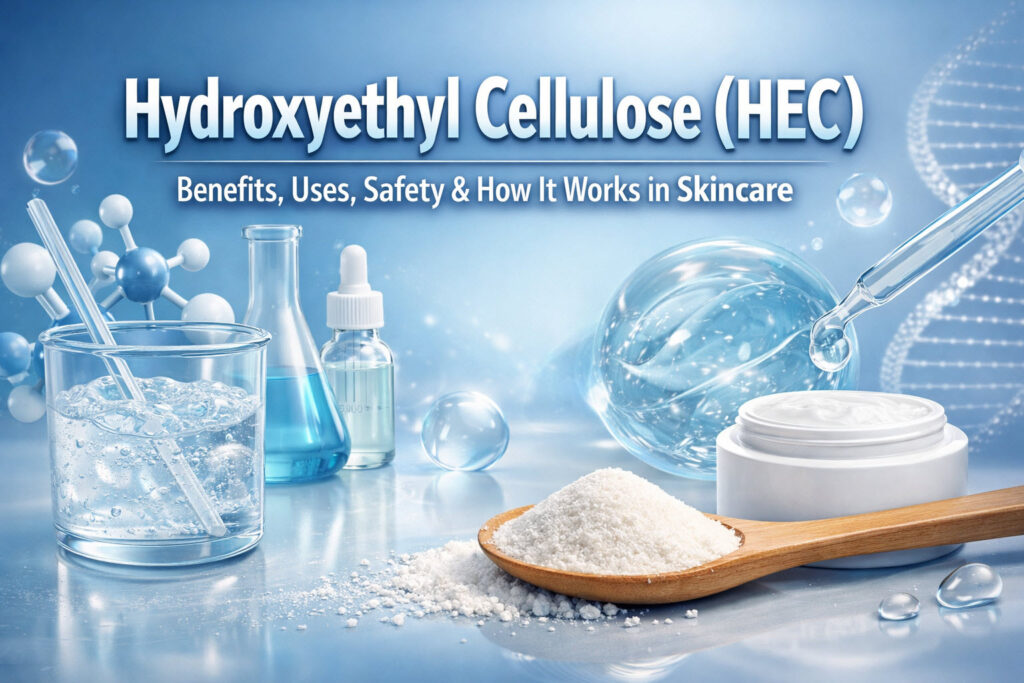
Hydroxyethyl Cellulose (HEC): Benefits, Uses, Safety & How It Works in Skincare
Hydroxyethyl Cellulose (HEC) is a widely used cosmetic and pharmaceutical ingredient known for its excellent thickening, stabilizing, and water-binding properties. Derived from natural cellulose, Hydroxyethyl Cellulose acts as a non ionic, water soluble polymer that enhances texture, improves viscosity, and delivers a smooth, non sticky skin feel in skincare and hair care formulations.
In skincare products, Hydroxyethyl Cellulose in cosmetics is commonly used in facial cleansers, gel serums, hydrating masks, aloe vera gels, sunscreens, and eye creams. It helps create clear, stable gels while maintaining pH stability, making it compatible with active ingredients like niacinamide, hyaluronic acid, salicylic acid, vitamin C, and botanical extracts. Due to its non-comedogenic and non irritating nature, Hydroxyethyl Cellulose is considered safe for sensitive and acne prone skin.
In hair care formulations, Hydroxyethyl Cellulose is used in shampoos, conditioners, and styling gels to provide consistent thickness, improved spreadability, and enhanced foam stability without weighing hair down. Unlike carbomer, HEC does not require neutralization, making it easier to use in both professional and DIY formulations.
From a safety perspective, Hydroxyethyl Cellulose is dermatologist-approved, globally permitted by cosmetic regulatory authorities, and suitable for clean beauty and vegan skincare products. Its biodegradable profile and plant derived origin make it a popular choice for brands focused on sustainability.
This complete guide explains what Hydroxyethyl Cellulose is, how it works, its benefits, uses, safety profile, recommended concentration, pH compatibility, and formulation tips, helping formulators, skincare brands, and beginners understand why HEC is a must-have ingredient in modern cosmetic science.
Table of Contents
What Is Hydroxyethyl Cellulose (HEC)?
Hydroxyethyl Cellulose, commonly known as HEC, is a non ionic, water-soluble polymer derived from natural cellulose. In simple words, it’s a plant-based ingredient that’s been chemically modified to make it incredibly useful in cosmetics, pharmaceuticals, and industrial formulations.
Chemical Definition
HEC is created by reacting cellulose with ethylene oxide. This process introduces hydroxyethyl groups into the cellulose structure, giving it excellent water solubility and thickening power.
Natural Origin and Modification Process
Cellulose comes from wood pulp or cotton linters. While the modification process is chemical, the base material is natural making HEC a popular choice for modern skincare brands aiming for performance with a “green” image.
Why Hydroxyethyl Cellulose Is Widely Used
Ever wondered why so many gels and cleansers feel smooth, silky, and consistent? HEC is often the secret hero behind that texture.
Key Functional Properties
- Excellent thickening ability
- Stable viscosity
- Clear gel formation
- Non-sticky skin feel
Compatibility With Cosmetic Ingredients
HEC plays nicely with most surfactants, actives, and preservatives. That makes it a formulator’s best friend.
How Hydroxyethyl Cellulose Works
Think of HEC like a sponge at a microscopic level it absorbs water and swells.
Thickening Mechanism
When dispersed in water, HEC hydrates and forms a network that traps water molecules, increasing viscosity.
Water Solubility Behavior
Unlike some gums, HEC dissolves smoothly without forming lumps when used correctly. Patience is key here.
Hydroxyethyl Cellulose vs Other Thickeners
HEC vs Carbomer
Carbomer needs neutralization and is sensitive to electrolytes. HEC? Much more forgiving and beginner-friendly.
HEC vs Xanthan Gum
Xanthan can feel sticky and stringy. HEC offers a cleaner, more elegant texture.
HEC vs HPMC
HPMC is great for pharma, but HEC wins in cosmetic sensory feel and clarity.
Uses of Hydroxyethyl Cellulose in Skincare
Cleansers
HEC improves foam stability and gives face washes that luxurious glide.
Serums
Perfect for lightweight gel serums especially hydrating and calming formulas.
Gels and Lotions
From aloe gels to soothing after-sun products, HEC ensures consistency and spreadability.
Uses of Hydroxyethyl Cellulose in Hair Care
Shampoos
It thickens shampoos without killing the foam. Win win.
Conditioners
Helps create smooth textures that distribute evenly through hair.
Styling Products
Used in hair gels and creams for flexible hold and non flaking finish.
Industrial and Pharmaceutical Applications
Eye Drops
HEC is commonly used to lubricate and soothe dry eyes.
Paints and Coatings
It controls viscosity and prevents pigment settling.
Benefits of Hydroxyethyl Cellulose
Texture Enhancement
It transforms watery formulas into rich, professional grade products.
Skin Feel Improvement
Non greasy, non tacky, and lightweight exactly what modern consumers want.
Is Hydroxyethyl Cellulose Safe for Skin?
Short answer? Yes.
Dermatological Safety
HEC is non toxic, non comedogenic, and non sensitizing.
Regulatory Approvals
Approved globally for cosmetic and pharmaceutical use.
Is Hydroxyethyl Cellulose Suitable for Sensitive Skin?
Non-Irritating Nature
It doesn’t penetrate the skin, which reduces irritation risk.
Allergy Considerations
Allergic reactions are extremely rare.
How to Use Hydroxyethyl Cellulose in Formulations
Recommended Concentration
Typically used at 0.1%–2.0%, depending on desired thickness.
Mixing and Hydration Tips
Sprinkle slowly into water while mixing. Let it hydrate fully no shortcuts.
Common Formulation Mistakes
- Adding too fast (hello lumps)
- Not allowing full hydration
- Over-thickening the formula
pH Stability and Compatibility
Ideal pH Range
Stable between pH 2–12, which is impressive.
Interaction With Actives
Compatible with acids, niacinamide, aloe vera, and botanical extracts.
Hydroxyethyl Cellulose for Natural & Clean Beauty
Vegan and Eco-Friendly Profile
Plant derived, biodegradable, and cruelty free ticks many clean beauty boxes.
Advantages and Limitations of HEC
Pros
- Easy to use
- Stable across pH
- Smooth sensory feel
Cons
- Slower hydration time
- Less instant thickening than carbomer
📊 Comparison Table: HEC vs Carbomer vs Xanthan Gum
| Feature | Hydroxyethyl Cellulose (HEC) | Carbomer | Xanthan Gum |
|---|---|---|---|
| Source | Cellulose (plant-derived, chemically modified) | Synthetic polymer | Natural polysaccharide (fermentation) |
| Type | Non ionic polymer | Anionic polymer | Natural gum |
| Water Solubility | Excellent | Excellent | Excellent |
| Thickening Speed | Moderate (needs hydration time) | Fast (after neutralization) | Fast |
| pH Stability Range | pH 2–12 | pH 5–10 | pH 4–10 |
| Neutralization Required | ❌ No | ✅ Yes | ❌ No |
| Texture Feel | Smooth, silky, non sticky | Gel like, slightly tacky | Can feel sticky/stringy |
| Clarity of Gel | Clear to slightly hazy | Crystal clear | Cloudy |
| Electrolyte Tolerance | Good | Low | High |
| Compatibility With Actives | Excellent | Moderate | Good |
| Best Used In | Serums, cleansers, shampoos, gels | Clear gels, spot treatments | Natural & organic formulations |
| Beginner Friendly | ✅ Yes | ⚠️ Moderate | ⚠️ Moderate |
| Clean Beauty Friendly | ✅ Yes | ⚠️ Sometimes questioned | ✅ Yes |
| Typical Usage Level | 0.1% – 2.0% | 0.1% – 1.0% | 0.1% – 1.0% |
Storage and Shelf Life
Proper Storage Conditions
Store in a cool, dry place. Keep container tightly sealed to avoid moisture absorption.
Future Trends of Hydroxyethyl Cellulose
Innovation in Cosmetics
As sulfate free and gentle formulations rise, HEC demand continues to grow especially in minimalist skincare.
👩⚕️ Dermatologist Tips for Using Hydroxyethyl Cellulose (HEC)
- Use the right concentration: Dermatologists recommend keeping Hydroxyethyl Cellulose between 0.1% and 2% to achieve optimal texture without over-thickening the formula.
- Allow full hydration time: Let HEC fully hydrate in water before adding active ingredients. This ensures a smooth, lump-free gel.
- Pair with gentle actives: HEC works best with skin friendly ingredients like niacinamide, hyaluronic acid, panthenol, aloe vera, and ceramides.
- Ideal for sensitive skin formulas: Because HEC is non ionic and non penetrating, it’s well suited for calming and barrier-repair products.
- Maintain clean formulation practices: Always use proper preservatives when formulating water based products containing HEC to prevent microbial growth.
⚠️ Common Mistakes When Using Hydroxyethyl Cellulose
- Adding HEC too quickly: Dumping the powder directly into water can cause clumping that’s hard to fix.
- Not pre dispersing properly: Skipping slow sprinkling or proper mixing leads to uneven viscosity.
- Using excessive amounts: Overuse can result in a stringy or overly thick texture.
- Ignoring hydration time: HEC requires patience rushing the process compromises texture.
- Assuming it works like carbomer: Unlike carbomer, HEC does not need neutralization, but it thickens more gradually.
- Skipping stability testing: Even gentle ingredients need pH and stability checks in finished products.
🚫 Who Should NOT Use Hydroxyethyl Cellulose?
While Hydroxyethyl Cellulose is considered very safe, certain situations require caution:
- Individuals with rare cellulose sensitivities: Though extremely uncommon, those with known allergies to cellulose derivatives should avoid it.
- People seeking instant thickening: If a formulation requires immediate, high viscosity, carbomer may be more suitable.
- Anhydrous product formulations: HEC is water soluble and not suitable for oil only products.
- Those misusing DIY skincare: Improper formulation, lack of preservation, or incorrect pH can cause skin issues not the ingredient itself.
💡 Important Note: Hydroxyethyl Cellulose itself does not clog pores, does not penetrate the skin, and does not cause acne. Most adverse reactions come from poorly formulated products rather than HEC.
Conclusion
Hydroxyethyl Cellulose (HEC) may not be flashy, but it’s one of the most reliable and versatile ingredients in modern formulations. Whether you’re creating a soothing gel serum, a luxurious cleanser, or a stable shampoo, HEC delivers consistency, safety, and performance. It’s like the quiet backbone of great products doing the hard work without stealing the spotlight.
FAQs
1. What is Hydroxyethyl Cellulose (HEC) used for in skincare?
Hydroxyethyl Cellulose is used as a thickening and stabilizing agent in skincare products like cleansers, serums, gels, and creams to improve texture and consistency.
2. Is Hydroxyethyl Cellulose safe for skin?
Yes, Hydroxyethyl Cellulose is considered safe, non-toxic, and non-irritating. It is dermatologist approved and widely used in cosmetic and pharmaceutical products.
3. Is Hydroxyethyl Cellulose good for sensitive skin?
Yes, it is suitable for sensitive skin because it is non ionic, non comedogenic, and does not penetrate the skin barrier.
4. Does Hydroxyethyl Cellulose clog pores?
No, Hydroxyethyl Cellulose does not clog pores. It sits on the skin’s surface and is safe for acne-prone skin.
5. What is the difference between Hydroxyethyl Cellulose and Carbomer?
Hydroxyethyl Cellulose does not require neutralization and is more electrolyte tolerant, while Carbomer provides faster thickening but needs pH adjustment.
6. Can Hydroxyethyl Cellulose be used with active ingredients?
Yes, it is compatible with actives such as niacinamide, hyaluronic acid, salicylic acid, vitamin C, and botanical extracts.
7. What is the recommended usage level of Hydroxyethyl Cellulose?
Hydroxyethyl Cellulose is typically used at concentrations between 0.1% and 2%, depending on the desired viscosity.
8. Is Hydroxyethyl Cellulose natural or synthetic?
It is derived from natural cellulose but chemically modified to improve solubility and performance.
9. Can Hydroxyethyl Cellulose be used in hair care products?
Yes, it is commonly used in shampoos, conditioners, and styling gels to enhance thickness and improve spreadability.
10. Is Hydroxyethyl Cellulose suitable for clean beauty products?
Yes, Hydroxyethyl Cellulose is plant derived, biodegradable, vegan, and widely accepted in clean beauty formulations.
Related posts:
 Hyaluronic Acid – The Ultimate Guide to Deep Hydration and Youthful Skin
 Niacinamide – The Ultimate Skincare Ingredient Explained
 Propanediol: The Ultimate Guide to This High-Performance, Skin-Friendly Ingredient
 Kojic Acid: Benefits, Uses, Safety, and How It Transforms Your Skin
 Alpha Arbutin: Complete Guide to Benefits, Uses, Safety, and Skincare Science
 Glycolic Acid – The Complete Guide to Benefits, Uses, Safety, and Skincare Science
I know this web site provides quality depending articles or reviews and extra material, is
there any other site which presents these information in quality?