

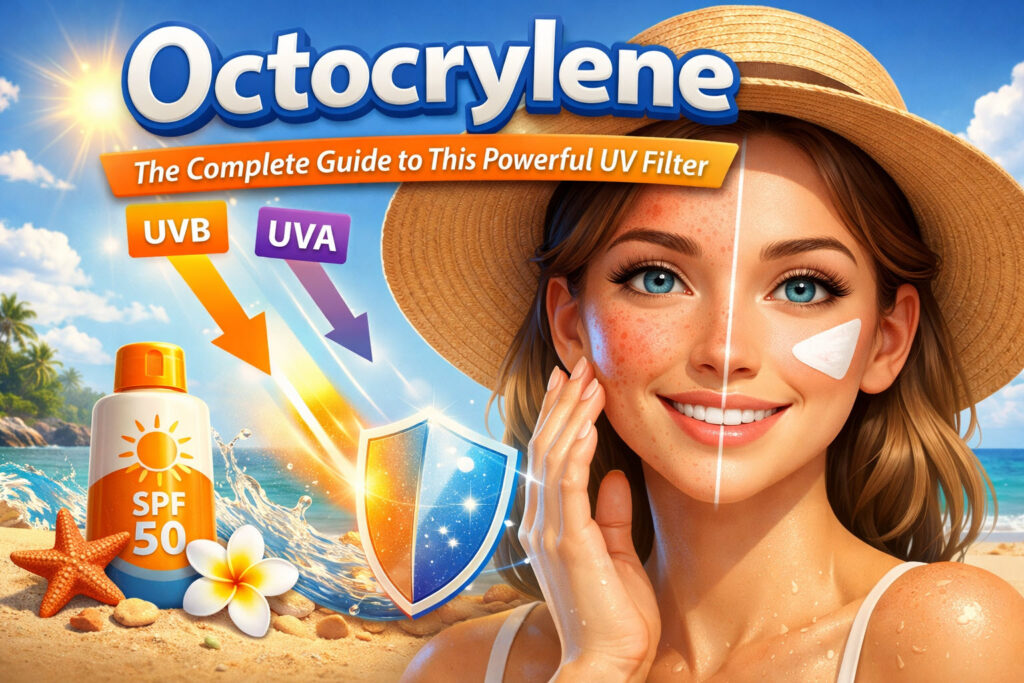
Octocrylene: The Complete Guide to This Powerful UV Filter
Octocrylene is a powerful and widely used UV filter in sunscreens and SPF skincare products, known for its excellent UVB protection and ability to stabilize other sunscreen ingredients like avobenzone. As modern consumers demand effective, lightweight, and photostable sun protection, octocrylene has become a cornerstone ingredient in broad-spectrum sunscreens, SPF moisturizers, BB creams, and cosmetic formulations.
This complete guide to octocrylene explains what octocrylene is, how it works in sunscreen, and why it is essential for long-lasting sun protection. Octocrylene absorbs harmful ultraviolet radiation and converts it into harmless heat, helping protect the skin from sunburn, premature aging, hyperpigmentation, and UV-induced skin damage. Its oil-soluble nature allows it to blend seamlessly into cosmetic formulations without leaving a white cast, making it ideal for daily sunscreen use and outdoor sun exposure.
One of the biggest advantages of octocrylene is its photostability, which prevents sunscreen formulas from breaking down when exposed to sunlight. This makes it especially valuable in high-SPF sunscreens, water-resistant sun care products, and sports sunscreens. Compared to older UV filters, octocrylene offers improved durability, better cosmetic elegance, and enhanced skin comfort.
In this in-depth guide, you’ll also learn about octocrylene safety, regulatory approvals, recommended usage levels, and how it compares to other popular sunscreen ingredients like oxybenzone, octinoxate, and mineral UV filters. Whether you’re a skincare enthusiast, formulator, or brand owner, this article provides everything you need to know about octocrylene in modern sun protection.
Table of Contents
Introduction to Octocrylene
Ever wondered why your sunscreen actually stays effective under the blazing sun? One of the unsung heroes behind that protection is octocrylene. It’s not flashy, it’s not talked about much, but it quietly does a lot of heavy lifting in modern sun care products.
Let’s break it down in a simple, human way—no chemistry headache, no boring textbook vibes.
What Is Octocrylene?
Octocrylene is an organic (chemical) UV filter commonly used in sunscreens and skincare products with SPF. Its main job is to absorb UVB rays and short UVA rays, which are responsible for sunburn, premature aging, and long-term skin damage.
Think of it like a sponge that soaks up harmful sunlight before it can mess with your skin.
Why Octocrylene Is Widely Used in Sunscreens
Octocrylene isn’t just effective—it’s stable, oil-soluble, and long-lasting. These qualities make it a favorite among formulators who want sunscreens that don’t break down quickly under sunlight.
Chemical Profile of Octocrylene
Chemical Structure and Properties
From a formulation perspective, octocrylene is valued for its:
- High photostability
- Excellent UV absorption capacity
- Compatibility with other UV filters
Oil Solubility and Stability
Being oil-soluble means octocrylene blends beautifully into creams, lotions, and sprays. More importantly, it doesn’t degrade easily when exposed to sunlight—huge win for SPF performance.
How Octocrylene Works on Skin
Once applied, octocrylene absorbs UV radiation and converts it into a small amount of heat, which is then safely released from the skin. Simple, effective, and efficient.
Role of Octocrylene in Sunscreens
UVB and Short UVA Protection
Octocrylene primarily protects against UVB rays, the main cause of sunburn. It also covers part of the UVA spectrum, adding extra depth to sun protection.
Photostabilizing Other UV Filters
Here’s where octocrylene really shines.
Octocrylene and Avobenzone Stability
Avobenzone is a powerful UVA filter—but it’s unstable on its own. Octocrylene acts like a bodyguard, stabilizing avobenzone and helping it last longer under sun exposure. This combo is extremely common in broad-spectrum sunscreens.
Benefits of Octocrylene in Skincare
Broad-Spectrum UV Protection
When combined with other filters, octocrylene helps achieve true broad-spectrum SPF, protecting skin from both burning and aging rays.
Water Resistance and Durability
Octocrylene improves water resistance, making it ideal for:
- Beach sunscreens
- Sports sunscreens
- Outdoor daily wear
Lightweight Skin Feel
Unlike heavy mineral filters, octocrylene keeps formulations light, non-greasy, and cosmetically elegant. No white cast, no chalky finish.
Octocrylene in Cosmetic Formulations
Typical Usage Levels
Recommended Concentration Range
- Up to 10% (USA)
- Up to 10% (EU)
Always follow regional cosmetic regulations.
Compatible Ingredients
Octocrylene works well with:
- Avobenzone
- Octinoxate
- Homosalate
- Emollient oils
- Silicones
Oils, Emollients, and UV Filters
Its oil solubility makes it easy to integrate into both luxury and mass-market SPF products.
Safety Profile of Octocrylene
Is Octocrylene Safe for Skin?
Yes—when used within approved limits, octocrylene is considered safe for topical use. It has been evaluated extensively for skin irritation, sensitization, and toxicity.
Regulatory Approvals Worldwide
FDA, EU, and Global Limits
- Approved by FDA (USA)
- Approved by European Commission
- Approved in Asia and many global markets
Common Myths and Concerns
Is Octocrylene Hormone Disrupting?
Current scientific evidence does not support claims that octocrylene is harmful at regulated cosmetic levels. Much of the fear comes from misinterpreted lab studies using unrealistic doses.
Octocrylene and Skin Sensitivity
Very sensitive skin types may experience mild irritation, but this is uncommon and often formulation-dependent.
Environmental Concerns Explained
Octocrylene is under review for environmental impact, especially in marine ecosystems. This has led to innovation in reef-conscious formulations, not outright bans in most regions.
Octocrylene vs Other UV Filters
Octocrylene vs Oxybenzone
- Octocrylene: More stable, less controversial
- Oxybenzone: Strong UV filter but more regulatory concerns
Octocrylene vs Octinoxate
Octocrylene offers better photostability and formulation flexibility.
Organic vs Mineral Sunscreens
Octocrylene belongs to organic (chemical) sunscreens, which absorb UV rays rather than reflect them like zinc oxide or titanium dioxide.
Who Should Use Products with Octocrylene
Suitable Skin Types
Best for:
- Normal skin
- Oily skin
- Combination skin
Sensitive skin users should always patch-test.
Daily Use vs Beach Use
Octocrylene-based sunscreens work well for both daily urban protection and intense sun exposure.
How to Identify Octocrylene in INCI Lists
Label Reading Tips
Look for “Octocrylene” listed under active ingredients.
Common Product Categories
- Sunscreens
- SPF moisturizers
- BB creams
- Foundations with SPF
Future of Octocrylene in Sunscreens
Innovation and Reformulation Trends
Brands are working on:
- Improved environmental profiles
- Hybrid SPF systems
- Enhanced photostability
Consumer Demand and Clean Beauty
Octocrylene continues to evolve alongside clean beauty expectations, not disappear.
Conclusion
Octocrylene may not be the star ingredient on marketing labels, but it’s absolutely a backbone of effective sun protection. Stable, reliable, and proven, it plays a crucial role in keeping your skin safe from daily UV damage. When used responsibly and formulated well, octocrylene remains one of the most valuable UV filters in modern skincare.
FAQs
1. What is octocrylene used for?
Octocrylene is used in sunscreens and SPF skincare products to absorb UVB rays and stabilize other UV filters, improving overall sun protection.
2. Is octocrylene safe for skin?
Yes, octocrylene is considered safe when used within approved cosmetic limits and is regulated by the FDA and EU authorities.
3. Does octocrylene protect against UVA and UVB rays?
Octocrylene mainly protects against UVB rays and short UVA rays, contributing to broad-spectrum sun protection when combined with other filters.
4. Is octocrylene better than oxybenzone?
Octocrylene is often preferred because it is more photostable and has fewer regulatory and sensitivity concerns than oxybenzone.
5. Can sensitive skin use octocrylene?
Most skin types tolerate octocrylene well, but individuals with very sensitive skin should perform a patch test before regular use.
Related posts:
 CDEA (Cocamide Diethanolamine): Complete Guide for Cosmetic & Personal Care Formulations
 Propanediol: The Ultimate Guide to This High-Performance, Skin-Friendly Ingredient
 Alpha Arbutin: Complete Guide to Benefits, Uses, Safety, and Skincare Science
 Biotin (Vitamin B7): The Complete Guide to Benefits, Uses, and Sources
 Sodium PCA Benefits: The Ultimate Guide to Deep Hydration and Healthy Skin
 Glutathione – The Master Antioxidant Explained