Rosacea: Causes, Symptoms, Types, Treatments, and Skincare Tips
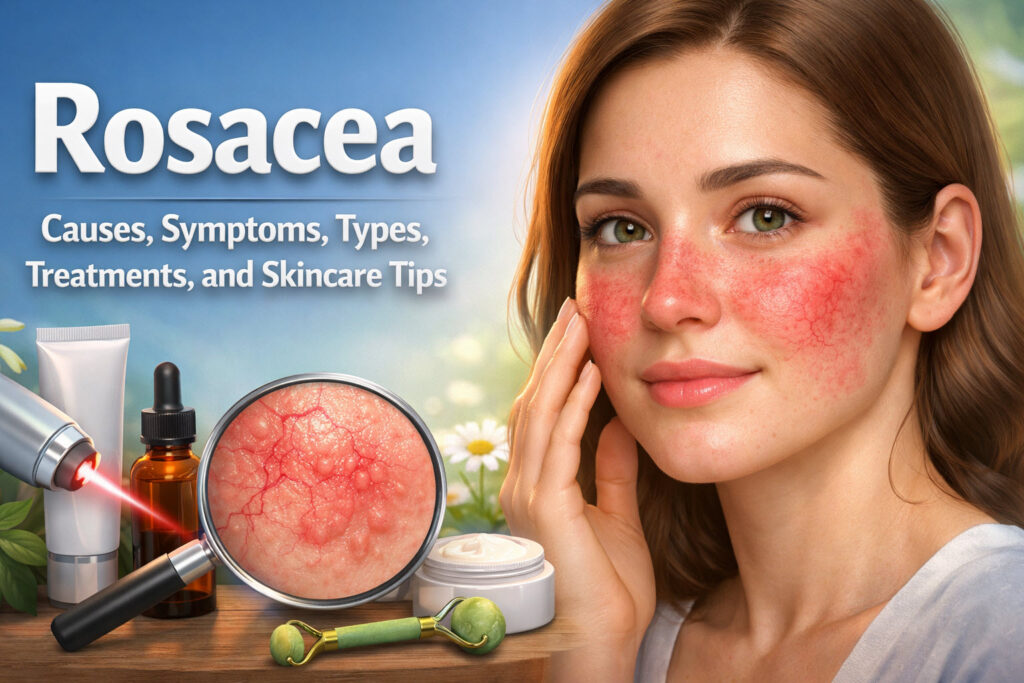
Rosacea is a chronic inflammatory skin condition that causes persistent facial redness, flushing, visible blood vessels, and acne-like bumps, primarily affecting the cheeks, nose, chin, and forehead. This detailed guide explains what causes rosacea, its early warning signs, and why sensitive skin overreacts to common triggers such as sun exposure, heat, spicy foods, alcohol, stress, and harsh skincare products.
Understanding the types of rosacea—including erythematotelangiectatic rosacea, papulopustular rosacea, phymatous rosacea, and ocular rosacea—is essential for choosing the right treatment. Learn how rosacea differs from acne, why redness worsens over time, and how improper skincare can damage the skin barrier and increase flare-ups.
This guide covers dermatologist-recommended rosacea treatments, including azelaic acid, metronidazole, ivermectin, oral antibiotics, and laser therapy, along with gentle skincare routines for rosacea-prone skin. Discover the best moisturizers for rosacea, why mineral sunscreen is critical, and which ingredients to avoid to prevent irritation.
You’ll also explore the gut-skin connection, common rosacea food triggers, and anti-inflammatory lifestyle changes that help calm redness naturally. Whether you’re dealing with mild flushing or severe rosacea symptoms, this in-depth resource provides practical, science-backed solutions to manage rosacea effectively and protect sensitive skin long-term.
Table of Contents
What Is Rosacea?
A Simple Explanation of Rosacea
Rosacea is a chronic inflammatory skin condition that mainly affects the face. Think of it like a sensitive smoke alarm—your skin reacts strongly to things that wouldn’t bother most people. It often shows up as persistent redness, flushing, visible blood vessels, and acne-like bumps.
Why Rosacea Is Often Misunderstood
Many people confuse rosacea with acne, sunburn, or even an allergic reaction. That confusion delays treatment, and rosacea loves delays. Left unmanaged, it can gradually worsen over time.
Who Gets Rosacea?
Age, Gender, and Skin Type Factors
Rosacea usually appears after age 30 and is more common in people with fair or sensitive skin. Women are diagnosed more often, but men tend to develop more severe symptoms, especially thickened skin.
Genetic and Environmental Influences
If rosacea runs in your family, your odds increase. Combine genetics with sun exposure, pollution, and stress, and you’ve got the perfect storm.
Common Signs and Symptoms of Rosacea
Facial Redness and Flushing
This is the hallmark sign. The cheeks, nose, forehead, and chin often look like they’re permanently blushing.
Visible Blood Vessels (Telangiectasia)
Tiny red lines may appear under the skin as blood vessels enlarge and become more visible.
Burning, Stinging, and Sensitivity
Rosacea skin reacts fast. Products tingle, weather stings, and even water can feel irritating.
Emotional and Psychological Impact
Let’s be real—constant redness can hurt confidence. Rosacea isn’t just skin-deep; it affects self-esteem and social comfort.
Different Types of Rosacea Explained
Erythematotelangiectatic Rosacea (ETR)
Characterized by redness, flushing, and visible blood vessels. No bumps, just persistent redness.
Papulopustular Rosacea
Often mistaken for acne, this type includes red bumps and pus-filled pimples—but without blackheads.
Phymatous Rosacea
A rarer form that causes skin thickening, especially around the nose (rhinophyma).
Ocular Rosacea
Affects the eyes, causing dryness, redness, irritation, and a gritty sensation.
What Causes Rosacea?
Blood Vessel Dysfunction
Blood vessels in rosacea-prone skin dilate too easily and stay dilated longer than normal.
Immune System Response
An overactive immune response leads to chronic inflammation.
Role of Demodex Mites
These microscopic mites live on everyone’s skin, but rosacea skin reacts aggressively to them.
Gut-Skin Connection
Digestive issues like H. pylori infection may worsen rosacea symptoms, highlighting the gut-skin link.
Common Rosacea Triggers You Should Avoid
Food and Drink Triggers
Spicy foods, hot beverages, alcohol (especially red wine), and caffeine can spark flare-ups.
Weather and Environmental Triggers
Sun, wind, heat, and cold all play a role.
Lifestyle and Emotional Triggers
Stress, intense exercise, and lack of sleep can fan the flames.
How Rosacea Is Diagnosed
Clinical Examination
There’s no single test. Dermatologists diagnose rosacea based on symptoms and visual examination.
When to See a Dermatologist
If redness persists or worsens, professional guidance is essential.
Medical Treatments for Rosacea
Topical Treatments
Metronidazole, azelaic acid, ivermectin, and brimonidine help reduce inflammation and redness.
Oral Medications
Low-dose antibiotics like doxycycline are used for moderate to severe cases.
Laser and Light-Based Therapies
Laser treatments reduce visible blood vessels and long-term redness.
Best Skincare Routine for Rosacea-Prone Skin
Cleansing the Right Way
Use gentle, fragrance-free cleansers. Lukewarm water only—hot water is a no-go.
Moisturizing and Barrier Repair
Ceramides, glycerin, and hyaluronic acid help strengthen the skin barrier.
Sunscreen Is Non-Negotiable
Daily broad-spectrum SPF 30+ is essential. Mineral sunscreens are often best.
Ingredients That Help Calm Rosacea
Niacinamide
Reduces redness, strengthens the skin barrier, and improves texture.
Azelaic Acid
One of the gold-standard ingredients for rosacea management.
Centella Asiatica
Soothes inflammation and supports healing.
Ingredients to Avoid
Alcohol, menthol, eucalyptus, fragrance, and harsh exfoliants.
Makeup Tips for Rosacea
Color-Correcting Techniques
Green-tinted primers neutralize redness before foundation.
Choosing Rosacea-Safe Makeup
Look for non-comedogenic, fragrance-free, mineral-based products.
Diet and Lifestyle Changes for Rosacea
Anti-Inflammatory Foods
Omega-3s, leafy greens, berries, and probiotics support calmer skin.
Stress Management Strategies
Yoga, meditation, deep breathing—stress control is skin care.
Living With Rosacea: Long-Term Management
Building a Trigger Diary
Track food, weather, emotions, and products to identify patterns.
Consistency Over Perfection
Rosacea management is a marathon, not a sprint.
Myths and Facts About Rosacea
Rosacea vs Acne
Rosacea isn’t acne and needs very different treatment.
Is Rosacea Curable?
There’s no cure, but it’s highly manageable with the right approach.
People also ask
1. What is the real cause of rosacea?
There is no single cause of rosacea. It develops due to a combination of factors, including:
- Over-reactive facial blood vessels
- Chronic skin inflammation
- Immune system sensitivity
- Demodex mites (naturally present skin mites in higher numbers)
- Genetic tendency
Think of rosacea as skin that overreacts to normal stimuli, like heat, sun, or stress.
2. What is the best treatment for rosacea?
The best treatment depends on the type and severity, but usually includes:
- Topical medications (Azelaic acid, Metronidazole, Ivermectin)
- Oral antibiotics (low-dose doxycycline for inflammation)
- Laser therapy for visible blood vessels
- Gentle skincare + sunscreen daily
There’s no one-size-fits-all cure, but consistent treatment controls symptoms very well.
3. How can I stop rosacea?
Rosacea cannot be permanently stopped, but it can be controlled by:
- Identifying and avoiding triggers
- Using rosacea-safe skincare
- Applying sunscreen every day
- Managing stress and diet
- Following dermatologist-recommended treatment
Control is the goal—not perfection.
4. What is the biggest trigger of rosacea?
The most common trigger worldwide is sun exposure.
Other major triggers include:
- Heat and hot showers
- Alcohol (especially red wine)
- Spicy foods
- Emotional stress
Sun protection alone can significantly reduce flare-ups.
5. What are the first signs of rosacea?
Early signs usually include:
- Frequent facial flushing
- Persistent redness on cheeks or nose
- Burning or stinging sensation
- Increased skin sensitivity
Catching rosacea early makes it much easier to manage.
6. What vitamin deficiency causes rosacea?
Rosacea is not directly caused by a vitamin deficiency, but low levels of:
- Vitamin D
- Vitamin B12
- Zinc
may worsen inflammation and skin sensitivity in some people. Always confirm deficiencies through lab testing.
7. What foods should I avoid with rosacea?
Common dietary triggers include:
- Spicy foods
- Hot beverages (tea, coffee)
- Alcohol
- Processed foods
- Sugary foods
Cooling, anti-inflammatory foods are generally better tolerated.
8. How to quickly heal rosacea?
Rosacea cannot be “healed” overnight, but flare-ups can calm quickly by:
- Stopping all harsh skincare
- Using a gentle moisturizer
- Applying mineral sunscreen
- Using prescribed topical treatment
- Avoiding heat, sun, and spicy food
Simple routines work best during flare-ups.
9. What is the best moisturizer for rosacea?
The best moisturizers are:
- Fragrance-free
- Alcohol-free
- Contain ceramides, glycerin, or hyaluronic acid
Look for barrier-repair moisturizers designed for sensitive or rosacea-prone skin.
10. How long does rosacea last?
Rosacea is a lifelong condition, but:
- Symptoms come and go
- Many people experience long periods of clear skin
- Proper care can keep rosacea mild and stable for years
It’s chronic—but manageable.
11. Is rosacea linked to other health issues?
Yes, rosacea has been linked with:
- Digestive issues (H. pylori, IBS)
- Migraine headaches
- Eye problems (ocular rosacea)
- Anxiety and depression
This supports the gut-skin and brain-skin connection.
12. Is Vaseline good for rosacea?
Yes, petroleum jelly (Vaseline) can help some people by:
- Sealing in moisture
- Protecting the skin barrier
However:
- It does not treat inflammation
- Best used over a moisturizer, not alone
- Patch test first if your skin is very sensitive
Conclusion
Rosacea may be chronic, but it doesn’t have to control your life. With the right skincare, smart lifestyle choices, and proper medical treatment, you can keep flare-ups in check and your confidence intact. Think of rosacea care like tending a garden—gentle, consistent care brings the best results.
Frequently Asked Questions (FAQs)
1. Can rosacea go away on its own?
No, rosacea doesn’t disappear without management, but symptoms can be controlled.
2. Is rosacea contagious?
Absolutely not. Rosacea cannot spread from person to person.
3. Can I wear makeup if I have rosacea?
Yes, as long as you choose gentle, rosacea-friendly products.
4. Does sunscreen really help rosacea?
Yes. Sun protection is one of the most important steps in rosacea care.
5. Can diet really affect rosacea?
Yes. Certain foods can trigger flare-ups, while anti-inflammatory diets may help.