

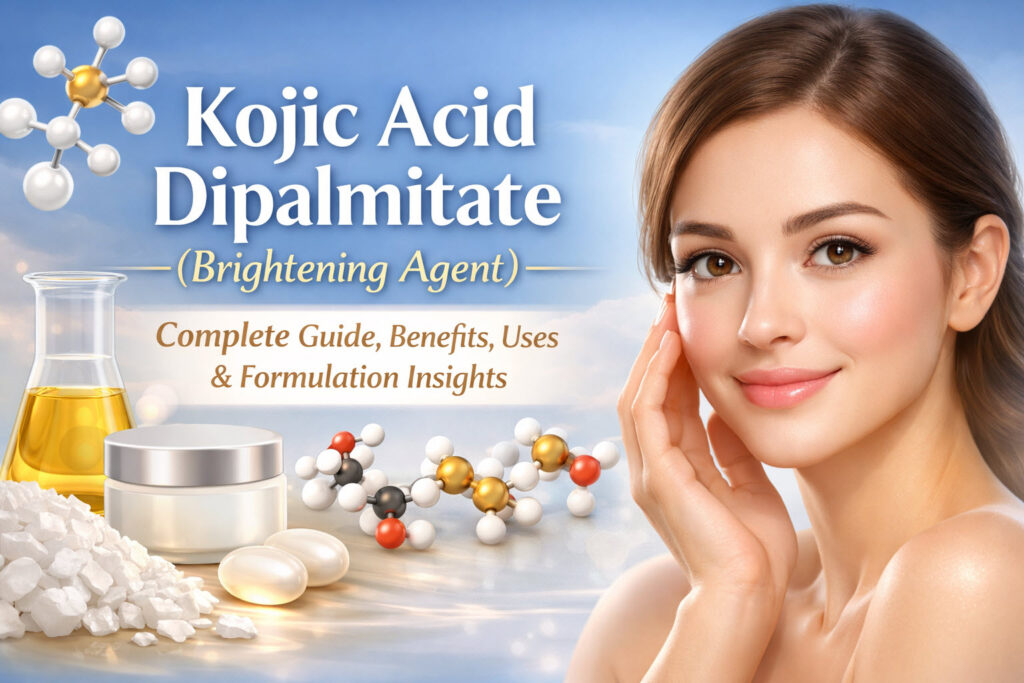
Kojic Acid Dipalmitate (Brightening Agent): Complete Guide, Benefits, Uses & Formulation Insights
Kojic Acid Dipalmitate is a powerful and highly stable skin brightening agent widely used in modern skincare and cosmetic formulations. Known as a more advanced and skin-friendly alternative to traditional kojic acid, it helps reduce hyperpigmentation, dark spots, melasma, sun damage, and uneven skin tone without causing irritation. Due to its oil-soluble and oxidation-resistant nature, Kojic Acid Dipalmitate is preferred in brightening creams, serums, lotions, soaps, sunscreens, and professional cosmetic products.
This complete guide explores what Kojic Acid Dipalmitate is, how it works, its benefits for skin whitening and brightening, recommended usage levels, formulation compatibility, safety profile, and comparison with other popular brightening ingredients such as Alpha Arbutin, Vitamin C, and Niacinamide. By inhibiting the tyrosinase enzyme responsible for melanin production, Kojic Acid Dipalmitate gradually fades pigmentation while maintaining the skin’s natural tone.
Ideal for sensitive, acne-prone, dull, and uneven skin, this ingredient is widely used in commercial cosmetic manufacturing due to its longer shelf life, stability under heat and light, and gentle action. Whether you are a skincare formulator, cosmetic brand owner, or skincare enthusiast, this in-depth resource provides everything you need to understand the role of Kojic Acid Dipalmitate in advanced skin brightening formulations.
Table of Contents
Introduction to Kojic Acid Dipalmitate
If glowing, even-toned skin feels like a never-ending chase, you’re not alone. Pigmentation, dark spots, and uneven skin tone are some of the most common skincare concerns worldwide. That’s exactly where Kojic Acid Dipalmitate steps into the spotlight. Think of it as the calmer, more stable cousin of Kojic Acid—doing the same job, but with fewer tantrums.
In this guide, we’ll break down everything you need to know about Kojic Acid Dipalmitate in plain, simple English. No lab-coat jargon. Just real, useful information you can actually apply.
What Is Kojic Acid Dipalmitate?
Chemical Nature and Origin
Kojic Acid Dipalmitate is a fatty acid ester of Kojic Acid, created by combining Kojic Acid with palmitic acid. This modification makes it oil-soluble and far more stable than traditional Kojic Acid.
In simpler terms? It’s Kojic Acid upgraded for modern skincare.
Difference Between Kojic Acid and Kojic Acid Dipalmitate
Here’s a quick analogy:
If Kojic Acid is fresh lemon juice that spoils quickly, Kojic Acid Dipalmitate is bottled lemon extract—long-lasting and easier to use.
- Kojic Acid: Water-soluble, unstable, irritation-prone
- Kojic Acid Dipalmitate: Oil-soluble, stable, skin-friendly
Why Kojic Acid Dipalmitate Is Used in Skincare
Stability Advantages
One of the biggest headaches for formulators is ingredient instability. Kojic Acid Dipalmitate resists oxidation, light, and heat, making it perfect for commercial products with longer shelf life.
Skin-Friendly Properties
Because it releases Kojic Acid slowly, it minimizes irritation. That makes it ideal for sensitive skin types who want results without redness or burning.
How Kojic Acid Dipalmitate Works on Skin
Melanin Inhibition Explained
Pigmentation happens when the enzyme tyrosinase goes into overdrive. Kojic Acid Dipalmitate gently inhibits this enzyme, slowing down excess melanin production.
Role in Brightening and Tone Correction
Instead of bleaching the skin, it corrects discoloration. Think of it as turning down the volume on dark spots rather than muting your natural skin tone.
Key Benefits of Kojic Acid Dipalmitate
Skin Brightening
Regular use helps reveal a brighter, healthier-looking complexion without harsh peeling.
Hyperpigmentation Reduction
Effective for:
- Sun spots
- Acne marks
- Age spots
- Melasma
Even Skin Tone
It smooths out patchy areas, giving skin a more uniform appearance.
Gentle Alternative for Sensitive Skin
Compared to strong acids, it’s much kinder—making it suitable for long-term use.
Common Uses in Cosmetic Products
Creams and Lotions
Its oil-soluble nature makes it ideal for emulsions and nourishing creams.
Serums
Often paired with Vitamin E, Niacinamide, or Alpha Arbutin for enhanced results.
Soaps and Cleansers
Used in brightening soaps due to its heat stability.
Sunscreen Formulations
Works beautifully with UV filters to prevent future pigmentation.
Ideal Concentration Levels
Recommended Usage Percentage
Typical usage ranges from 1% to 3%, depending on product type.
Regulatory and Safety Limits
Most cosmetic regulations consider it safe within recommended limits, especially in rinse-off and leave-on products.
Formulation Characteristics
Oil-Soluble Nature
It must be dissolved in oils or esters—never water.
Compatible Ingredients
- Vitamin E
- Niacinamide
- Alpha Arbutin
- Licorice Extract
- Sunscreen filters
Ingredients to Avoid
Avoid highly acidic environments that may reduce efficacy.
Kojic Acid Dipalmitate vs Other Brightening Agents
Comparison with Alpha Arbutin
- Alpha Arbutin: Faster results, water-soluble
- Kojic Acid Dipalmitate: Slower but more stable and gentle
Comparison with Vitamin C
Vitamin C brightens instantly, while Kojic Acid Dipalmitate works gradually and targets pigmentation deeply.
Comparison with Niacinamide
Niacinamide supports the skin barrier; Kojic Acid Dipalmitate focuses on pigment correction. Together? Magic.
Safety Profile and Side Effects
Is It Safe for Daily Use?
Yes, when used correctly. It’s designed for long-term application.
Suitability for All Skin Types
Dry, oily, sensitive, acne-prone—this ingredient plays well with almost everyone.
Who Should Use Kojic Acid Dipalmitate
Acne-Prone Skin
Helps fade post-acne marks without clogging pores.
Melasma and Sun Damage
A reliable option for stubborn pigmentation issues.
Dull and Uneven Skin
Perfect if your skin looks tired and lacks radiance.
How to Incorporate It into a Skincare Routine
Morning vs Night Use
Can be used both, but always pair daytime use with sunscreen.
Layering with Other Actives
Apply after cleansing and toning, before heavy creams.
Commercial Importance in Skincare Industry
Demand in Brightening Products
Brightening products dominate the global skincare market—and Kojic Acid Dipalmitate is a top choice.
Market Trends
Consumers now prefer gentle, effective, and stable ingredients—exactly where this shines.
Storage and Shelf-Life Considerations
Stability Over Time
Highly stable when stored in cool, dry conditions.
Packaging Recommendations
Airless pumps and opaque containers are ideal.
Myths and Facts About Kojic Acid Dipalmitate
Common Misconceptions
Myth: It bleaches skin
Truth: It corrects pigmentation, not skin color
Evidence-Based Facts
Clinical use supports its safety and effectiveness when properly formulated.
Conclusion
Kojic Acid Dipalmitate is like a silent performer—it doesn’t scream instant results, but it delivers consistent, visible improvement over time. Stable, gentle, and effective, it’s a smart choice for both skincare brands and informed consumers. If you’re aiming for brighter, more even skin without irritation, this ingredient deserves a permanent spot on your radar.
Frequently Asked Questions (FAQs)
1. Is Kojic Acid Dipalmitate better than Kojic Acid?
Yes, it’s more stable, less irritating, and better suited for commercial products.
2. Can beginners use Kojic Acid Dipalmitate?
Absolutely. It’s beginner-friendly when used at recommended levels.
3. Does it work on dark spots?
Yes, especially on sun spots, acne marks, and melasma.
4. Can it be used with sunscreen?
Not only can it—it should be. Sunscreen boosts its effectiveness.
5. How long does it take to see results?
Visible improvements usually appear within 4–8 weeks of consistent use.
Related posts:
 Hyaluronic Acid Serum – The Ultimate Guide to Deep Hydration and Youthful Skin
 Hyaluronic Acid Gel Benefits: Deep Hydration, Plump Skin & Daily Skincare Guide
 Night Repair Cream: The Ultimate Guide to Overnight Skin Renewal
 Glutathione Glow Serum – The Ultimate Guide to Radiant, Even-Toned Skin
 Rose Water Toner: The Complete Guide to Natural Skin Refreshment
 Brightening Face Cleanser Guide Ingredients, Benefits & Top Picks