

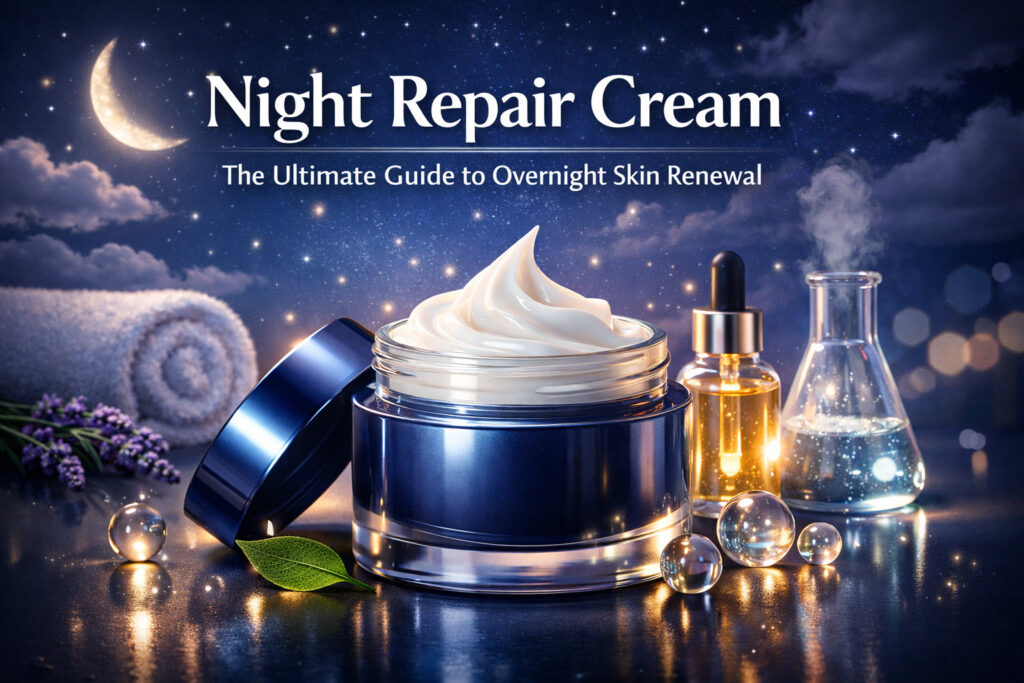
Night Repair Cream: The Ultimate Guide to Overnight Skin Renewal
Night repair cream is an essential part of any effective nighttime skincare routine. Designed to work while you sleep, a high-quality night repair cream deeply hydrates, repairs the skin barrier, boosts collagen production, and restores natural glow. Packed with powerful ingredients like retinol alternatives, peptides, ceramides, hyaluronic acid, and antioxidants, night repair creams help reduce fine lines, wrinkles, dark spots, and dullness. This complete guide explains how night repair cream works, its benefits for different skin types, key ingredients to look for, how to use it correctly, and when you can expect visible results for healthier, smoother, and younger-looking skin.
Let’s be honest—your skin works harder at night than you think. While you’re deep in sleep, dreaming away, your skin is busy fixing damage, rebuilding itself, and preparing for the next day. That’s where a night repair cream comes in. Think of it as a personal night-shift worker for your skin—hydrating, repairing, and rejuvenating while you rest.
If you’ve ever wondered whether night repair creams are worth the hype, you’re in the right place. Let’s break it all down in simple, real-talk terms.
Table of Contents
What Is a Night Repair Cream?
A night repair cream is a rich, treatment-focused moisturizer specifically designed to work during your sleep. Unlike regular moisturizers, it’s packed with active ingredients that support skin repair and regeneration.
How It Works While You Sleep
At night, your skin’s permeability increases. Translation? It absorbs ingredients better. A night repair cream takes advantage of this window, delivering nutrients deep into the skin when they’re most effective.
Difference Between Day Cream and Night Cream
Day creams focus on protection—SPF, pollution defense, lightweight hydration. Night creams? They’re all about repair, nourishment, and recovery. Thicker texture, stronger actives, zero sunscreen.
Why Nighttime Is Crucial for Skin Repair
Ever notice how skin looks better after good sleep? That’s not magic—it’s biology.
Skin’s Natural Regeneration Cycle
Between 10 PM and 2 AM, skin cell turnover peaks. Collagen production increases, and damaged cells are replaced faster. Miss this window, and your skin shows it.
Role of Circadian Rhythm in Skincare
Your skin follows a circadian rhythm just like your body. At night, blood flow increases, helping nutrients reach skin cells more efficiently. A night repair cream works with this rhythm, not against it.
Key Benefits of Using a Night Repair Cream
Deep Hydration and Moisture Lock
Night creams seal in moisture, preventing transepidermal water loss. Wake up with soft, plump skin instead of dryness and tightness.
Repairing Skin Barrier
A healthy barrier equals healthy skin. Ingredients like ceramides and fatty acids help repair cracks in the barrier caused by stress, pollution, and harsh products.
Anti-Aging and Wrinkle Reduction
Fine lines don’t appear overnight—but they do form faster without repair. Retinoids, peptides, and antioxidants fight wrinkles while you sleep.
Brightening and Even Skin Tone
Dark spots and dullness fade gradually with consistent nighttime treatment. Think of it as slow, steady glow-building.
Key Ingredients in a High-Quality Night Repair Cream
Retinol and Its Alternatives
Retinol boosts cell turnover and collagen production. It’s powerful—but not for everyone.
Bakuchiol as a Gentle Option
Bakuchiol delivers retinol-like benefits without irritation, making it ideal for sensitive skin.
Peptides for Skin Repair
Peptides are messengers that tell your skin to produce more collagen. Simple, smart, effective.
Hyaluronic Acid and Ceramides
Hyaluronic acid hydrates; ceramides seal it in. Together, they’re a hydration power duo.
Niacinamide and Antioxidants
Niacinamide strengthens the barrier and evens skin tone, while antioxidants fight free radical damage from daily exposure.
Night Repair Cream for Different Skin Types
Dry Skin
Look for rich textures with shea butter, ceramides, and oils. Your skin drinks it up overnight.
Oily and Acne-Prone Skin
Yes, oily skin needs night cream too. Choose non-comedogenic formulas with niacinamide and light gels.
Sensitive Skin
Fragrance-free, alcohol-free, and soothing ingredients like panthenol or allantoin are key.
Combination Skin
Balanced formulas that hydrate without heaviness work best. Focus on barrier repair.
How to Use Night Repair Cream Correctly
Step-by-Step Night Skincare Routine
- Cleanse thoroughly
- Apply toner or essence
- Use serum (if any)
- Apply night repair cream
- Optional: eye cream
How Much Cream Should You Apply?
A pea-sized amount is enough. More doesn’t mean better—it just means greasy pillows.
Common Myths About Night Repair Creams
Myth vs. Reality Explained
- Myth: Night creams clog pores
Reality: Only poorly formulated ones do - Myth: Young skin doesn’t need night cream
Reality: Prevention beats correction
Choosing the Best Night Repair Cream
What to Look for on the Label
- Proven actives
- Skin-type specific claims
- Dermatologically tested
Ingredients to Avoid
Harsh alcohols, heavy fragrance, and unnecessary fillers—especially if you have sensitive skin.
Night Repair Cream vs Night Serum
Which One Should You Use?
Serums treat; creams seal. Ideally, use both. If you must choose one, go for a cream for all-in-one care.
When Will You See Results?
Short-Term vs Long-Term Benefits
- 1 week: Better hydration
- 4 weeks: Smoother texture
- 8–12 weeks: Visible repair and glow
Consistency is the real secret sauce.
Can Men Use Night Repair Cream?
Skincare Has No Gender
Skin is skin. Men benefit just as much from overnight repair—especially after shaving and sun exposure.
Side Effects and Safety Tips
Patch Testing and Precautions
Always patch test new products. Introduce actives slowly to avoid irritation.
Are Natural and Organic Night Creams Effective?
Science vs Nature
Natural ingredients can be effective—but formulation matters. The best products blend nature with science.
Who Should Start Using a Night Repair Cream and When?
Anyone above 20 can benefit. Early use means delayed aging—it’s that simple.
Final Thoughts on Night Repair Cream
A night repair cream isn’t a luxury—it’s a smart investment in your skin’s future. While you sleep, it works silently, repairing today’s damage and preventing tomorrow’s problems. Apply it nightly, stay consistent, and let your skin thank you every morning.
FAQs
1. Can I use night repair cream every night?
Yes, most formulas are designed for daily nighttime use.
2. Can I apply night cream around my eyes?
Only if it’s eye-safe. Otherwise, use a separate eye cream.
3. Is night repair cream suitable for acne-prone skin?
Absolutely—just choose non-comedogenic formulas.
4. Should I wash my face in the morning after using night cream?
Yes. Always cleanse in the morning to remove residue and oil buildup.
5. Can I use night repair cream during summer?
Yes. Switch to a lighter texture if needed, but don’t skip it.
Related posts:
 Night Repair Cream – Advanced Overnight Skin Renewal Formula
 Hyaluronic Acid Serum – The Ultimate Guide to Deep Hydration and Youthful Skin
 Hyaluronic Acid Gel Benefits: Deep Hydration, Plump Skin & Daily Skincare Guide
 Vitamin C Serum: The Ultimate Guide to Brighter, Healthier Skin
 Niacinamide Serum – The Ultimate Guide to Brighter, Healthier Skin
 Salicylic Acid Face Wash for Acne Control – Complete Guide