

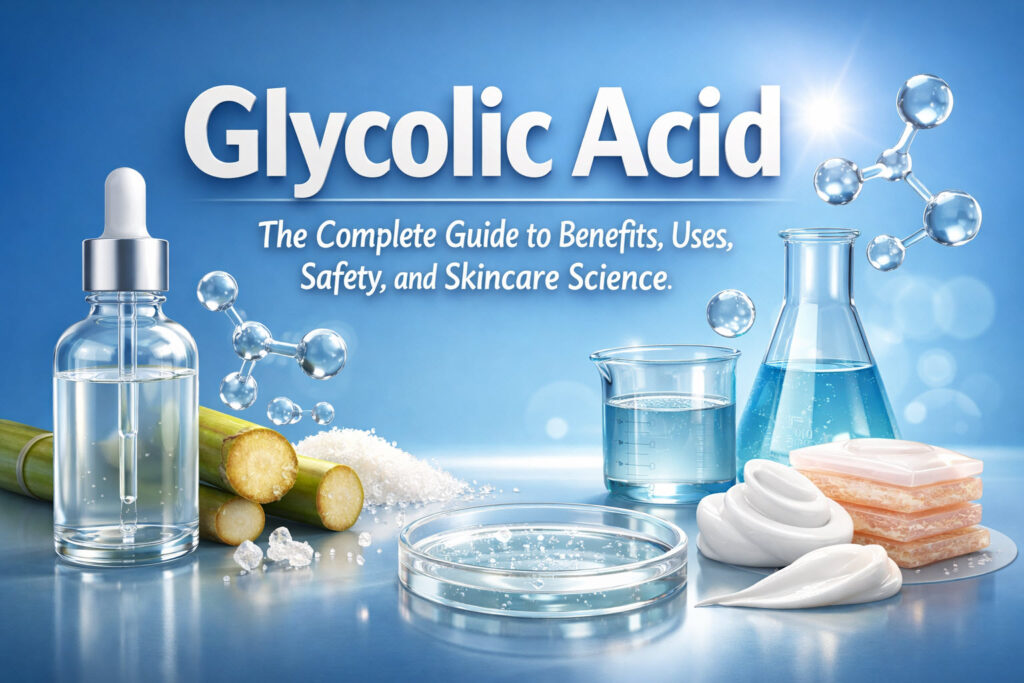
Glycolic Acid – The Complete Guide to Benefits, Uses, Safety, and Skincare Science
Glycolic acid is one of the most powerful and widely used ingredients in modern skincare, known for its exceptional exfoliating and skin-renewing properties. Belonging to the alpha hydroxy acid (AHA) family and derived from sugarcane, glycolic acid has the smallest molecular size among AHAs, allowing it to penetrate the skin more deeply and work more effectively than many other exfoliating acids.
At its core, glycolic acid works by breaking down the bonds between dead skin cells on the surface of the skin. This process accelerates natural cell turnover, helping reveal fresher, brighter, and smoother skin underneath. With regular and correct use, glycolic acid improves skin texture, enhances radiance, and promotes a more even skin tone.
One of the most significant benefits of glycolic acid is its ability to reduce hyperpigmentation, dark spots, and uneven skin tone. By encouraging the shedding of pigmented surface cells and supporting new cell growth, glycolic acid helps fade sun damage, acne marks, and melasma over time. This makes it a popular ingredient in treatments for dull, discolored, and aging skin.
Glycolic acid is also highly effective for acne-prone and oily skin types. It helps unclog pores, reduce blackheads and whiteheads, and prevent future breakouts by keeping the skin clear of dead cells and excess oil buildup. Unlike harsh physical scrubs, glycolic acid provides chemical exfoliation, which is more even, controlled, and less damaging to the skin barrier when used properly.
Table of Contents
Introduction to Glycolic Acid
Let’s be honest—skincare can feel like a maze. One wrong turn and boom, irritation city. But some ingredients earn their fame, and glycolic acid is one of them. It’s not just hype. It’s science, results, and consistency wrapped into one tiny molecule.
What Is Glycolic Acid?
Glycolic acid is a type of alpha hydroxy acid (AHA) derived from sugarcane. What makes it special? Its small molecular size, which allows it to penetrate the skin more effectively than many other acids. Think of it as a tiny key that unlocks dull, tired skin and reveals a brighter version underneath.
Why Glycolic Acid Is So Popular in Skincare
Because it works. Plain and simple. From acne and dark spots to fine lines and rough texture, glycolic acid tackles multiple skin concerns at once. It’s like a multitasking overachiever that never misses a deadline.
Understanding Alpha Hydroxy Acids (AHAs)
What Are AHAs?
AHAs are water-soluble acids that exfoliate the surface of the skin. They work by loosening the “glue” that holds dead skin cells together. When those cells shed, fresh, smoother skin comes forward.
How Glycolic Acid Differs from Other AHAs
Glycolic Acid vs Lactic Acid
Lactic acid is gentler and more hydrating, while glycolic acid is stronger and more effective for deep exfoliation. If lactic acid is a soft breeze, glycolic acid is a fresh, powerful wind.
Glycolic Acid vs Mandelic Acid
Mandelic acid has a larger molecule, making it slower and gentler. Glycolic acid acts faster, which means quicker results—but also a higher chance of irritation if misused.
How Glycolic Acid Works on the Skin
The Science Behind Exfoliation
Your skin naturally sheds dead cells, but as we age, that process slows down. Glycolic acid speeds it up. It dissolves the bonds between dead cells, helping them slough off more easily.
Cellular Turnover Explained Simply
Imagine your skin like a messy desk. Glycolic acid helps clear the clutter so new, organized skin cells can take their place. The result? Brighter, smoother, healthier-looking skin.
Benefits of Glycolic Acid for Skin
Brightening Dull Skin
If your skin looks tired even after a full night’s sleep, glycolic acid can help. By removing dead skin cells, it instantly boosts radiance.
Reducing Hyperpigmentation and Dark Spots
Dark spots don’t disappear overnight, but glycolic acid helps fade them faster by encouraging new skin growth and reducing melanin buildup.
Improving Acne and Congested Pores
Clogged pores love dead skin cells. Glycolic acid clears them out, reducing breakouts and preventing new ones from forming.
Anti-Aging and Fine Lines
Regular use improves collagen production over time, helping soften fine lines and wrinkles. It’s like a gentle reset button for aging skin.
Improving Skin Texture and Smoothness
Rough patches, bumps, uneven tone—glycolic acid smooths them all out, leaving skin soft and polished.
Glycolic Acid for Different Skin Types
Oily and Acne-Prone Skin
This is where glycolic acid truly shines. It keeps pores clean and oil balanced without stripping the skin.
Dry and Dehydrated Skin
Used correctly and at low concentrations, glycolic acid can actually improve hydration by helping moisturizers absorb better.
Sensitive Skin – Is It Safe?
Yes—but caution is key. Start with low strength, use it sparingly, and always patch test.
Common Uses of Glycolic Acid
Glycolic Acid in Face Serums
Serums deliver targeted exfoliation and are ideal for pigmentation and texture issues.
Glycolic Acid Toners
Toners are great for beginners. They’re usually lower in strength and easy to incorporate into daily routines.
Chemical Peels
Professional peels use high concentrations for dramatic results—but they should always be done by experts.
Body Care Products
From dark underarms to rough elbows and knees, glycolic acid works wonders beyond the face.
Glycolic Acid Concentrations Explained
Low Strength (5–7%)
Perfect for beginners and daily use.
Medium Strength (8–10%)
Ideal for experienced users targeting pigmentation and texture.
High Strength (20–70%)
Strictly for professional treatments. Not for home use.
How to Use Glycolic Acid Correctly
Step-by-Step Application Guide
- Cleanse your face
- Apply glycolic acid product
- Wait a few minutes
- Follow with moisturizer
- Use sunscreen during the day
How Often Should You Use It?
Start 2–3 times a week. Increase slowly if your skin tolerates it.
Best Time to Use Glycolic Acid
Nighttime is best. Your skin repairs itself while you sleep, and there’s no sun exposure.
Glycolic Acid and Sun Sensitivity
Why Sunscreen Is Non-Negotiable
Glycolic acid makes skin more sensitive to UV rays. Sunscreen isn’t optional—it’s mandatory.
Common Mistakes to Avoid
- Overusing the product
- Skipping sunscreen
- Mixing with too many actives
Side Effects and Safety Concerns
Possible Irritation and Redness
Tingling is normal. Burning is not. Listen to your skin.
Who Should Avoid Glycolic Acid
People with eczema, rosacea, or broken skin should consult a dermatologist first.
Glycolic Acid in Professional Treatments
Dermatologist Peels
These offer faster, deeper results for severe pigmentation and acne scars.
At-Home vs In-Clinic Treatments
At-home is for maintenance. In-clinic is for transformation.
Combining Glycolic Acid with Other Ingredients
Glycolic Acid and Niacinamide
Great combination when used at different times.
Glycolic Acid and Vitamin C
Use separately to avoid irritation.
Glycolic Acid and Retinol
Powerful but risky. Alternate nights only.
Myths and Facts About Glycolic Acid
Does It Thin the Skin?
No. It actually thickens the dermis over time by boosting collagen.
Is Glycolic Acid Only for Acne?
Not at all. It’s for anyone seeking brighter, smoother skin.
Choosing the Right Glycolic Acid Product
Reading Labels Like a Pro
Check concentration, pH (ideally 3–4), and soothing ingredients.
pH Matters – Here’s Why
Too high, it won’t work. Too low, it may irritate. Balance is everything.
Conclusion
Glycolic acid isn’t just another skincare trend—it’s a proven, science-backed ingredient that delivers real results. Used correctly, it can transform dull, uneven skin into something brighter, smoother, and healthier. Start slow, stay consistent, and always protect your skin. Your glow will thank you.
FAQs
1. Can I use glycolic acid every day?
Yes, but only at low concentrations and if your skin tolerates it well.
2. Is glycolic acid safe during pregnancy?
Low concentrations are generally considered safe, but always consult a doctor.
3. How long does it take to see results?
Most people notice improvement within 2–4 weeks.
4. Can glycolic acid remove acne scars?
It helps fade mild scars over time but won’t remove deep scars completely.
5. Should I moisturize after glycolic acid?
Absolutely. Moisturizer helps soothe and protect the skin barrier.
Related posts:
 Hyaluronic Acid – The Ultimate Guide to Deep Hydration and Youthful Skin
 Niacinamide – The Ultimate Skincare Ingredient Explained
 Propanediol: The Ultimate Guide to This High-Performance, Skin-Friendly Ingredient
 Kojic Acid: Benefits, Uses, Safety, and How It Transforms Your Skin
 Alpha Arbutin: Complete Guide to Benefits, Uses, Safety, and Skincare Science
 Biotin (Vitamin B7): The Complete Guide to Benefits, Uses, and Sources