Hyperpigmentation: Causes, Types, Treatments, and Complete Skincare Guide
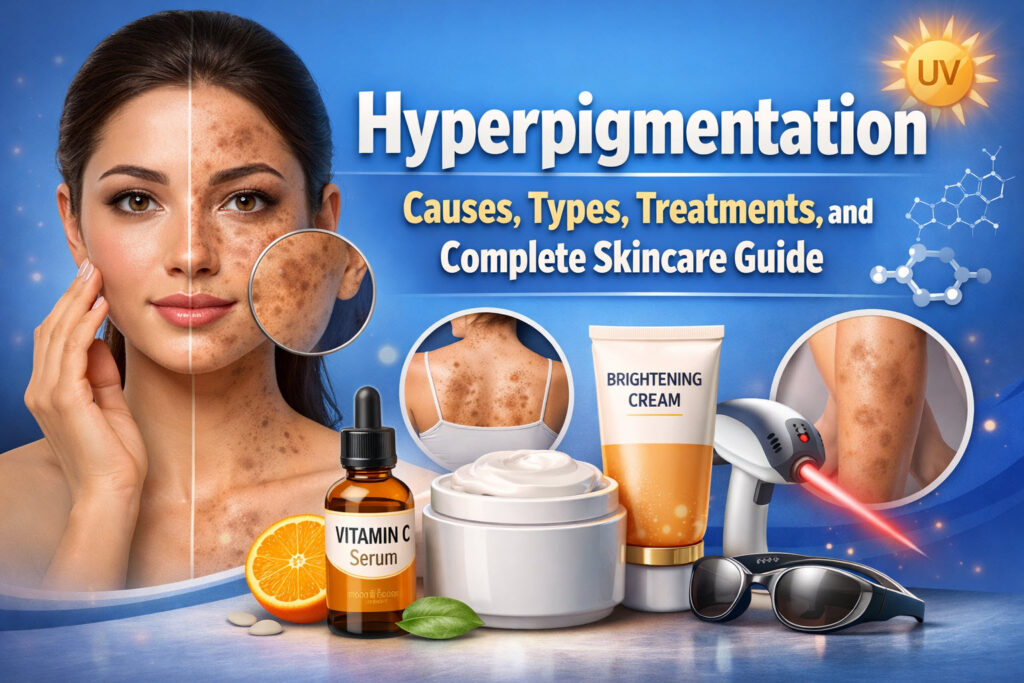
Hyperpigmentation is one of the most common skin concerns affecting people of all ages and skin types. It appears as darkened patches or spots on the skin and can impact confidence, especially when visible on the face, neck, or exposed areas of the body. This comprehensive guide explains what hyperpigmentation is, why it happens, and how to treat it effectively.
What Is Hyperpigmentation (Dark Spots)?
Hyperpigmentation is a skin condition in which certain areas of the skin become darker than the surrounding skin due to excess production of melanin, the pigment responsible for skin color.
It is not dangerous, but it can be persistent and emotionally distressing if left untreated.
Difference Between Pigmentation and Hyperpigmentation
| Pigmentation | Hyperpigmentation |
|---|---|
| Natural skin color | Abnormal darkening of skin |
| Even tone | Patchy or spot-based |
| Genetically determined | Caused by sun, acne, hormones, inflammation |
Main Causes of Hyperpigmentation
1. Sun Exposure
UV rays stimulate melanin production, leading to sun spots and tanning.
2. Acne & Inflammation
Post-inflammatory hyperpigmentation (PIH) occurs after acne, burns, or rashes.
3. Hormonal Changes
Pregnancy, birth control pills, and thyroid disorders can trigger melasma.
4. Skin Injuries
Cuts, burns, insect bites, and cosmetic procedures.
5. Vitamin Deficiencies
- Vitamin B12 deficiency
- Vitamin D deficiency
- Iron deficiency
Hyperpigmentation Dark Spots on Face
Facial hyperpigmentation is the most common type and includes:
- Sun spots
- Acne marks
- Melasma
- Freckles
Common areas: cheeks, forehead, upper lip, chin.
Hyperpigmentation Dark Spots from Acne
After acne heals, it often leaves behind brown or red marks, especially in deeper skin tones.
Best ingredients for acne-related hyperpigmentation:
- Niacinamide
- Azelaic acid
- Salicylic acid
- Vitamin C
- Alpha arbutin
Hyperpigmentation Dark Spots on Neck
Neck pigmentation may be caused by:
- Sun exposure
- Hormonal imbalance
- Insulin resistance
- Friction from clothing
- Poor skincare routine
Consistent exfoliation and sunscreen are essential.
Hyperpigmentation Dark Spots on Back
Back pigmentation often results from:
- Back acne
- Sweat and friction
- Tight clothing
- Delayed treatment of pimples
Chemical exfoliation and body serums help fade these spots.
Hyperpigmentation Dark Spots on Legs
Leg pigmentation may be caused by:
- Shaving irritation
- Ingrown hairs
- Insect bites
- Poor circulation
- Eczema
Using gentle exfoliation and brightening body creams is effective.
Hyperpigmentation Dark Spots: Reddit Experiences
Many users on Reddit report success with:
- Consistent sunscreen use
- Vitamin C + Niacinamide routine
- Chemical exfoliation (AHA/BHA)
- Patience (results take 6–12 weeks)
Common mistake: expecting overnight results.
Hyperpigmentation Dark Spots Treatment Options
1. Topical Treatments
- Vitamin C serums
- Retinoids
- Azelaic acid
- Kojic acid
- Alpha arbutin
- Tranexamic acid
2. Professional Treatments
- Chemical peels
- Laser therapy
- Microneedling
- Prescription creams
3. Daily Sun Protection
SPF 30–50 is non-negotiable.
Hyperpigmentation Dark Spots Creams
Look for creams containing:
- Vitamin C
- Niacinamide
- Licorice extract
- Arbutin
- Kojic acid
- Sunscreen
Avoid harsh bleaching agents or steroid creams.
Hyperpigmentation Dark Spots Face Treatment Routine
Morning Routine
- Gentle cleanser
- Vitamin C serum
- Moisturizer
- Broad-spectrum sunscreen
Night Routine
- Cleanser
- Exfoliant (2–3x/week)
- Brightening serum
- Moisturizer
People Also Ask – Answered
How Do You Get Rid of Hyperpigmentation Spots?
- Use sunscreen daily
- Apply brightening serums
- Exfoliate gently
- Be consistent for 8–12 weeks
How to Treat Hyperpigmentation for Kids?
- Avoid harsh chemicals
- Use mild moisturizers
- Apply mineral sunscreen
- Consult a dermatologist for persistent cases
How to Treat Hyperpigmentation During Pregnancy?
- Use pregnancy-safe ingredients:
- Vitamin C
- Niacinamide
- Azelaic acid
- Avoid retinoids and hydroquinone
Can Vitamin C Remove Pigmentation?
Yes. Vitamin C:
- Inhibits melanin production
- Brightens dark spots
- Improves skin tone with regular use
Do Hyperpigmentation Spots Go Away?
Some fade naturally over time, but most require active treatment and sun protection.
What Happens If Hyperpigmentation Is Left Untreated?
- Spots may darken
- Become harder to treat
- Spread with sun exposure
- Affect skin texture
What Vitamins Are Good for Hyperpigmentation?
- Vitamin C
- Vitamin E
- Vitamin A
- Vitamin B12
- Vitamin D
Which Deficiency Causes Hyperpigmentation?
- Vitamin B12 deficiency
- Iron deficiency
- Folic acid deficiency
What Is the Best Ingredient for Hyperpigmentation?
There is no single best ingredient, but Vitamin C + Niacinamide + Sunscreen is one of the most effective combinations.
Final Thoughts
Hyperpigmentation is common, treatable, and preventable with the right knowledge and routine. Consistency, patience, and sun protection are the keys to success. Whether the dark spots are on your face, neck, back, or legs, modern skincare offers safe and effective solutions for every skin type.