

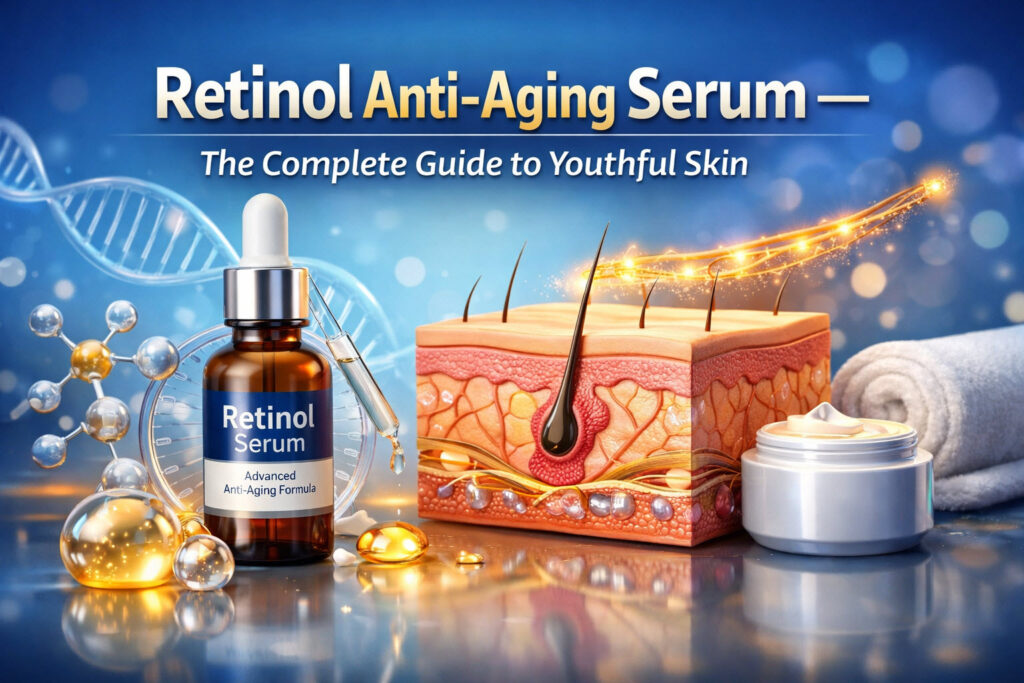
Retinol Anti-Aging Serum – The Complete Guide to Youthful Skin
Retinol Anti-Aging Serum is one of the most powerful and dermatologist-recommended skincare solutions for achieving youthful, smooth, and radiant skin. Backed by decades of scientific research, retinol works at a cellular level to accelerate skin renewal, boost collagen production, and visibly reduce signs of aging such as fine lines, wrinkles, and loss of firmness.
This advanced anti-aging serum penetrates deep into the skin, encouraging faster cell turnover and helping to repair sun damage, uneven skin tone, and texture irregularities. With consistent use, retinol improves skin elasticity, refines enlarged pores, and enhances overall clarity, making the skin appear firmer and more luminous over time.
A well-formulated retinol serum is suitable for most skin types when used correctly. It is especially effective for mature skin, acne-prone skin, and individuals experiencing early signs of aging. When paired with hydrating ingredients like hyaluronic acid and barrier-strengthening agents such as ceramides and niacinamide, retinol delivers visible results with minimal irritation.
To maximize benefits, retinol anti-aging serum should be applied at night and always followed by daily broad-spectrum sunscreen during the day. Whether you are starting your anti-aging journey or looking to upgrade your skincare routine, retinol remains the gold-standard ingredient for long-term skin health, rejuvenation, and age-defying results.
Table of Contents
Aging is inevitable—but looking aged? That’s optional. If there’s one skincare ingredient that has stood the test of time and science, it’s retinol. Think of retinol as a personal trainer for your skin—pushing it to renew faster, work harder, and look smoother, firmer, and younger over time. Let’s break it all down in a simple, honest, and human way.
Introduction to Retinol
What Is Retinol?
Retinol is a vitamin A derivative and one of the most researched ingredients in skincare. It belongs to the retinoid family and is widely used in anti-aging serums for its ability to renew skin from within. Once applied, retinol converts into retinoic acid in the skin—the active form that does all the heavy lifting.
Why Retinol Is Called the Gold Standard
Why does every dermatologist talk about retinol like it’s magic? Because it works. From wrinkles and fine lines to acne and uneven tone, retinol tackles multiple skin issues at once. Few ingredients can multitask this well.
How Retinol Works on the Skin
Cell Turnover Explained
Your skin naturally sheds old cells and creates new ones—but this process slows down as we age. Retinol speeds it up, encouraging fresh, healthy skin cells to rise to the surface. Imagine hitting the refresh button on your skin.
Retinol and Collagen Production
Collagen is the protein that keeps skin firm and bouncy. Retinol stimulates collagen production, helping reduce sagging and wrinkles over time.
Retinol vs Natural Aging Process
As collagen breaks down and cell renewal slows, wrinkles appear. Retinol directly counters this process, making it one of the most effective anti-aging solutions available.
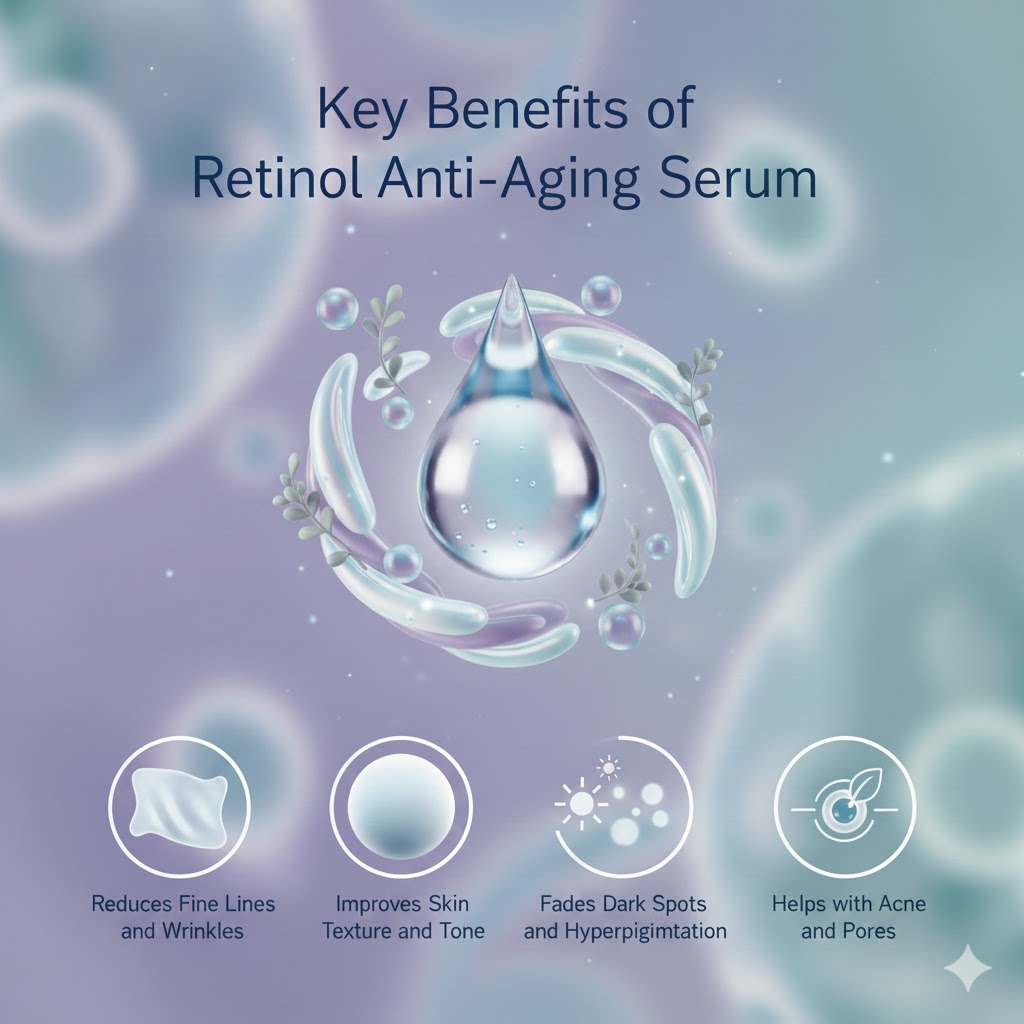
Key Benefits of Retinol Anti-Aging Serum
Reduces Fine Lines and Wrinkles
Regular use of retinol visibly softens fine lines and deep wrinkles by strengthening the skin structure from within.
Improves Skin Texture and Tone
Rough texture? Uneven tone? Retinol smooths the skin surface and enhances overall radiance.
Fades Dark Spots and Hyperpigmentation
By accelerating cell turnover, retinol helps fade sun spots, acne marks, and discoloration.
Helps with Acne and Pores
Retinol keeps pores clear, reduces excess oil, and minimizes breakouts—making it great even for adult acne.
Types of Retinoids in Skincare
Retinol
Most common and beginner-friendly. Effective but less irritating than prescription forms.
Retinaldehyde
Stronger than retinol and works faster with similar benefits.
Retinoic Acid
Prescription-only and very potent. Works fast but can be irritating.
Granactive Retinoid
A newer, gentler option with less irritation and good anti-aging benefits.
Retinol Strengths and Percentages
Beginner-Friendly Strengths
- 0.1% to 0.3% retinol
Perfect for first-time users or sensitive skin.
Intermediate to Advanced Strengths
- 0.5% to 1% retinol
For experienced users seeking stronger anti-aging results.
How to Use Retinol Anti-Aging Serum Correctly
Night-Time Skincare Routine
Retinol should always be used at night, as sunlight deactivates it.
Step-by-Step Application Guide
- Cleanse your face
- Apply retinol serum (pea-sized amount)
- Follow with a moisturizer
How Often Should You Use Retinol?
Start 2–3 times a week. Slowly increase frequency as your skin adapts.
Common Side Effects and How to Avoid Them
Retinol Purging
Temporary breakouts may occur as pores clear out. This usually lasts a few weeks.
Redness, Peeling, and Dryness
These are common early on and usually fade with proper use.
Tips to Minimize Irritation
- Start slow
- Use a moisturizer
- Avoid over-exfoliation
Retinol for Different Skin Types
Retinol for Dry Skin
Pair retinol with hydrating ingredients like hyaluronic acid and ceramides.
Retinol for Oily and Acne-Prone Skin
Retinol helps regulate oil and reduce breakouts—just don’t overdo it.
Retinol for Sensitive Skin
Use low-strength retinol and buffer it with moisturizer.
Retinol Myths and Misconceptions
Retinol Thins the Skin
False. Retinol thickens the deeper layers of skin by boosting collagen.
Retinol Is Only for Mature Skin
Wrong again. Retinol is preventative and can be used in your mid-20s.
Retinol and Sun Protection
Why Sunscreen Is Non-Negotiable
Retinol makes skin more sensitive to UV rays. Daily sunscreen is essential.
Best SPF to Use with Retinol
Use a broad-spectrum SPF 30 or higher every morning.
Ingredients That Pair Well with Retinol
Hyaluronic Acid
Hydrates and reduces dryness.
Niacinamide
Soothes irritation and strengthens the skin barrier.
Ceramides and Peptides
Support repair and boost anti-aging benefits.
Ingredients to Avoid Mixing with Retinol
AHAs and BHAs
Can cause excessive irritation when used together.
Benzoyl Peroxide
Deactivates retinol.
Vitamin C (Same Routine)
Use vitamin C in the morning, retinol at night.
When to Expect Results from Retinol
Short-Term Results
Smoother texture and glow in 4–6 weeks.
Long-Term Anti-Aging Benefits
Wrinkle reduction and firmness in 3–6 months with consistent use.
Choosing the Best Retinol Anti-Aging Serum
What to Look for on the Label
- Encapsulated retinol
- Supporting hydrating ingredients
- Clear percentage disclosure
Packaging and Stability
Choose air-tight, opaque packaging to protect retinol from light and air.
Who Should Avoid Retinol?
Pregnancy and Breastfeeding
Retinol is not recommended during pregnancy.
Skin Conditions and Retinol
Consult a dermatologist if you have eczema, rosacea, or severe sensitivity.
Conclusion
Retinol anti-aging serum isn’t just hype—it’s science-backed skincare at its finest. When used correctly, it can transform your skin, turning back the clock one cell at a time. Start slow, stay consistent, and protect your skin with sunscreen. Think of retinol as a long-term investment—small steps today lead to youthful skin tomorrow.
FAQs
1. Can I use retinol every night?
Only after your skin has fully adjusted. Start slow.
2. At what age should I start using retinol?
Mid-20s is ideal for prevention.
3. Can retinol be used under eyes?
Yes, but only eye-specific retinol formulas.
4. Is retinol safe for daily use?
Yes, once tolerance is built.
5. Can I use retinol with moisturizer?
Absolutely. Moisturizer helps reduce irritation.
Related posts:
 Vitamin C Brightening Serum – The Ultimate Guide to Radiant, Even-Toned Skin
 Hyaluronic Acid Serum – The Ultimate Guide to Deep Hydration and Youthful Skin
 Hyaluronic Acid Gel Benefits: Deep Hydration, Plump Skin & Daily Skincare Guide
 Vitamin C Serum: The Ultimate Guide to Brighter, Healthier Skin
 Salicylic Acid Face Wash for Acne Control – Complete Guide
 Advanced Night Repair Synchronized Multi-Recovery Complex Serum with Hyaluronic Acid