

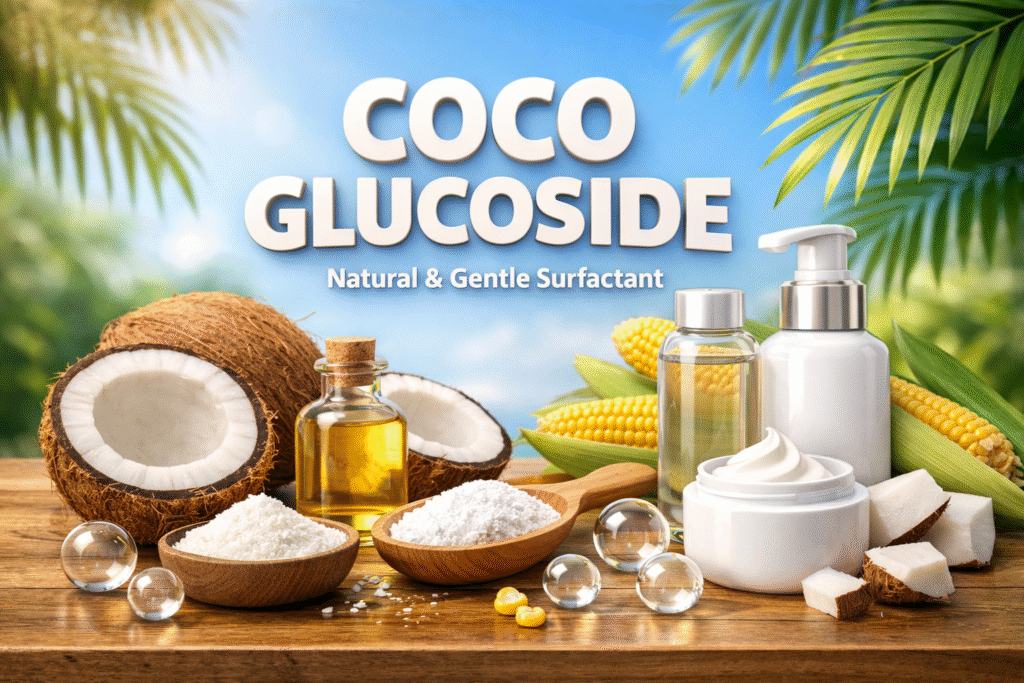
Coco Glucoside: The Gentle, Plant-Based Surfactant Revolutionizing Skincare & Haircare
Coco Glucoside is a gentle, plant-based, non-ionic surfactant derived from coconut oil and natural glucose. Widely used in sulfate-free skincare and haircare formulations, it provides effective yet mild cleansing without stripping the skin or scalp of natural oils. Ideal for face washes, shampoos, body washes, and baby care products, Coco Glucoside is biodegradable, eco-friendly, and suitable for sensitive and acne-prone skin. Its creamy foam, excellent skin compatibility, and clean beauty appeal make it a preferred ingredient in modern cosmetic formulations focused on sustainability and skin health.
Table of Contents
Introduction to Coco Glucoside
If you’ve ever flipped a cleanser bottle and noticed Coco Glucoside on the ingredient list, you’re not alone. This mild, plant-based surfactant has quietly become a superstar in modern skincare and haircare. Why? Because people want products that clean effectively without stripping, irritating, or harming the planet. Think of Coco Glucoside as the soft-spoken cleaner that does the job without causing drama.
What Is Coco Glucoside?
Coco Glucoside is a non-ionic surfactant derived from natural sources. In simple terms, it helps water mix with oil and dirt so they can be rinsed away easily.
Origin and Raw Materials
Coco Glucoside is made from:
- Coconut oil (fatty alcohols)
- Glucose (from corn or other plant starch)
That’s it. No petroleum base, no harsh sulfates—just nature doing its thing.
How Coco Glucoside Is Made
The process involves combining coconut-derived fatty alcohols with glucose through a controlled chemical reaction. The result is a gentle cleansing agent that respects both skin and hair. Think of it like blending coconut water with sugar—smooth, balanced, and friendly.
Why Coco Glucoside Is So Popular in Cosmetics
Rise of Clean Beauty
Clean beauty isn’t just a trend; it’s a movement. Consumers now read labels like detectives. Coco Glucoside ticks all the right boxes: plant-derived, biodegradable, and mild.
Demand for Sulfate-Free Products
Harsh sulfates can feel like using dish soap on your face. Coco Glucoside offers a softer alternative that cleans without over-drying, making it ideal for daily use.
Chemical Nature of Coco Glucoside
Non-Ionic Surfactant Explained
Unlike anionic surfactants (like SLS), Coco Glucoside carries no electrical charge. This makes it far less irritating and more compatible with sensitive skin.
How Non-Ionic Surfactants Work on Skin
They gently lift dirt and oil without disrupting the skin barrier. Imagine sweeping dust with a soft brush instead of blasting it with a pressure washer.
Key Benefits of Coco Glucoside
Gentle Cleansing Action
It removes impurities without stripping natural oils. Skin feels clean, not tight.
Skin-Friendly and Non-Irritating
Perfect for sensitive, baby, and compromised skin types.
Biodegradable and Eco-Friendly
Coco Glucoside breaks down naturally, making it kind to waterways and ecosystems.
Coco Glucoside for Skin Care
Facial Cleansers
Ideal for:
- Daily face washes
- Gel cleansers
- Micellar-style formulas
It cleans while maintaining hydration.
Body Washes
Provides creamy, soft foam that doesn’t dry out the skin—even with daily showers.
Baby Care Products
Because of its mild nature, it’s widely used in baby shampoos and washes.
Coco Glucoside for Hair Care
Shampoos
It cleans the scalp gently while preserving natural oils, making hair feel soft and manageable.
Sulfate-Free Hair Cleansers
Often blended with other mild surfactants to improve foam and cleansing efficiency.
Coco Glucoside vs Other Surfactants
Coco Glucoside vs SLS
| Feature | Coco Glucoside | SLS |
|---|---|---|
| Harshness | Very mild | Harsh |
| Origin | Plant-based | Synthetic |
| Skin barrier | Preserved | Stripped |
| Eco-friendly | Yes | No |
Coco Glucoside vs Decyl Glucoside
Both are gentle, but Coco Glucoside offers slightly richer foam and better compatibility in creamy formulations.
Foaming Ability of Coco Glucoside
While it doesn’t produce aggressive foam, it creates a soft, creamy lather—the kind that feels luxurious rather than drying. Remember, more foam doesn’t mean more clean.
Is Coco Glucoside Safe for All Skin Types?
Sensitive Skin
Yes. It’s one of the safest surfactants available for reactive skin.
Acne-Prone Skin
Because it doesn’t clog pores or strip oils, it supports a balanced skin environment.
How to Use Coco Glucoside in Formulations
Recommended Usage Levels
- Face cleansers: 5–15%
- Body wash: 10–20%
- Shampoo: 8–20%
pH Compatibility
Works best between pH 5.0–7.0, making it ideal for skin-friendly products.
Common Myths About Coco Glucoside
- “It doesn’t clean well” → False. It cleans gently but effectively.
- “Foam equals effectiveness” → Foam is just visual, not functional.
Environmental Impact and Sustainability
Coco Glucoside is biodegradable, renewable, and derived from sustainable plant sources. It aligns perfectly with eco-conscious brand values.
Why Brands Prefer Coco Glucoside
- Consumer trust
- Clean label appeal
- Regulatory acceptance worldwide
- Excellent compatibility with actives
Future of Coco Glucoside in Cosmetics
As demand for gentle, sustainable products grows, Coco Glucoside will continue to dominate sulfate-free formulations. It’s not just an ingredient—it’s a philosophy.
Conclusion
Coco Glucoside proves that cleansing doesn’t have to be harsh to be effective. Gentle, eco-friendly, and versatile, it’s the quiet hero behind many modern skincare and haircare products. If clean beauty had a handshake, Coco Glucoside would be it—soft, reassuring, and trustworthy.
FAQs
1. Is Coco Glucoside natural or synthetic?
It is naturally derived from coconut oil and plant-based glucose.
2. Can Coco Glucoside be used daily?
Yes, it’s gentle enough for everyday use on skin and hair.
3. Does Coco Glucoside suit oily skin?
Absolutely. It cleans oil without triggering over-dryness.
4. Is Coco Glucoside safe for babies?
Yes, it’s commonly used in baby washes and shampoos.
5. Does Coco Glucoside damage the skin barrier?
No, it helps maintain the skin’s natural protective barrier.
Related posts:
 Decyl Glucoside: A Complete Guide to This Gentle, Natural Surfactant
 CDEA (Cocamide Diethanolamine): Complete Guide for Cosmetic & Personal Care Formulations
 Propanediol: The Ultimate Guide to This High-Performance, Skin-Friendly Ingredient
 Hydrolyzed Keratin: The Complete Scientific and Cosmetic Authority Guide
 Sodium PCA: The Ultimate Guide to Superior Skin Hydration and Barrier Repair
 Disodium EDTA: Benefits, Uses, Safety, and Role in Cosmetics & Skincare