

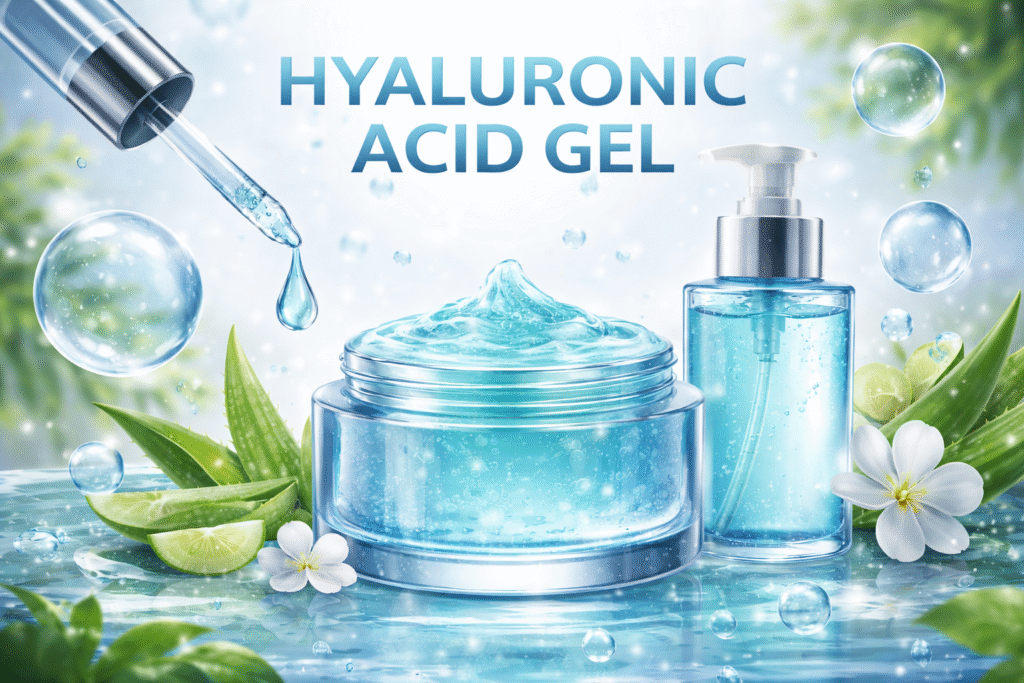
Hyaluronic Acid Gel Benefits: Deep Hydration, Plump Skin & Daily Skincare Guide
Hyaluronic Acid Gel is a powerful, lightweight skincare essential designed to deliver deep, long-lasting hydration without clogging pores. Known for its ability to hold up to 1,000 times its weight in water, hyaluronic acid helps instantly plump the skin, reduce the appearance of fine lines, and restore a healthy, radiant glow.
This fast-absorbing gel is suitable for all skin types, including oily, acne-prone, sensitive, and mature skin. By strengthening the skin barrier and maintaining optimal moisture levels, hyaluronic acid gel prevents dryness, dehydration, and environmental damage.
Whether used alone or layered with other skincare actives like vitamin C, niacinamide, or retinol, hyaluronic acid gel enhances overall skin performance and comfort. Ideal for daily morning and night routines, it delivers smooth, soft, and visibly refreshed skin with consistent use.
Perfect for professional skincare treatments and home routines alike, hyaluronic acid gel is a must-have ingredient for achieving hydrated, plump, and youthful-looking skin.
Table of Contents
Introduction to Hyaluronic Acid Gel
If your skin could talk, hydration would be its number one demand. And that’s exactly where hyaluronic acid gel steps in like a tall glass of water on a hot summer day. Lightweight, fast-absorbing, and incredibly effective, this gel has become a staple in modern skincare routines across the globe.
But what makes it so special? Why do dermatologists, formulators, and beauty lovers swear by it? Let’s break it down—simply, clearly, and honestly.
What Is Hyaluronic Acid?
Natural Occurrence in the Human Body
Hyaluronic acid (HA) isn’t some lab-created mystery ingredient. Your body already makes it. It’s found naturally in your skin, joints, and eyes, acting like a cushion and lubricant. In fact, nearly 50% of the HA in your body lives in your skin.
The problem? As we age, our natural HA levels drop. Think of a grape slowly turning into a raisin. That’s moisture loss in action.
How It Works as a Humectant
HA is a humectant, meaning it pulls water from its surroundings and binds it to the skin. One gram of hyaluronic acid can hold up to 1,000 times its weight in water. That’s not marketing hype—it’s chemistry.
What Is Hyaluronic Acid Gel?
Difference Between Serum, Gel, and Cream
Hyaluronic acid gel sits comfortably between a serum and a cream.
- Serum: Thin, watery, fast-penetrating
- Gel: Lightweight, cooling, water-based
- Cream: Thick, occlusive, oil-rich
The gel format is ideal if you want intense hydration without heaviness.
Texture and Absorption Explained
Hyaluronic acid gel feels cool and refreshing on contact. It absorbs quickly, doesn’t clog pores, and layers beautifully under sunscreen or makeup. No greasy residue. No sticky aftermath.
Types of Hyaluronic Acid Used in Gels
High Molecular Weight HA
- Sits on the skin’s surface
- Instantly smooths and hydrates
- Creates a protective moisture film
Low Molecular Weight HA
- Penetrates deeper into the skin
- Improves elasticity and firmness
- Supports long-term hydration
Cross-Linked Hyaluronic Acid
- More stable and long-lasting
- Releases hydration slowly over time
Why Multi-Molecular HA Works Best
The best hyaluronic acid gels combine multiple molecular weights. Think of it as hydration on different floors of a building—surface, middle, and deep levels all covered.
Key Benefits of Hyaluronic Acid Gel
Deep Hydration
This is HA’s superpower. It quenches thirsty skin instantly and continuously.
Skin Plumping & Anti-Aging
Fine lines often look worse when skin is dehydrated. HA gel plumps the skin, making lines appear softer and less visible.
Soothing & Barrier Repair
Irritated skin? Over-exfoliated? Sun-stressed? Hyaluronic acid gel calms inflammation and supports the skin barrier.
Acne-Safe Hydration
Even oily and acne-prone skin needs hydration. HA gel hydrates without oil, helping balance sebum production.
Hyaluronic Acid Gel for Different Skin Types
Dry Skin
Acts like a moisture magnet. Always seal it with a cream to lock hydration in.
Oily & Acne-Prone Skin
Hydrates without clogging pores. Helps reduce excess oil caused by dehydration.
Sensitive Skin
Gentle, non-irritating, and soothing. Ideal after treatments or exfoliation.
Mature Skin
Improves elasticity, softness, and overall skin comfort.
How to Use Hyaluronic Acid Gel Correctly
Morning Skincare Routine
- Cleanser
- Hyaluronic acid gel (on damp skin)
- Moisturizer
- Sunscreen
Night Skincare Routine
- Cleanser
- Toner (optional)
- Hyaluronic acid gel
- Treatment serum
- Moisturizer
Layering with Other Actives
HA plays well with almost everything—vitamin C, niacinamide, retinol, peptides. It’s the ultimate team player.
Common Mistakes to Avoid
Applying on Dry Skin
HA needs water. Apply it on slightly damp skin, or it may pull moisture out instead of in.
Skipping Moisturizer
HA hydrates, but it doesn’t seal. Always follow with a moisturizer.
Overuse Myths
More isn’t better. A pea-sized amount is enough.
Hyaluronic Acid Gel vs Other Hydrating Ingredients
HA vs Glycerin
Both hydrate well, but HA offers superior skin-plumping benefits.
HA vs Aloe Vera
Aloe soothes; HA hydrates deeply. Together, they’re magic.
HA vs Ceramides
HA adds water; ceramides lock it in. Different roles, same goal.
Hyaluronic Acid Gel in Professional Skincare
Dermatology Uses
Used in post-treatment care, microneedling, laser recovery, and professional facials.
Post-Procedure Care
Reduces dryness, tightness, and irritation after cosmetic procedures.
DIY vs Commercial Hyaluronic Acid Gel
Safety & Stability Concerns
DIY gels often lack proper preservation and pH balance, increasing contamination risk.
Preservatives Matter
Commercial gels are formulated for stability, safety, and long shelf life.
How to Choose the Best Hyaluronic Acid Gel
Ingredient List Checklist
- Sodium Hyaluronate / Hyaluronic Acid
- Multiple molecular weights
- No harsh alcohols
- Added soothing agents (panthenol, allantoin)
Ideal Concentration & pH
- HA: 0.1%–2%
- pH: 5.0–6.5
Side Effects & Safety Profile
Is Hyaluronic Acid Gel Safe?
Yes. It’s biocompatible and suitable for daily use.
Who Should Patch Test?
Those with extremely reactive or allergy-prone skin—just to be safe.
Sustainability & Future of Hyaluronic Acid
Modern HA is produced via biotechnology fermentation, making it vegan, sustainable, and eco-friendly. The future points toward smarter, longer-lasting hydration systems.
Conclusion
Hyaluronic acid gel isn’t just another skincare trend—it’s a hydration essential. Lightweight yet powerful, simple yet science-backed, it fits effortlessly into any routine. Whether your skin is dry, oily, sensitive, or aging, this gel works quietly in the background, keeping your skin comfortable, plump, and healthy.
Hydrated skin isn’t a luxury. It’s the foundation.
FAQs
1. Can I use hyaluronic acid gel every day?
Yes, it’s safe for daily morning and night use.
2. Is hyaluronic acid gel suitable for oily skin?
Absolutely. It hydrates without adding oil.
3. Can hyaluronic acid gel cause breakouts?
No, it’s non-comedogenic and acne-safe.
4. Should I use hyaluronic acid gel before or after moisturizer?
Always before moisturizer.
5. Can hyaluronic acid gel replace a moisturizer?
No. It hydrates but does not seal moisture on its own.
Related posts:
 Hyaluronic Acid Serum – The Ultimate Guide to Deep Hydration and Youthful Skin
 CDEA (Cocamide Diethanolamine): Complete Guide for Cosmetic & Personal Care Formulations
 Propanediol: The Ultimate Guide to This High-Performance, Skin-Friendly Ingredient
 Hydrolyzed Keratin: The Complete Scientific and Cosmetic Authority Guide
 Sodium PCA: The Ultimate Guide to Superior Skin Hydration and Barrier Repair
 Phenoxyethanol + Ethylhexylglycerin: The Gold-Standard Preservative System in Modern Skincare