

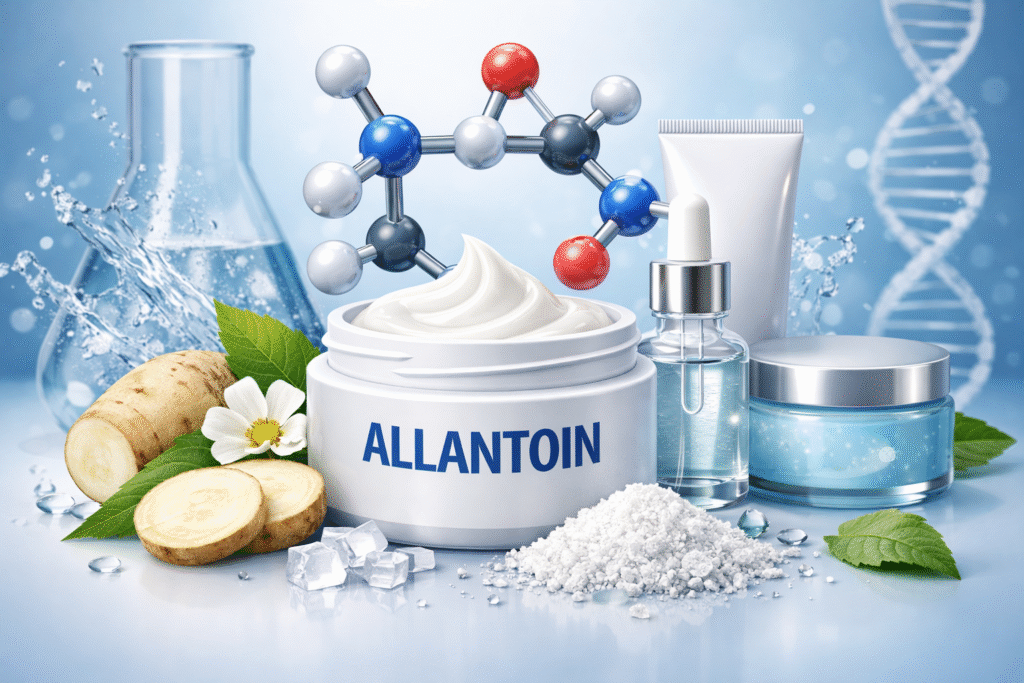
Allantoin – The Ultimate Skin-Soothing Ingredient Explained
Table of Contents
Introduction to Allantoin
If skincare ingredients were people at a party, Allantoin would be the calm, kind friend who helps everyone relax. It doesn’t shout, it doesn’t sting, and it definitely doesn’t cause drama. Yet somehow, it quietly transforms irritated, dry, and unhappy skin into something smooth, soft, and comfortable.
What Is Allantoin?
Allantoin is a skin-conditioning ingredient widely used in skincare, cosmetics, and pharmaceutical products. It’s known for its soothing, healing, and moisturizing properties. Chemically speaking, it’s a diureide of glyoxylic acid—but don’t worry, your skin doesn’t care about chemistry. What it cares about is results, and Allantoin delivers.
Why Allantoin Is So Popular in Skincare
Why do formulators love Allantoin? Because it works for almost everyone. Sensitive skin? Yes. Acne-prone? Absolutely. Post-treatment skin? Perfect. It’s gentle, effective, and plays well with other ingredients—like the ultimate team player.
The History and Origin of Allantoin
Natural Sources of Allantoin
Originally, Allantoin was discovered in plants like comfrey root, chamomile, and sugar beet. These plants were historically used to heal wounds and soothe irritation—long before modern skincare existed.
Synthetic vs Natural Allantoin
Today, most Allantoin used in cosmetics is synthetically produced. Why? Because it’s purer, more stable, cruelty-free, and environmentally sustainable. And here’s the good news: synthetic Allantoin performs exactly the same as natural Allantoin—sometimes even better.
How Allantoin Works on the Skin
Skin Barrier Repair Mechanism
Think of your skin barrier like a brick wall. When it’s damaged, moisture escapes and irritants get in. Allantoin helps repair this wall by softening skin cells and supporting barrier recovery.
Cellular Renewal and Healing Support
Allantoin encourages gentle skin renewal. It helps remove dead skin cells while supporting new cell growth—without the harshness of traditional exfoliants.
Role in Keratinization
Keratinization is the process of forming new skin cells. Allantoin regulates this process, preventing rough texture, flaking, and buildup. Smooth skin? That’s Allantoin doing its thing.
Key Benefits of Allantoin for Skin
Soothing Sensitive and Irritated Skin
Redness, itching, burning—Allantoin calms it all down. It’s often used in post-peel, post-laser, and eczema-friendly formulations.
Moisturizing and Hydration Boost
While Allantoin isn’t a humectant like glycerin, it enhances moisture retention by improving skin softness and reducing water loss.
Gentle Exfoliation Properties
Unlike acids, Allantoin exfoliates without irritation. It loosens dead skin cells so they shed naturally—no peeling, no stinging.
Wound Healing and Skin Repair
Minor cuts, burns, acne marks—Allantoin speeds up healing by promoting tissue regeneration. It’s basically first aid in a bottle.
Allantoin for Different Skin Types
Allantoin for Dry Skin
Dry skin loves Allantoin because it softens rough patches and improves texture. It’s especially effective in creams and lotions.
Allantoin for Oily and Acne-Prone Skin
Yes, oily skin needs soothing too. Allantoin reduces inflammation, calms active acne, and helps prevent post-acne irritation.
Allantoin for Sensitive and Rosacea-Prone Skin
If your skin reacts to everything, Allantoin is your safe zone. It reduces redness and strengthens skin tolerance over time.
Allantoin in Skincare Products
Common Product Types Containing Allantoin
You’ll find Allantoin in:
- Cleansers
- Toners
- Serums
- Moisturizers
- Sunscreens
- Aftershaves
- Baby creams
Ideal Concentration Levels
Most products use Allantoin at 0.1% to 0.5%.
Leave-On vs Rinse-Off Products
Leave-on products benefit most because Allantoin stays on the skin longer, delivering continuous soothing and repair.
Allantoin in Cosmetic Formulation
Solubility and Stability
Allantoin is water-soluble but needs proper heating during formulation. Once dissolved, it’s very stable across a wide pH range.
Compatibility with Other Ingredients
Allantoin works beautifully with:
- Niacinamide
- Panthenol
- Hyaluronic Acid
- Ceramides
- Aloe Vera
Allantoin vs Similar Soothing Ingredients
Allantoin vs Panthenol
Panthenol hydrates deeply; Allantoin repairs and soothes. Together? A powerhouse combo.
Allantoin vs Aloe Vera
Aloe calms instantly, while Allantoin works long-term. Aloe is the ice pack; Allantoin is the healing process.
Safety, Side Effects, and Myths
Is Allantoin Safe for Daily Use?
Absolutely. It’s non-toxic, non-comedogenic, and approved worldwide for cosmetic use—even in baby products.
Common Myths About Allantoin
Myth: Allantoin exfoliates harshly
Truth: It exfoliates gently without irritation.
How to Use Allantoin in Your Skincare Routine
Morning vs Night Routine
Allantoin works both day and night. In the morning, it protects. At night, it repairs.
Layering Tips for Best Results
Apply after cleansing and before heavier creams. Let it sink in—your skin will thank you.
Allantoin in Professional and Dermatological Use
Use in Medical Skincare
Dermatologists use Allantoin in healing ointments, scar gels, and post-procedure creams.
Baby Care and Post-Procedure Products
Its ultra-gentle nature makes it ideal for diapers, baby lotions, and post-treatment recovery.
Sustainability and Ethical Considerations
Eco-Friendly Production
Synthetic Allantoin reduces plant harvesting and ensures consistent quality.
Vegan and Cruelty-Free Status
Allantoin is vegan, cruelty-free, and ethically sourced—perfect for conscious brands.
Why Allantoin Is a Must-Have Ingredient
Who Should Definitely Use Allantoin
If your skin ever feels dry, irritated, sensitive, or stressed—Allantoin belongs in your routine. Simple as that.
Conclusion
Allantoin may not be flashy, but it’s one of the most reliable, skin-loving ingredients out there. It soothes, heals, protects, and strengthens—without irritation or risk. Whether you’re building a skincare routine or formulating your own product, Allantoin is a quiet hero that never disappoints.
FAQs
Is Allantoin good for acne-prone skin?
Yes, it calms inflammation and supports healing without clogging pores.
Can Allantoin be used every day?
Absolutely. It’s safe for daily, long-term use.
Does Allantoin lighten skin?
No, but it improves texture and reduces redness, giving skin a healthier appearance.
Is Allantoin suitable for baby skin?
Yes, it’s commonly used in baby creams and diaper rash products.
Can Allantoin be combined with active ingredients?
Yes, it pairs well with retinoids, acids, and vitamin C to reduce irritation.
Related posts:
 Propanediol: The Ultimate Guide to This High-Performance, Skin-Friendly Ingredient
 Hyaluronic Acid – The Ultimate Guide to Deep Hydration and Youthful Skin
 Niacinamide – The Ultimate Skincare Ingredient Explained
 Vitamin C, Sodium Ascorbyl Phosphate (SAP): A Complete Skincare Guide
 Coco Betaine (Cocamidopropyl Betaine): Benefits, Uses, Safety, and Complete Guide
 Guar Hydroxypropyltrimonium Chloride: Comprehensive Guide, Benefits, Uses, and Formulation Insights