

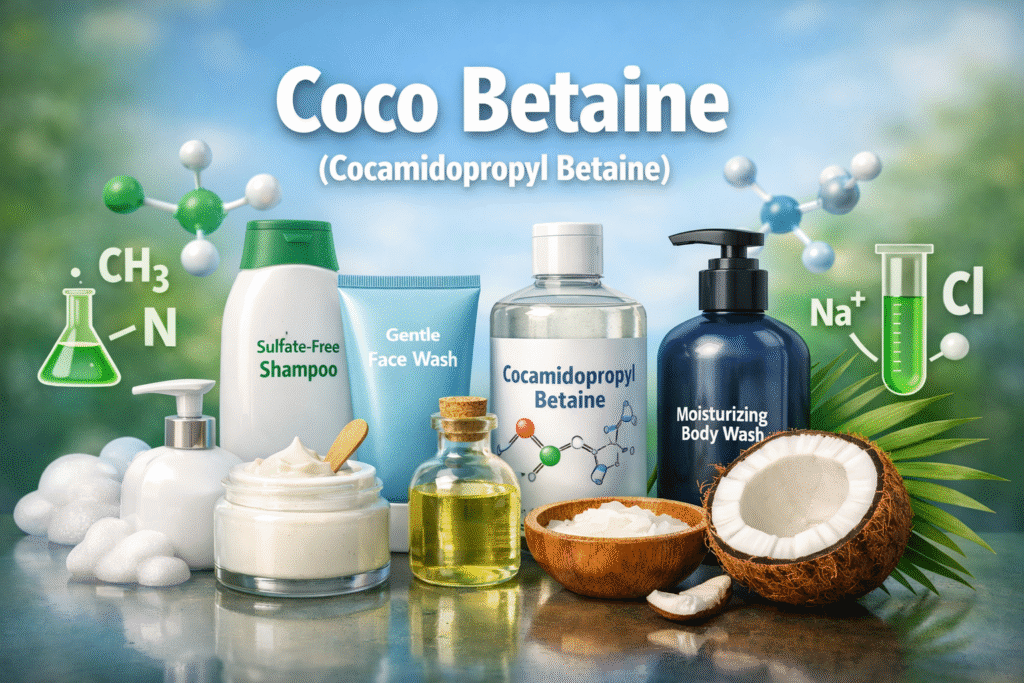
Coco Betaine (Cocamidopropyl Betaine): Benefits, Uses, Safety, and Complete Guide
Introduction to Coco Betaine
Ever wondered why your shampoo feels gentle yet foams like a dream? Or why your face wash cleans without making your skin feel tight and dry? The secret often lies in a humble ingredient called Coco Betaine, scientifically known as Cocamidopropyl Betaine.
In the world of skincare and haircare, Coco Betaine is like that dependable friend—flexible, mild, and always doing its job quietly but effectively. Whether you’re a formulator, a brand owner, or just a curious consumer reading ingredient labels, understanding Coco Betaine can change how you see everyday personal care products.
Let’s break it all down in simple, human language.
Table of Contents
What Is Cocamidopropyl Betaine?
Cocamidopropyl Betaine (CAPB) is a mild amphoteric surfactant derived from coconut fatty acids. In plain terms, it’s a cleansing agent that helps remove dirt and oil while being gentle on skin and hair.
Unlike harsh cleansers that strip away natural moisture, Coco Betaine works like a soft sponge—it cleans without scratching the surface.
Chemical Nature and Classification
Coco Betaine belongs to the amphoteric surfactant family. This means it can behave as both:
- A positive ion (cationic)
- A negative ion (anionic)
Depending on the pH of the formula.
This dual nature is what makes it incredibly versatile and mild compared to traditional surfactants.
How Coco Betaine Is Made
Raw Materials Used in Coco Betaine
The main raw material is:
- Coconut oil–derived fatty acids
These fatty acids react with:
- Dimethylaminopropylamine
- And later with sodium monochloroacetate
Sounds technical? Don’t worry—the takeaway is this: Coco Betaine starts from natural coconut sources and is processed to become safe, stable, and effective.
Manufacturing Process Explained Simply
Think of it like cooking:
- Coconut fatty acids are “prepared”
- They’re chemically modified for performance
- The final product is purified and stabilized
The result? A clear to pale yellow liquid surfactant ready to shine in formulations.
Why Coco Betaine Is So Popular in Personal Care
Coco Betaine didn’t become famous overnight. It earned its reputation by being:
- Gentle
- Effective
- Compatible with almost everything
Formulators love it, and skin loves it even more.
Key Functions of Coco Betaine in Formulations
Surfactant Properties
Coco Betaine reduces surface tension between water and oil, helping cleanse skin and hair effectively.
Foam Boosting Ability
Ever noticed rich foam even in sulfate-free products? Coco Betaine is often the reason. It:
- Boosts foam
- Stabilizes bubbles
- Improves lather quality
Viscosity Enhancement
It naturally thickens formulations, reducing the need for extra thickeners.
Mildness and Skin Compatibility
This is its superpower. Coco Betaine:
- Reduces irritation
- Minimizes dryness
- Improves skin feel
Benefits of Coco Betaine for Skin
For skin, Coco Betaine acts like a gentle cleanser with manners. Benefits include:
- Non-stripping cleansing
- Reduced redness and irritation
- Suitable for daily use
- Supports skin barrier function
That’s why you’ll often see it in facial cleansers and sensitive-skin formulas.
Benefits of Coco Betaine for Hair
Hair products rely on Coco Betaine because it:
- Cleans without roughening the cuticle
- Improves hair softness
- Enhances shine
- Reduces scalp irritation
It’s especially valuable in anti-dandruff and hair fall control shampoos.
Role in Shampoos
In shampoos, Coco Betaine:
- Acts as a secondary surfactant
- Reduces harshness of primary cleansers
- Improves foam creaminess
Think of it as the cushion that softens the impact of stronger surfactants.
Role in Face Washes
Facial skin is delicate. Coco Betaine ensures:
- Effective cleansing
- No tight, squeaky feeling
- Better tolerance for acne-prone skin
Role in Body Washes and Hand Washes
In body and hand washes, it:
- Improves thickness
- Enhances foam
- Leaves skin feeling smooth, not dry
Perfect for frequent handwashing routines.
Coco Betaine in Cosmetic and Personal Care Products
You’ll commonly find Coco Betaine in:
- Shampoos
- Face cleansers
- Body washes
- Hand washes
- Bubble baths
- Intimate washes
Industrial and Household Uses
Beyond cosmetics, Coco Betaine is also used in:
- Mild household cleaners
- Dishwashing liquids
- Pet shampoos
Baby Care Products
Because of its mildness, Coco Betaine is widely used in:
- Baby shampoos
- Baby body washes
- Tear-free formulations
Men’s Grooming Products
Men’s grooming products like:
- Beard washes
- Face cleansers
- Shaving foams
rely on Coco Betaine for comfort and performance.
Coco Betaine vs Other Surfactants
Coco Betaine vs SLS
| Feature | Coco Betaine | SLS |
|---|---|---|
| Mildness | Very mild | Harsh |
| Foam | Creamy | Aggressive |
| Skin feel | Soft | Drying |
Coco Betaine clearly wins for sensitive skin.
Coco Betaine vs Coco Glucoside
Coco Glucoside is non-ionic and very mild, but:
- Coco Betaine gives better foam
- Improves viscosity more effectively
Many formulas combine both for best results.
Is Coco Betaine Safe?
Yes, Coco Betaine is considered safe by:
- Cosmetic regulatory bodies
- Dermatologists worldwide
When properly formulated and purified, it’s non-toxic and skin-friendly.
Dermatological Safety and Regulations
It is approved for use in:
- EU
- USA
- ASEAN
- Global cosmetic standards
Is Coco Betaine Natural or Synthetic?
This is a common question.
Coco Betaine is:
- Naturally derived
- Chemically processed
So it’s not 100% raw-natural, but it is nature-based and biodegradable.
Is Coco Betaine Suitable for Sensitive Skin?
Absolutely. It’s often included in:
- Sensitive-skin formulas
- Sulfate-free products
- Dermatologist-tested cleansers
Recommended Usage Levels in Formulations
Typical usage levels:
- Shampoos: 3–10%
- Face washes: 2–6%
- Hand washes: 5–12%
Exact levels depend on the formulation and desired performance.
Compatibility with Other Ingredients
Coco Betaine plays well with:
- Anionic surfactants
- Non-ionic surfactants
- Conditioning agents
- Herbal extracts
- Essential oils
It’s a true team player.
Common Myths About Coco Betaine
Myth: “It’s harsh because it foams.”
Truth: Foam doesn’t equal harshness.
Myth: “It causes allergies in everyone.”
Truth: Rare reactions usually come from impurities, not the ingredient itself.
Environmental Impact and Biodegradability
Coco Betaine is:
- Readily biodegradable
- Eco-friendlier than sulfates
- Safer for aquatic life
A better choice for sustainable formulations.
How to Choose High-Quality Coco Betaine
Look for:
- Low amidoamine content
- Clear appearance
- Trusted suppliers
- Cosmetic-grade certification
Storage and Shelf Life
- Store in a cool, dry place
- Keep container tightly closed
- Typical shelf life: 12–24 months
Future Trends of Coco Betaine in Skincare and Haircare
With the rise of:
- Sulfate-free products
- Clean beauty
- Sensitive-skin demand
Coco Betaine’s future looks brighter than ever.
Final Thoughts on Coco Betaine
Coco Betaine is not just another ingredient—it’s a backbone of modern gentle cleansing. Mild, versatile, safe, and effective, it bridges the gap between performance and skin comfort. Whether you’re formulating products or choosing them, Coco Betaine is an ingredient worth appreciating.
Conclusion
Coco Betaine (Cocamidopropyl Betaine) has earned its place as a trusted surfactant in skincare and haircare. Its gentle cleansing action, excellent foaming ability, and wide compatibility make it ideal for everything from baby shampoos to professional-grade formulations. As consumers continue to demand mild, effective, and eco-conscious products, Coco Betaine will remain a cornerstone ingredient in personal care.
FAQs
1. Is Coco Betaine sulfate-free?
Yes, Coco Betaine is completely sulfate-free.
2. Can Coco Betaine cause skin irritation?
Rarely. When irritation occurs, it’s usually due to impurities or improper formulation.
3. Is Coco Betaine good for acne-prone skin?
Yes, its mild nature makes it suitable for acne-prone and sensitive skin.
4. Can Coco Betaine be used in natural products?
Yes, it’s commonly used in naturally derived and clean beauty products.
5. Is Coco Betaine safe for daily use?
Absolutely. It’s designed for frequent and daily cleansing applications.
Related posts:
 Hyaluronic Acid – The Ultimate Guide to Deep Hydration and Youthful Skin
 Niacinamide – The Ultimate Skincare Ingredient Explained
 Vitamin C, Sodium Ascorbyl Phosphate (SAP): A Complete Skincare Guide
 CDEA (Cocamide Diethanolamine): Complete Guide for Cosmetic & Personal Care Formulations
 Guar Hydroxypropyltrimonium Chloride: Comprehensive Guide, Benefits, Uses, and Formulation Insights
 Hydrolyzed Keratin: The Complete Scientific and Cosmetic Authority Guide